
20 Minute Panang Chicken Curry
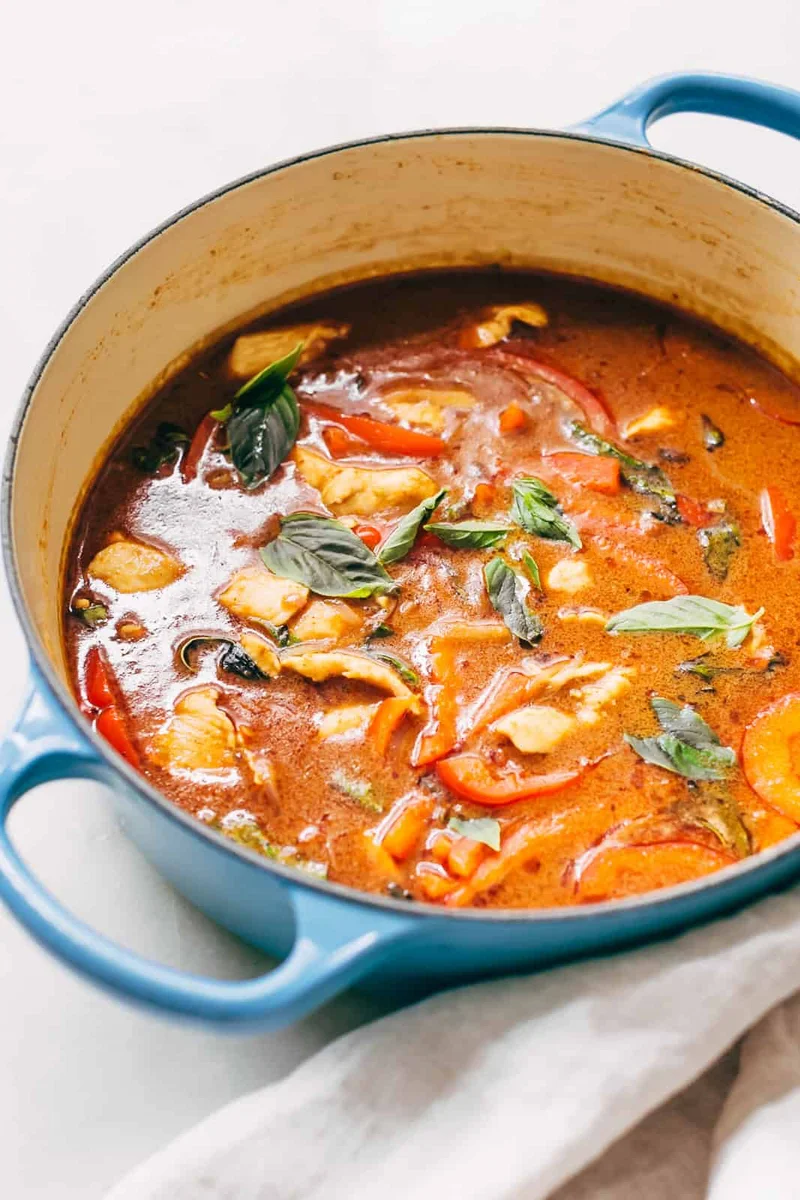
This quick Panang chicken curry combines tender chicken and sliced vegetables in a rich, gently sweet coconut sauce with peanut butter and fragrant curry paste. It comes together in about 20 minutes, making it a practical dinner to serve with rice or rice noodles.
Ingredients
- 1½–2 × 414 ml cans (14 oz each)coconut milk
- 30–60 ml (2–4 tablespoons)Panang curry paste
- 15 ml (1 tablespoon)creamy peanut butter
- 567 g (1¼ lb)boneless, skinless chicken, thinly sliced
- 15–30 ml (1–2 tablespoons)fish sauce
- 2 tablespoonsbrown sugar
- 5 ml (1 teaspoon)tamarind paste concentrate, or more for extra tang
- 1shallot, thinly sliced (or ½ red onion)
- 1red pepper, thinly sliced
- 3kefir lime leaves (optional)
- 6 g (¼ cup)basil leaves, for topping
Instructions
- 1
Fry the paste
Without shaking the coconut milk can, skim 30 ml (2 tablespoons) of the coconut cream into a sauté pan over medium-high heat. Add the Panang curry paste and peanut butter, then cook for 1 minute. Add the chicken, stir to coat, and cook for 1–2 minutes. If the sauce starts sticking, add a couple of tablespoons of water to loosen it.
- 2
Add the ingredients
Stir in the remaining coconut milk, starting with 1½ cans and reserving the option to add more later. Add the kefir lime leaves, fish sauce, brown sugar, sliced shallot or onion, and red pepper.
- 3
Simmer the curry
Bring the curry to a simmer, then lower the heat and cook for 2–3 minutes, or until the chicken is cooked through.
- 4
Finish and serve
Taste and adjust with more coconut milk, sugar, tamarind or fish sauce as desired. Turn off the heat, stir in the basil and serve warm with rice or cooked rice noodles.
What is Panang chicken curry?
Panang curry is a Thai-style curry known for a rich, thick coconut sauce and a balance of savoury, sweet and tangy flavours. This version pairs Panang curry paste with peanut butter, chicken and vegetables for a speedy one-pan meal.
The short simmer keeps the method weeknight-friendly. Adding the basil at the end preserves its fresh aroma.
Nutrition and macros by portion
The nutrition label shows one serving as written: 578 calories, 35g protein, 20g carbs, 42g fat.
| Portion | Adjustment | kcal | Protein | Carbs | Fat |
|---|---|---|---|---|---|
| Lighter | Less coconut milk | 405 kcal | 25g | 14g | 29g |
| This serving | As written | 578 kcal | 35g | 20g | 42g |
| Hungry | Serve with extra rice | 867 kcal | 53g | 30g | 63g |
The chicken contributes much of the protein, while coconut milk and peanut butter account for a substantial share of the fat. The sugar and any rice or rice noodles served alongside provide most of the meal’s carbohydrates. For a balanced plate, serve a moderate portion of rice with extra vegetables on the side.
Build the curry base
Coconut cream: Skimming a little from the top of an undisturbed can gives the curry paste and peanut butter a rich base to cook in.
Curry paste: The recipe allows 2–4 tablespoons, so choose an amount that suits your preferred intensity and the paste you have.
Choose and prepare the chicken
Thin slices: Cutting the chicken thinly helps it cook through during the brief simmer. Keep the pieces similar in size so they finish at roughly the same time.
Pan contact: Stir the chicken through the paste to coat it. If the mixture catches on the pan before the coconut milk goes in, use a little water to loosen it.
Balance the sauce
Sweet and savoury: Brown sugar rounds out the curry paste, while fish sauce adds savouriness. Begin with the listed amounts and adjust to taste at the end.
Tangy finish: Tamarind brings acidity to the rich coconut sauce. Add extra gradually if you want a sharper flavour.
Check the vegetables and doneness
Even slices: Thinly sliced shallot or onion and red pepper soften quickly in the simmering sauce. They should be tender while still holding their shape.
Chicken: Check that the thickest pieces are cooked through before finishing the curry. The short cooking time depends on the chicken being thinly sliced.
Serve it with
Rice: Plain cooked rice is an easy way to catch the coconut curry sauce and make the dish a fuller meal.
Rice noodles: Cooked rice noodles are another suggested accompaniment. Add them to bowls rather than leaving them in the pan if you want to keep their texture distinct.
Recipe notes & tips
- Do not shake the can before skimming the coconut cream from the top.
- Start with the lower amount of curry paste, then taste before adding more.
- Slice the chicken thinly and evenly to match the short cooking time.
- Keep a little water nearby to loosen the paste if it begins to stick.
- Add the basil after turning off the heat for a fresher finish.
Variations
- More vegetables: Add extra sliced red pepper for a more vegetable-forward curry.
- Onion swap: Use ½ a thinly sliced red onion instead of the shallot.
- Adjust the heat: Use less Panang curry paste for a milder result.
- Extra tang: Stir in more tamarind paste a little at a time.
- Noodle bowls: Serve the curry over cooked rice noodles instead of rice.
Common mistakes to avoid
- Shaking the can: This mixes the coconut cream through the milk; leave it undisturbed so you can skim the cream.
- Adding all the paste at once: Curry pastes vary in intensity; start with a smaller amount and adjust after tasting.
- Crowding the pan with thick chicken pieces: They may not cook through in time; slice the chicken thinly.
- Letting the paste catch: It can stick before the coconut milk is added; loosen the pan with a couple of tablespoons of water.
- Boiling for too long: The chicken can overcook; simmer gently and stop once it is cooked through.
How to store
Refrigerate leftovers in a covered container and use within 3 days. Reheat gently in a pan until piping hot, adding a splash of water if the sauce has thickened; store rice or noodles separately where possible.
Frequently asked questions
How spicy is Panang chicken curry?
The heat depends on the curry paste and how much you use. Begin with 2 tablespoons and add more to taste.
Can I use chicken thighs instead of breast?
Yes, boneless, skinless thighs can be used. Slice them thinly and check that they are cooked through before serving.
Can I make it without kefir lime leaves?
Yes. The leaves are optional, so you can leave them out if you do not have them.
Can I make the curry ahead?
You can cook it ahead and refrigerate it, then reheat it gently until piping hot. The basil is best stirred in just before serving.
What should I serve with Panang chicken curry?
Serve it warm with cooked rice or rice noodles, as suggested in the recipe.
Cook it from the original
This recipe comes from littlespicejar.com. Their page has the author’s own photos, notes and tips — the best place to cook it from.
Open the recipe on littlespicejar.com