
Roasted Honeynut Squash Risotto
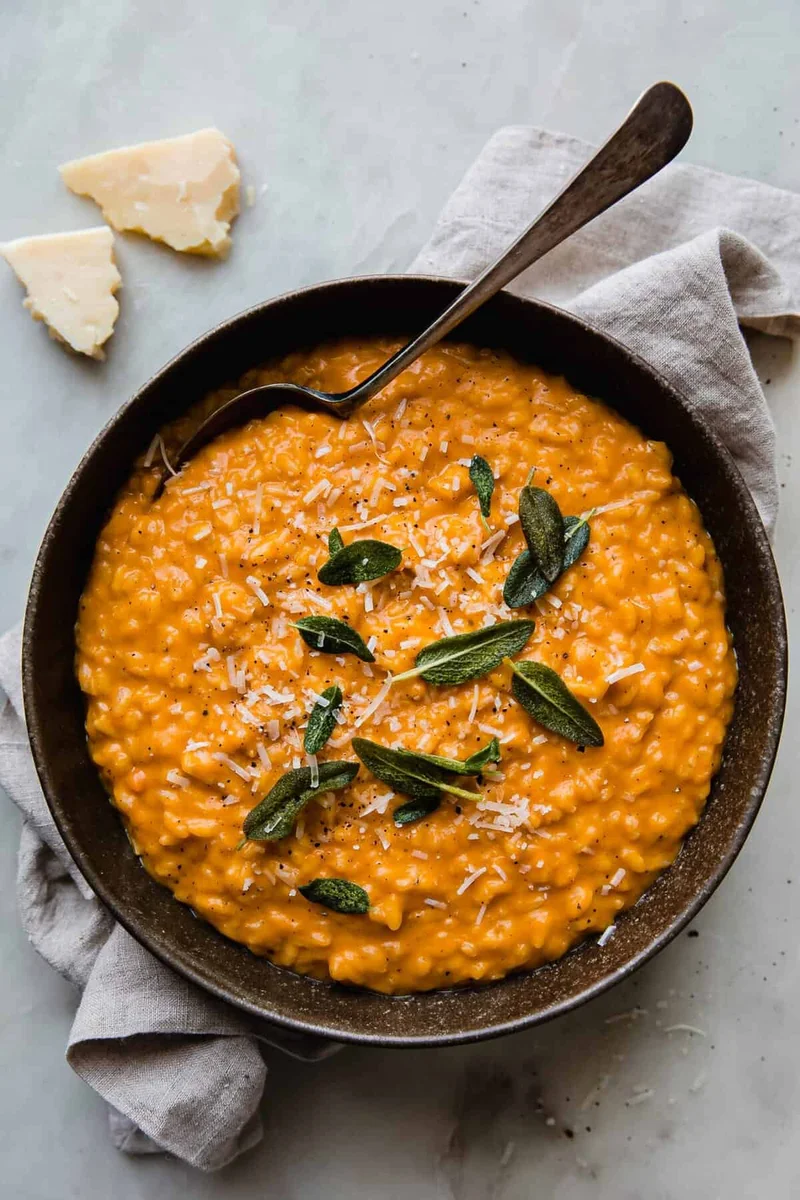
Roasted honeynut squash brings sweetness and a gentle hint of heat to this creamy risotto, finished with sage, cheese and butter. It is a cosy, hands-on dinner that makes the most of autumn squash.
Ingredients
- 907 ghoneynut squash (or sugar pumpkin or butternut squash)
- 45 ml, dividedolive oil
- to tastekosher salt and black pepper
- 0.6 mlcayenne pepper
- 15 mlmaple syrup (or honey)
- 1.42 litresvegetable or chicken stock
- 0.6 mlsaffron (optional)
- 10–12 leavesfresh sage
- 75 gshallots, finely chopped
- 4 clovesgarlic, minced
- 300 gArborio rice
- 50 g eachshredded Gruyère and grated Pecorino Romano
- 28 gunsalted butter
Instructions
- 1
Roast the squash
Place a rack in the centre of the oven and preheat it to 200°C. Halve the squash and scoop out the seeds with a spoon. Put it on a foil- or parchment-lined baking sheet, drizzle with 15 ml olive oil, and season with kosher salt, black pepper and the cayenne. Add the maple syrup and roast for 30–40 minutes, until fork-tender. Start the next step while it roasts. Let it cool enough to handle, then scoop out and reserve the flesh.
- 2
Warm the stock
Heat the stock and saffron, if using, in a medium saucepan over medium heat until just boiling. Reduce the heat to low and keep the stock at a gentle simmer so it is warm when added to the rice.
- 3
Fry the sage
Heat the remaining 30 ml olive oil in a Dutch oven or saucepan over medium heat until shimmering. Add the sage leaves in one layer and watch closely; they should crisp in about 30 seconds. Transfer them to a paper-towel-lined plate and save for serving. Add the shallots and a generous pinch of salt to the pan; cook for 3–4 minutes. Add the garlic and cook for 30 seconds, then stir in the Arborio rice. Toast it for 2–3 minutes, stirring often, then add the squash flesh and cook for another 1–2 minutes.
- 4
Cook the risotto
Add 240 ml stock and move the mixture around the pan with a wooden spoon. Start a 20-minute timer as soon as the stock goes in. Once most of the liquid has evaporated, add another 120 ml stock, stir and repeat. When the timer ends, check the rice; cook for up to 5 minutes longer if needed, until it is done to your liking. You may not need all the stock; the original recipe used about 1.2 litres.
- 5
Finish and serve
Stir in the Gruyère and grated Pecorino Romano until combined, then finish with the butter. Taste and adjust the salt and pepper. Serve topped with extra shredded Parmesan and the fried sage.
What is squash risotto?
Risotto is an Italian rice dish cooked gradually with stock, stirred until the grains release starch and the mixture turns creamy. This version pairs that method with roasted honeynut squash, a small, sweet variety related to butternut squash.
Roasting concentrates the squash’s flavour, while maple syrup and cayenne add sweetness and a mild spark. Sage, two cheeses and butter make the finished rice savoury and rich.
Nutrition and macros by portion
The nutrition label shows one serving as written: 650 calories, 18g protein, 83g carbs, 28g fat.
| Portion | Adjustment | kcal | Protein | Carbs | Fat |
|---|---|---|---|---|---|
| Lighter | Less butter and cheese | 455 kcal | 13g | 58g | 20g |
| This serving | As written | 650 kcal | 18g | 83g | 28g |
| Hungry | Larger risotto portion | 975 kcal | 27g | 125g | 42g |
The Arborio rice and squash provide most of the carbohydrates, while olive oil, butter and cheese contribute much of the fat. The cheese also supplies protein; serve a smaller scoop with extra vegetables if you want a lighter plate.
Choosing the squash
Honeynut squash: Use the squash named in the recipe, or substitute sugar pumpkin or butternut squash. The important cue is that the flesh is tender enough to scoop easily after roasting.
Seasoning: Cayenne gives a quiet warmth rather than making the dish hot. Maple syrup (or honey), salt and pepper season the squash before it meets the rice.
Roast for deeper flavour
Cut and season: Halve the squash and remove its seeds before roasting it cut-side up on the lined tray. The oil, salt, pepper, cayenne and syrup coat the flesh as it cooks.
Check for doneness: Roast at 200°C for 30–40 minutes, checking with a fork. Begin warming the stock during this time, and let the squash cool enough to handle before scooping out the flesh.
Build the flavour base
Crisp sage: Fry the leaves in the hot oil for about 30 seconds and lift them out as soon as they crisp. They are a garnish, so keep them aside rather than stirring them into the rice.
Toast the rice: Cook the shallots until softened, add the garlic briefly, then stir in the Arborio rice. Toasting it for 2–3 minutes before adding the squash and stock helps the grains hold their shape as they cook.
Add the stock gradually
Warm liquid: Keep the stock at a gentle simmer so each addition stays warm when it reaches the rice. Add 240 ml first, then 120 ml at a time once most of the liquid has evaporated.
Watch the pan: Stir and move the rice around as it cooks, but use the rice and liquid as your guide rather than relying only on the timer. The recipe allows 20 minutes, with up to 5 minutes extra if the grains need it.
Finish with cheese and butter
Cheese: Gruyère and Pecorino Romano bring savoury flavour and help make the rice creamy. Stir them in at the end, followed by the butter, then taste before adding more salt or pepper.
Garnish: Top each serving with the reserved crisp sage and extra shredded Parmesan, as directed in the method. Add the garnish just before serving so the sage stays crisp.
What to serve alongside
This risotto is a substantial main, so a crisp green salad or simply dressed leafy vegetables make a fresh contrast. Roasted greens or steamed green beans also work well alongside its soft, creamy texture.
Serve it soon after cooking, while the rice is creamy and the sage still crisp. Keep extra stock warm in case the risotto needs a little more liquid before serving.
Recipe notes & tips
- Keep the stock gently simmering so it is warm when you add it to the rice.
- Fry the sage in a single layer and remove it as soon as it crisps.
- Stir often while the rice toasts so it does not catch on the pan.
- Add stock in stages, waiting until most of the previous addition has evaporated.
- Check the rice at 20 minutes and give it up to 5 minutes more if needed.
- Taste for seasoning after adding the cheeses, which are already savoury.
Variations
- Use butternut: Roast butternut squash in place of honeynut squash.
- Swap the sweetener: Use honey instead of maple syrup.
- Skip the saffron: Leave it out for a simpler stock flavour.
- Adjust the heat: Use a little less cayenne for a milder result.
- Change the stock: Choose vegetable stock for a vegetarian version, checking that the cheeses suit your needs.
Common mistakes to avoid
- Adding cold stock: Keep it at a gentle simmer so it is warm when added.
- Pouring in too much at once: Add the stock gradually so the rice cooks evenly.
- Overcooking the garlic: Add it after the shallots and cook for only 30 seconds before stirring in the rice.
- Leaving the sage in the pan: Remove it after about 30 seconds so it crisps rather than burns.
- Serving undercooked rice: Taste it at the 20-minute mark and continue cooking for up to 5 minutes if needed.
- Salting too early at the end: Taste after the cheese is stirred in, then adjust the seasoning.
How to store
Cool leftovers promptly, store them in an airtight container in the fridge and eat within 3 days. Reheat gently in a saucepan with a splash of stock or water, stirring until hot; the rice will thicken as it stands.
Frequently asked questions
Can I use butternut squash instead of honeynut squash?
Yes. Sugar pumpkin is another stated alternative. Roast until fork-tender, then scoop out the flesh as directed.
Do I need to use saffron?
No, it is optional. You can warm the stock without it.
How much stock should I expect to use?
The recipe lists 1.42 litres, but says you may not need all of it; the original cook used about 1.2 litres. Add it gradually and stop when the rice is cooked to your liking.
How do I know when the risotto is ready?
Taste the rice at 20 minutes. If the grains are still firmer than you prefer, continue cooking for up to 5 minutes, adding stock as needed.
Can I make the squash ahead?
Yes. Roast and scoop out the squash ahead of time, then keep it chilled until you are ready to cook the risotto. Warm the stock before adding it to the rice.
Is this risotto vegetarian?
It can be made with vegetable stock, but check that the cheeses you use are suitable for your requirements. Chicken stock would make it non-vegetarian.
Cook it from the original
This recipe comes from littlespicejar.com. Their page has the author’s own photos, notes and tips — the best place to cook it from.
Open the recipe on littlespicejar.com