
Chicken Puff Pastry (Chicken Patties)
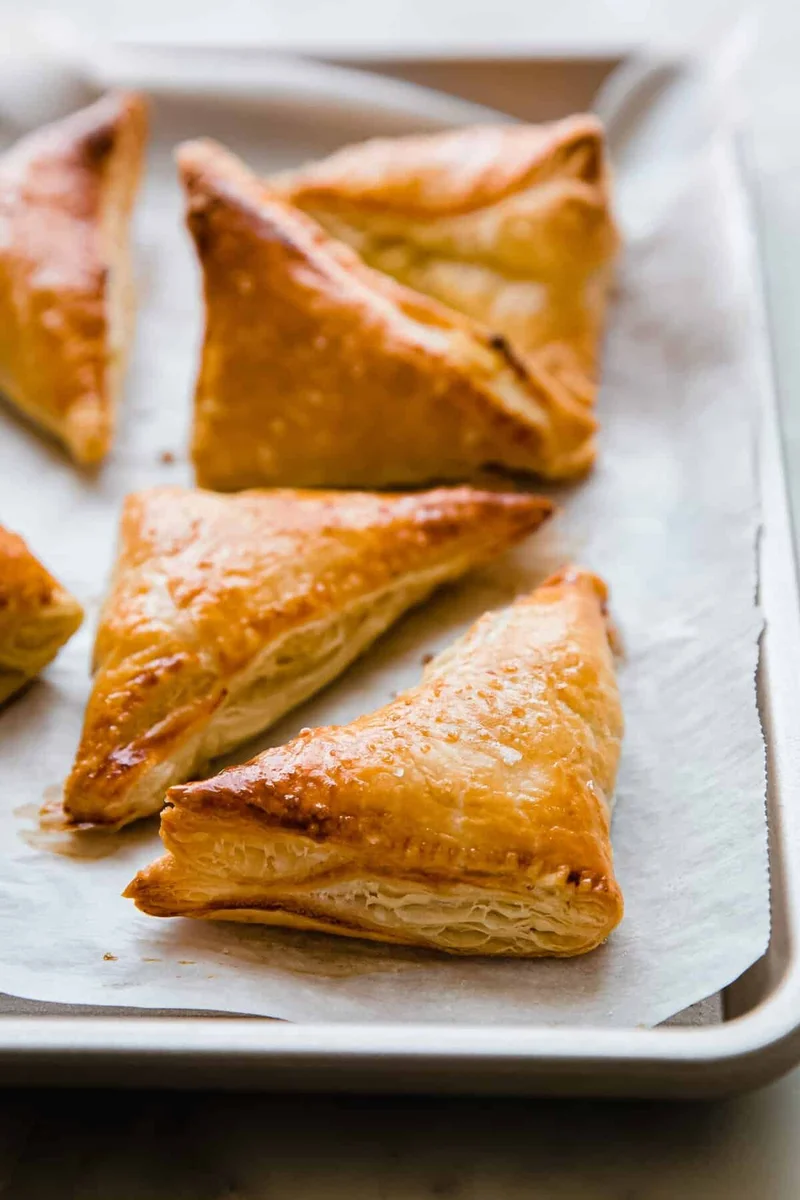
These chicken patties are crisp puff pastry parcels filled with a creamy, seasoned chicken mixture. They make handy finger food for a gathering, and the assembled pastries can be frozen to bake later.
Ingredients
- 12–15 squares, each 12.7 × 12.7 cm (5 × 5 inches), thawedpuff pastry
- 340 gcooked chicken breast, shredded
- 28 gsalted butter
- 16 gplain flour
- 1–2 tsp (5–10 ml)yellow mustard
- ½ tsp, plus more to tastekosher salt
- ½ tsp, plus more to tastecracked black pepper
- ½ tspgarlic powder
- 180–240 mlwhole or 2% milk
- 1, lightly beatenegg
Instructions
- 1
Make the roux
Warm a sauté pan over medium heat and melt the butter. Add the flour, black pepper and garlic powder, then whisk continuously for 75 seconds to cook the flour. Add 1 tsp mustard and whisk it in.
- 2
Cook the filling
Whisk while slowly pouring in 180 ml milk. Once it begins to simmer, add the chicken and salt and stir to combine and heat through. If the mixture seems very thick, stir in the remaining 60 ml milk. Cook for 1–2 minutes.
- 3
Cool the filling
Once the chicken mixture has thickened, taste it and adjust with more mustard, garlic powder, salt or pepper as needed. Take the pan off the heat; the filling will thicken further as it cools. It can be covered and refrigerated for up to 24 hours before filling the pastry.
- 4
Shape the pastries
Thaw the pastry according to the packet directions. Cut each 12.7 cm square diagonally to make two triangles. Put 1 tablespoon of filling on one side of each triangle, fold the other side over and seal the edges with a pastry crimper or a fork. Repeat with the remaining ingredients.
- 5
Bake until golden
Place a rack in the centre of the oven and heat it to 190°C. Line a baking sheet with baking paper, arrange the pastries on it and brush them lightly with beaten egg. If the pastry feels too soft, refrigerate it for at least 45–60 minutes before baking. Bake for 25–30 minutes, until lightly golden; do not open the oven during the first 15 minutes.
- 6
Freeze for later
Arrange the pastries at least 2.5 cm apart on a baking sheet and freeze for 2–3 hours. Transfer them to a zip-top bag and keep frozen. To bake, brush with beaten egg and bake from frozen for about 27–35 minutes; do not open the oven during the first 15 minutes.
What are chicken patties?
Chicken patties, also called chicken puff pastry, are small filled pastries made by folding pastry around a savoury mixture. This version uses cooked chicken in a creamy sauce, enclosed in flaky puff pastry and baked until golden.
Puff pastry parcels are a familiar party-food format in many places, and this recipe keeps the filling simple and easy to prepare. A quick flour-and-butter roux thickens the milk around the chicken so the filling stays together inside each triangle.
Nutrition and macros by portion
The nutrition label shows one serving as written: 232 calories, 7g protein, 17g carbs, 15g fat.
| Portion | Adjustment | kcal | Protein | Carbs | Fat |
|---|---|---|---|---|---|
| Lighter | Serve fewer with salad | 162 kcal | 5g | 12g | 11g |
| This serving | As written | 232 kcal | 7g | 17g | 15g |
| Hungry | Add another pastry | 348 kcal | 11g | 26g | 23g |
The pastry and flour provide most of the carbohydrates, while butter, pastry and milk contribute much of the fat. Chicken supplies the protein, with smaller amounts also coming from the milk and pastry. Serve a few pastries with vegetables or salad to add freshness and balance the plate.
Build a smooth filling
Roux: Whisk the flour into melted butter with the pepper and garlic powder, cooking it for the full 75 seconds. Keep the mixture moving so the flour cooks without catching on the pan.
Milk: Pour the milk in gradually while whisking to help the sauce turn smooth. Start with 180 ml and add the remaining amount only if the mixture looks significantly thick.
Seasoning: Mustard, salt, pepper and garlic powder bring flavour to the chicken. Taste after cooking and adjust while the filling is still in the pan.
Cool before filling
The filling thickens as it cools, which makes it easier to portion and less likely to run out of the pastry. If making it ahead, cover it and refrigerate for up to 24 hours.
Allow the filling to cool before assembling the pastries. A hot filling can soften the pastry before it has a chance to puff in the oven.
Seal the triangles well
Cut each square from corner to corner to create two triangles, then keep the filling to one side of each triangle. Using 1 tablespoon per pastry gives you a consistent portion and leaves room to seal the edges.
Press the edges firmly with a fork or pastry crimper. Avoid getting filling along the seam, as it can make it harder to close securely.
Watch the pastry, not the clock alone
The pastries are ready when they look lightly golden; the recipe gives a baking time of 25–30 minutes from thawed. If the pastry has become soft during shaping, chill the tray for 45–60 minutes before baking.
Keep the oven closed for the first 15 minutes so the pastry can puff without a sudden drop in oven temperature. Frozen pastries take about 27–35 minutes and are baked without thawing.
Serve as a snack or starter
These pastries work well on a sharing platter as a party snack or starter. For a more substantial plate, serve them with a crisp salad or vegetables.
Because the filling is creamy and the pastry is rich, a fresh, lightly dressed accompaniment offers a useful contrast in texture and flavour.
Recipe notes & tips
- Shred the cooked chicken before starting the sauce so it is ready to stir in.
- Whisk continuously while the flour cooks to keep the roux from catching.
- Begin with 180 ml milk and add the rest only if the filling needs loosening.
- Cool the filling before assembling so it does not soften the pastry.
- Chill soft assembled pastries for 45–60 minutes before baking.
- Leave the oven closed for the first 15 minutes of baking.
Variations
- Extra mustard: Add more mustard to the filling after tasting for a sharper flavour.
- More garlic: Adjust the garlic powder to taste when finishing the filling.
- Peppery filling: Add extra cracked black pepper before assembling.
- Smaller parcels: Cut the pastry into smaller pieces and use less filling in each.
- Make ahead: Prepare and refrigerate the filling for up to 24 hours before shaping.
Common mistakes to avoid
- Lumpy sauce: Add the milk gradually while whisking continuously.
- Under-cooked flour: Cook the roux for the full 75 seconds before adding milk.
- Overfilled pastry: Measure 1 tablespoon of filling for each triangle.
- Loose seams: Keep filling away from the edges and press firmly with a fork or crimper.
- Soft pastry: Chill the assembled pastries for 45–60 minutes before baking.
- Opening the oven early: Keep it closed for the first 15 minutes so the pastry can puff.
How to store
The filling can be covered and refrigerated for up to 24 hours before assembly. Freeze assembled pastries on a tray for 2–3 hours, then transfer them to a zip-top bag; bake from frozen for about 27–35 minutes. Refrigerate leftover baked pastries and reheat in the oven until warmed through and crisp.
Frequently asked questions
Can I make the filling ahead?
Yes. Cover it and refrigerate for up to 24 hours, then use it to fill the pastry.
Can I bake the pastries from frozen?
Yes. Brush them with beaten egg and bake without thawing for about 27–35 minutes. Keep the oven closed for the first 15 minutes.
How do I know when they are done?
Look for pastry that is lightly golden. The recipe gives 25–30 minutes for thawed pastries and about 27–35 minutes from frozen.
Why is my pastry too soft to handle?
It may have warmed during thawing or shaping. Refrigerate the assembled pastries for at least 45–60 minutes before baking.
Can I use a different type of milk?
The recipe specifies whole or 2% milk. The filling may have a different richness if you use another type.
Cook it from the original
This recipe comes from littlespicejar.com. Their page has the author’s own photos, notes and tips — the best place to cook it from.
Open the recipe on littlespicejar.com