
Dulce de Leche Recipe
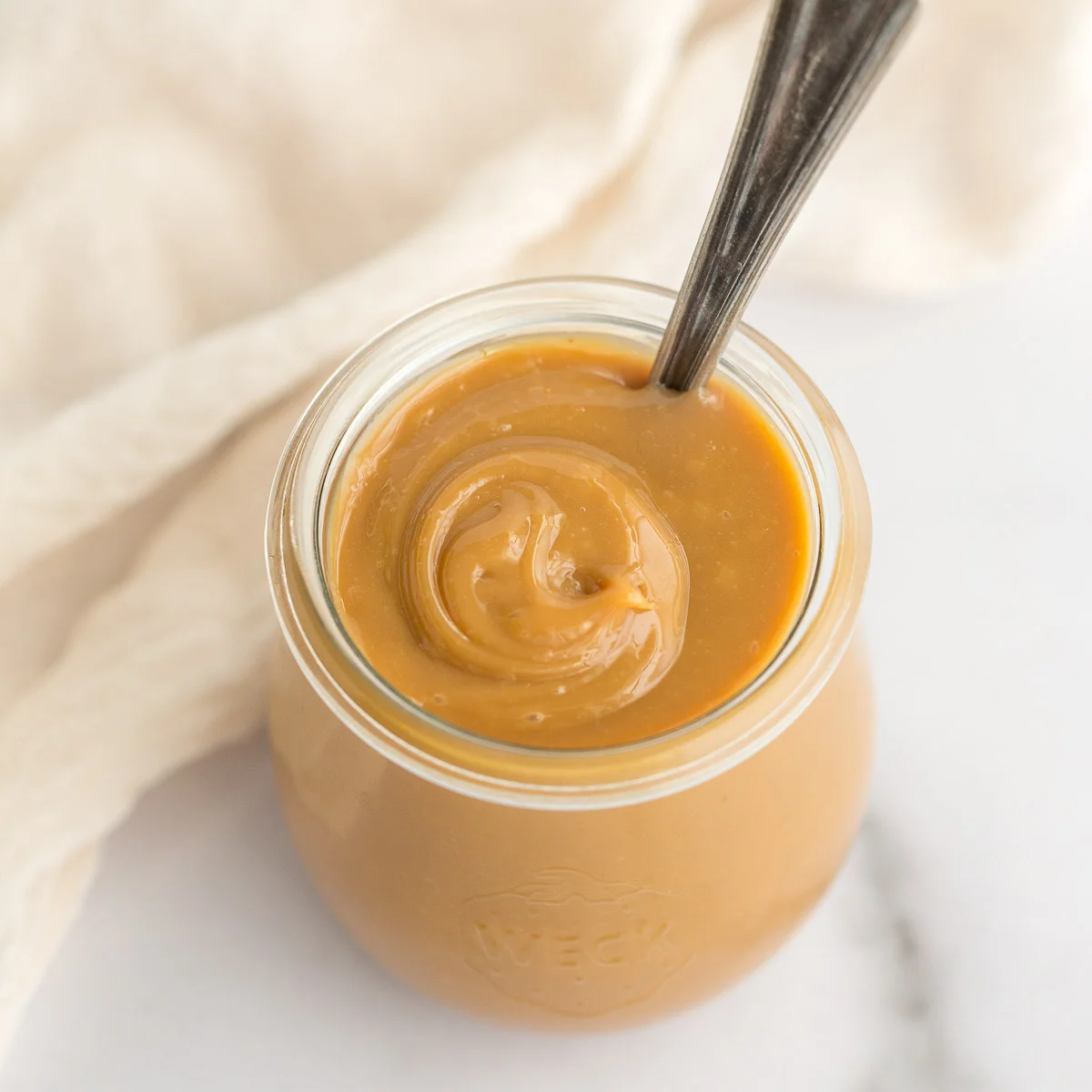
Dulce de leche is a thick, amber milk caramel made here from a single can of sweetened condensed milk. Baking it gently in a water bath gives you a smooth spread or sauce for cakes, fruit and other desserts.
Ingredients
- 1 (397 g [14-ounce]) cansweetened condensed milk
Instructions
- 1
Heat the oven
Bring a large pot of water to the boil on the hob and preheat the oven to 218°C.
- 2
Prepare the milk
Pour the sweetened condensed milk into an 20 cm square baking dish or a 23 cm pie plate, spreading it into an even layer. Cover the dish tightly with foil and set it inside a large roasting tin.
- 3
Add the water
Pour the hot water from the pot into the roasting tin until it comes halfway up the sides of the baking dish.
- 4
Bake until amber
Bake at 218°C for 1 hour 30 minutes to 1 hour 45 minutes, until the mixture has thickened and turned amber. Check the roasting tin about halfway through and add more hot water if needed.
- 5
Whisk until smooth
Take the roasting tin out of the oven and carefully lift out the baking dish. Set it on a wire rack, carefully remove the foil, then whisk the dulce de leche until smooth and leave it to cool completely.
- 6
Chill for storage
Once cool, transfer the dulce de leche to an airtight container and store it in the fridge.
What is dulce de leche?
Dulce de leche is a thick caramel made by slowly heating sweetened milk. It is closely associated with Latin American cooking, though this simple oven method suits a home kitchen anywhere.
Here, sweetened condensed milk cooks in a covered dish set in a water bath. The gentle, even heat helps it deepen in colour and thicken without needing to stir it throughout the bake.
Nutrition and macros by portion
The nutrition label shows one serving as written: 1275 calories, 31g protein, 216g carbs, 35g fat.
| Portion | Adjustment | kcal | Protein | Carbs | Fat |
|---|---|---|---|---|---|
| Lighter | Use a smaller spoonful | 893 kcal | 22g | 151g | 24g |
| This serving | As written | 1275 kcal | 31g | 216g | 35g |
| Hungry | Larger spoonful | 1913 kcal | 47g | 324g | 52g |
The condensed milk supplies most of this recipe’s energy, with carbohydrates largely from its sugars and a smaller share of fat and protein from the milk. Since the stated serving is the entire batch, serve a spoonful alongside fruit or another less-sweet dish rather than treating the whole container as one sitting.
Why use a water bath?
Steady heat: The hot water buffers the baking dish from the oven’s direct heat. This helps the milk cook gradually rather than scorching around the edges.
Water level: Aim for the water to reach halfway up the sides of the dish. Check it partway through baking and top it up with hot water if the level has dropped.
Choosing the baking dish
Square dish: An 20 cm square baking dish spreads the condensed milk into a shallow, even layer.
Pie plate: A 23 cm pie plate is an alternative. Whichever dish you use, make sure it fits inside the roasting tin and can be covered tightly with foil.
How to judge when it is ready
Colour: Look for an amber shade, rather than relying on the clock alone. The recipe gives a baking window of 1 hour 30 minutes to 1 hour 45 minutes.
Texture: The mixture should have thickened by the time it comes out of the oven. Whisk it after baking to smooth it out; it will cool and thicken further as it stands.
Handling the hot dish
Lift carefully: The roasting tin and its water will be very hot, so take care when removing them from the oven. Carefully transfer the baking dish to a wire rack before taking off the foil.
Uncover slowly: Keep your hands clear of the steam as you remove the foil. Whisk the mixture only once the dish is safely on the rack.
Ways to serve it
For spreading: Let the dulce de leche cool completely, then use it as a filling or spread for cakes and biscuits.
For spooning: Add it to fruit or other desserts as a topping. Its concentrated sweetness means a small spoonful can bring plenty of caramel flavour.
Recipe notes & tips
- Cover the baking dish tightly with foil to keep water from entering the condensed milk.
- Use hot water in the roasting tin so the water bath is ready to work as soon as it goes into the oven.
- Check the water level about halfway through the bake and replenish it with hot water if necessary.
- Whisk the dulce de leche after baking to remove any unevenness in its texture.
- Let it cool completely before transferring it to its storage container.
Variations
- Cake filling: Spread the cooled dulce de leche between cake layers for a caramel filling.
- Fruit topping: Spoon a little over sliced fruit for a sweet finish.
- Biscuit spread: Use it between biscuits or spread it onto plain biscuits.
- Dessert drizzle: Warm a small amount gently until it is easier to spoon over a dessert.
- Swirled topping: Fold a spoonful through another dessert just before serving for ribbons of caramel.
Common mistakes to avoid
- Loose foil: Water can get into the milk; crimp the foil firmly around the baking dish.
- Low water bath: The dish may not heat as gently; bring the water halfway up its sides and top it up if needed.
- Skipping the water check: The level can fall during baking; check the roasting tin about halfway through.
- Relying only on time: Ovens and dishes can vary; look for a thickened mixture and amber colour within the stated baking window.
- Removing the foil carelessly: Hot steam can escape; uncover the dish cautiously once it is on the wire rack.
How to store
After it has cooled completely, keep the dulce de leche in an airtight container in the fridge and use it within about 2 weeks. Stir it before serving; warm a small portion gently if you would like it softer.
Frequently asked questions
Can I use a different baking dish?
Yes. The recipe allows either a 20 cm square baking dish or a 23 cm pie plate. It should fit inside the roasting tin and be safe to use in the oven.
Why does the dish need to be covered with foil?
The foil covers the condensed milk during baking and helps keep water from splashing into it. Seal it tightly around the dish.
How do I know when the dulce de leche is done?
It should be thickened and amber after 1 hour 30 minutes to 1 hour 45 minutes at 218°C. Check the colour and texture as well as the time.
What if the water bath runs low?
Carefully add more hot water to the roasting tin, keeping it around halfway up the sides of the baking dish. Check the level about halfway through baking.
Why whisk it after baking?
Whisking helps make the cooked mixture smooth. Do this after removing the foil and setting the dish on a wire rack.
Can I use it straight from the oven?
Let it cool completely first, as directed. It will thicken as it cools and can then be transferred to an airtight container.
Cook it from the original
This recipe comes from livewellbakeoften.com. Their page has the author’s own photos, notes and tips — the best place to cook it from.
Open the recipe on livewellbakeoften.com