
Marbled Christmas Bundt Cake
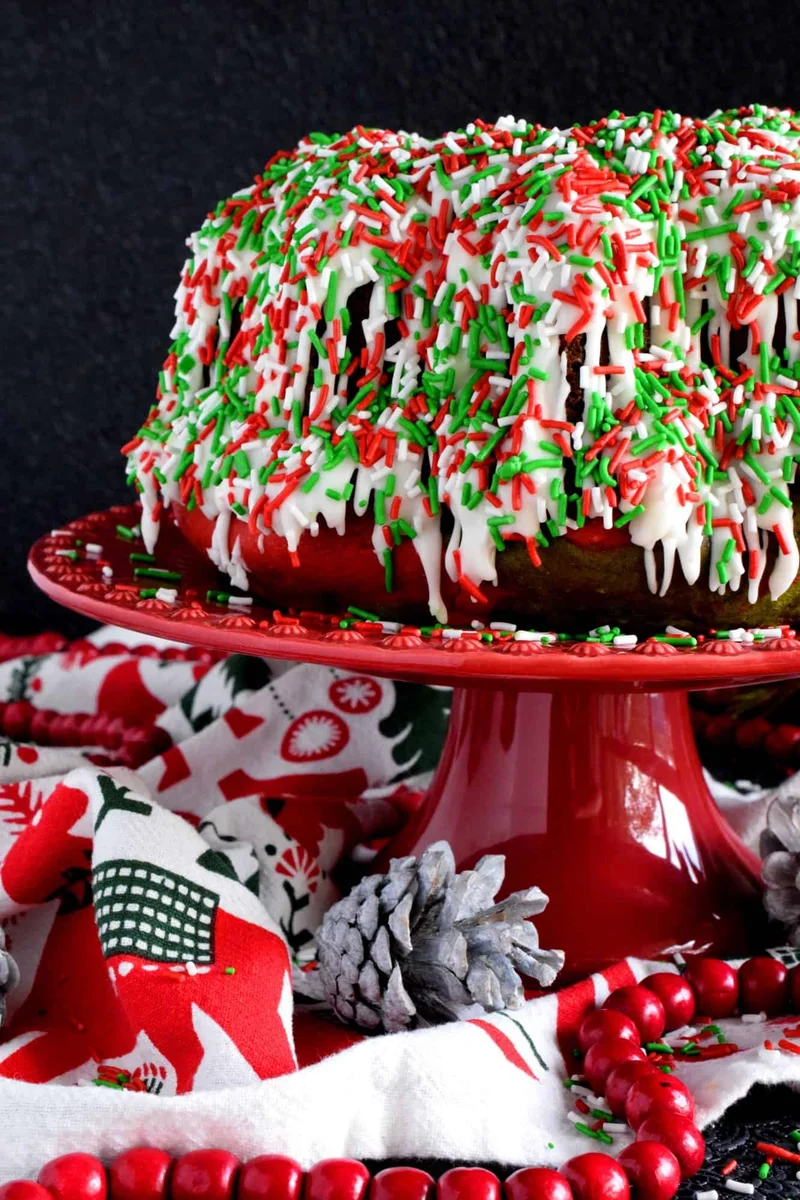
This festive Bundt cake has red and green marbled sponge, a simple icing sugar glaze and Christmas sprinkles. Greek yoghurt helps keep the crumb soft, making it a cheerful centrepiece to share.
Ingredients
- 170 g (¾ cup)butter, softened
- 250 g (1¼ cups)sugar
- 3 largeeggs, at room temperature
- 360 g (1½ cups)plain Greek yoghurt
- 10 ml (2 teaspoons)vanilla extract
- 375 g (3 cups)plain flour
- 6 g (1½ teaspoons)baking powder
- 7 g (1½ teaspoons)bicarbonate of soda
- 1 teaspoonsalt
- 1red food colouring
- 1green food colouring
- 480 g (4 cups)icing sugar
- 60 ml (4 tablespoons)milk
- 80 g (½ cup)Christmas-themed sprinkles
Instructions
- 1
Prepare the tin
Heat the oven to 175°C (350°F). Coat the inside of a Bundt tin generously with non-stick cooking spray and set it aside.
- 2
Cream butter and sugar
Beat the butter and sugar together in a stand mixer until creamy.
- 3
Add the eggs
Scrape down the bowl, then add the eggs one at a time, beating well after each addition.
- 4
Mix in yoghurt
Take the bowl off the mixer. Add the vanilla and yoghurt, then fold them into the butter mixture with a spatula until combined.
- 5
Add dry ingredients
Return the bowl to the mixer. Add the flour, baking powder, bicarbonate of soda and salt, then mix on low just until the flour is incorporated. Do not overmix.
- 6
Colour the batter
Divide the batter evenly between two bowls. Colour one red and the other green, stirring each with a separate spatula until evenly mixed.
- 7
Fill the tin
Using separate tablespoons or small scoops, drop alternating spoonfuls of red and green batter into the prepared Bundt tin until it is all used.
- 8
Settle the batter
Tap the tin firmly on a cutting board to help the thick batter settle into the tin and level out.
- 9
Bake the cake
Bake for 55 minutes. Test the centre with a wooden toothpick; if it comes out clean, the cake is ready. If it has wet batter on it, bake for another 5 minutes and test again.
- 10
Cool the cake
Set the tin on a wire rack and leave the cake to cool in it for 15 minutes. Turn the cake out onto the rack and leave it to cool completely.
- 11
Glaze and decorate
Once the cake is completely cool, whisk the icing sugar and milk until smooth and creamy. Pour the glaze over the cake, add the sprinkles and leave it for a few minutes so the glaze can firm up before serving.
What is a marbled Christmas Bundt cake?
A Bundt cake is baked in a ring-shaped tin, a format popular in North American home baking. This festive version colours the batter red and green, then layers the colours in the tin for a marbled effect.
Yoghurt adds moisture and a gentle tang, while the icing sugar glaze and sprinkles give the cake its celebratory finish.
Nutrition and macros by portion
The nutrition label shows one serving as written: 331 calories, 6g protein, 54g carbs, 10g fat.
| Portion | Adjustment | kcal | Protein | Carbs | Fat |
|---|---|---|---|---|---|
| Lighter | Smaller cake slice | 232 kcal | 4g | 38g | 7g |
| This serving | As written | 331 kcal | 6g | 54g | 10g |
| Hungry | Larger cake slice | 497 kcal | 9g | 81g | 15g |
The flour and sugar provide most of the carbohydrates, while butter contributes much of the fat. Eggs and Greek yoghurt contribute protein, with smaller amounts also coming from the flour and milk. Pair a slice with fresh fruit if you want to add a lighter, refreshing side.
The ingredients that matter
Room-temperature eggs: These blend more readily into the creamed butter and sugar. Add them gradually and beat well after each one.
Greek yoghurt: Its thick texture contributes to the soft, moist crumb. Use plain yoghurt so the vanilla and festive colours remain the main flavours.
Food colouring: Use separate bowls and spatulas for the red and green batters to keep the colours distinct before they go into the tin.
How to get a good marble
Alternating spoonfuls: Drop the colours into the tin in turns rather than mixing them together first. This creates patches of colour through the cake.
Gentle settling: Tap the filled tin firmly on a cutting board, as directed, to help the thick batter settle into the ring shape. Avoid stirring the colours once they are in the tin.
Mix for a tender crumb
Cream the butter and sugar until creamy, then mix in the eggs one at a time. Fold in the yoghurt and vanilla before adding the dry ingredients.
Stop the mixer as soon as the flour is incorporated. Overmixing at this stage can make the finished cake less tender.
Check the cake is baked
The recipe gives a baking time of 55 minutes, but the toothpick test is the clearest cue provided. Insert a wooden toothpick into the centre of the cake; it should come out clean.
If wet batter clings to it, return the cake to the oven for 5 minutes and test again. Let the cake rest in the tin for 15 minutes before turning it out.
Glaze and serve
Wait until the cake has cooled completely before adding the glaze, or it may run off rather than sit on top. Whisk the icing sugar and milk until smooth, then pour it over the cake.
Add the Christmas sprinkles while the glaze is still soft so they adhere. Serve as a centrepiece cake or cut into slices for a festive snack.
Recipe notes & tips
- Bring the eggs to room temperature before mixing so they are easier to incorporate.
- Scrape down the mixer bowl after creaming to catch any butter or sugar clinging to the sides.
- Use a separate spatula for each colour to avoid muddying the batter.
- Tap the filled tin firmly on a cutting board to help the batter settle into the ring.
- Let the cake cool completely before pouring on the glaze.
- Add the sprinkles soon after glazing, while the surface is still tacky.
Variations
- Different colours: Use other food-colouring shades for a different celebration.
- Vanilla finish: Add a little more vanilla to the glaze for a stronger vanilla note.
- Citrus glaze: Replace some of the milk with lemon juice for a tangier topping.
- Plain decoration: Leave off the sprinkles for a simpler glazed cake.
- Single-colour cake: Colour all the batter one shade instead of dividing it.
Common mistakes to avoid
- Overmixing the flour: The crumb can turn less tender; stop as soon as the flour is incorporated.
- Combining the colours too soon: The batter may lose its distinct marbling; keep the mixtures separate until spooning them into the tin.
- Skipping the tin preparation: The cake may stick; coat the inside of the Bundt tin generously with non-stick cooking spray.
- Turning it out immediately: The warm cake may break; leave it in the tin for 15 minutes first.
- Glazing while warm: The glaze can run off; wait until the cake has cooled completely.
- Underbaking: Wet batter on the toothpick means the centre needs more time; bake for another 5 minutes and test again.
How to store
Store the cake covered at room temperature for up to 3 days. If chilled, bring slices back to room temperature before serving; the recipe does not specify a reheating method.
Frequently asked questions
Can I make the cake without a stand mixer?
Yes. Use a hand mixer to cream the butter and sugar and beat in the eggs. Fold in the yoghurt and dry ingredients with a spatula, taking care not to overmix.
How do I know when the cake is done?
Insert a wooden toothpick into the centre. If it comes out clean, the cake is ready; if wet batter remains, bake for another 5 minutes and check again.
When should I remove the cake from the Bundt tin?
Leave it in the tin on a wire rack for 15 minutes after baking, then turn it out onto the rack to finish cooling.
Can I use ordinary yoghurt instead of Greek yoghurt?
The recipe specifies plain Greek yoghurt. Ordinary yoghurt may be thinner, so the batter's consistency could differ.
When should I add the sprinkles?
Scatter them over the glaze straight after pouring it on, while the glaze is still soft enough for them to stick.
Cook it from the original
This recipe comes from lordbyronskitchen.com. Their page has the author’s own photos, notes and tips — the best place to cook it from.
Open the recipe on lordbyronskitchen.com