
Easy Pavlova Recipe
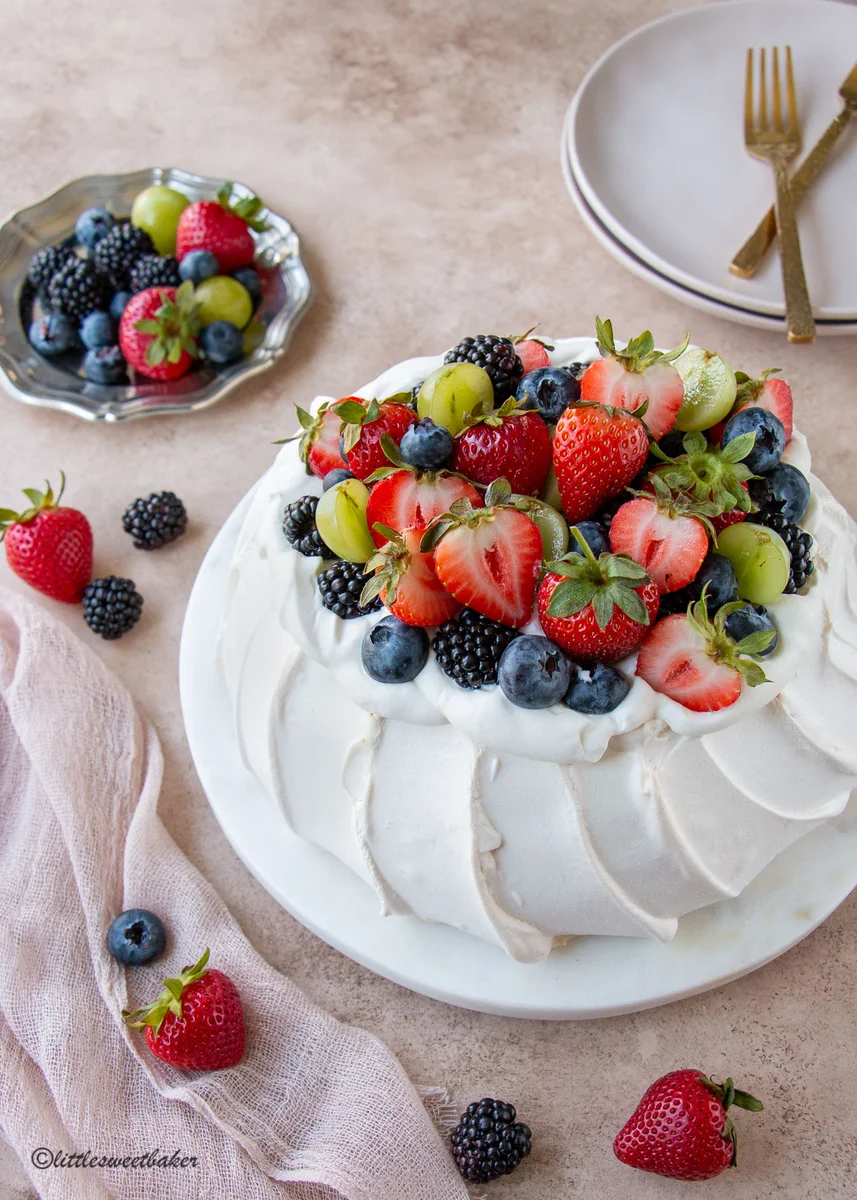
This Australian and New Zealand favourite pairs a crisp meringue shell with a soft, marshmallow-like centre, whipped cream and fresh fruit. It makes a striking dessert for a gathering, and most of the baking time is hands-off.
Ingredients
- 6 largeegg whites, at room temperature
- 300 ggranulated sugar
- 2 tspcornstarch
- 1 tspwhite vinegar
- 1 tspvanilla extract
- 240 ml (1 cup)heavy whipping cream
- 3 tbsppowdered sugar
- 1/2 tspvanilla extract
- 300–450 g (2–3 cups)mixed fruit, such as strawberries, blueberries, blackberries and green grapes
Instructions
- 1
Prepare the oven
Heat the oven to 150°C. Draw a 20 cm circle on a sheet of baking parchment and set it aside.
- 2
Whisk the egg whites
In a large mixing bowl, beat the egg whites until soft peaks form and curl over. Add the sugar gradually, one tablespoon at a time, whisking as you go; the meringue will become glossy. Keep mixing until all the sugar has been added.
- 3
Mix the slurry
Stir the cornstarch and vinegar together in a small bowl to make a slurry. Mix it into the meringue with the vanilla.
- 4
Finish the meringue
Keep beating until the sugar has dissolved—the mixture should feel smooth when rubbed between your fingers—and stiff peaks form that hold their shape when the beater is lifted.
- 5
Shape the base
Dab a little meringue onto each of the four corners of a baking sheet to hold the parchment in place. Put the prepared parchment on top with the pencil or pen marks facing down, then pile the meringue in the centre of the circle.
- 6
Form the pavlova
Using an offset spatula or large spoon, spread the meringue to the edge of the drawn 20 cm circle. Make a shallow furrow around the edge, smooth the top edges, then create a dip in the centre.
- 7
Bake and cool
Put the pavlova in the oven, close the door and lower the temperature to 95°C. Bake for 90 minutes. Turn off the oven and let the pavlova cool slowly inside, with the door closed, for 4 hours or overnight.
- 8
Whip the cream
Just before serving, beat the cream with the powdered sugar and vanilla until medium or stiff peaks form.
- 9
Top and serve
Spoon the whipped cream over the pavlova and arrange the fruit on top. Cut into slices with a sharp serrated knife.
What is pavlova?
Pavlova is a meringue-based dessert closely associated with Australia and New Zealand. Its crisp shell and soft, marshmallow-like middle are topped with cream and fruit.
This version uses cornstarch and vinegar in the meringue, then bakes it slowly and cools it in the switched-off oven. The cream and fruit go on just before serving, keeping the topping fresh.
Nutrition and macros by portion
The nutrition label shows one serving as written: 245 calories, 3g protein, 40g carbs, 9g fat.
| Portion | Adjustment | kcal | Protein | Carbs | Fat |
|---|---|---|---|---|---|
| Lighter | Less cream, more fruit | 172 kcal | 2g | 28g | 6g |
| This serving | As written | 245 kcal | 3g | 40g | 9g |
| Hungry | Larger pavlova slice | 368 kcal | 5g | 60g | 14g |
The meringue’s sugar supplies most of the carbohydrates, while the cream contributes much of the fat and a little protein. The egg whites also provide protein, and the fruit adds carbohydrates; serve a slice with extra fresh fruit if you want a more fruit-forward plate.
Building a stable meringue
Room-temperature whites: they are easier to whip to volume, so separate the eggs carefully and keep the yolks out of the bowl.
Gradual sugar: add it a tablespoon at a time after soft peaks form. This gives the sugar time to incorporate and helps create a glossy mixture.
Cornstarch and vinegar: combine them into a slurry before adding. The recipe uses this mixture along with vanilla to support the pavlova’s soft centre.
Shaping the base
Parchment: draw a 20 cm circle and turn the marked side down before adding the meringue, so the pencil or pen does not touch it.
Raised edge: shape the meringue to the outline, then make a furrow around the sides and a dip in the centre. This leaves a hollow for the cream and fruit.
Baking and cooling
Oven change: begin at 150°C, then reduce the heat to 95°C once the pavlova is in the oven. Bake for 90 minutes without opening the door.
Slow cooling: leave the oven closed after switching it off and let the pavlova cool for 4 hours or overnight. This gradual cool-down is part of the recipe’s method.
Checking the texture
Before baking, the meringue should feel smooth between your fingers once the sugar has dissolved, and hold a stiff peak when the beater is lifted.
After baking and cooling, handle the shell gently. Its outside is meant to be crisp, while the inside stays softer; use a serrated knife when slicing.
Cream and fruit topping
Whip the cream just before serving with the powdered sugar and vanilla, stopping when it reaches medium or stiff peaks. Spoon it onto the cooled pavlova rather than spreading it in advance.
Strawberries, blueberries, blackberries and green grapes are suggested choices. Arrange the fruit over the cream shortly before bringing the dessert to the table.
Serving the pavlova
The recipe makes 10 servings and is best assembled just before serving, once the base has cooled completely.
Serve it on its own as a centrepiece dessert, or alongside fresh fruit. A sharp serrated knife helps cut through the shell without pressing down too heavily.
Recipe notes & tips
- Use a clean mixing bowl and keep the egg whites free of yolk.
- Add the sugar slowly, one tablespoon at a time, after the whites reach soft peaks.
- Rub a little meringue between your fingers to check that the sugar has dissolved.
- Turn the parchment marked-side down before piling on the meringue.
- Wait until just before serving to add the cream and fruit.
- Use a serrated knife and a gentle sawing motion to slice the shell.
Variations
- Strawberry topping: use sliced strawberries as the main fruit.
- Berry medley: top the cream with blueberries and blackberries.
- Grape topping: add green grapes alongside the berries.
- Mixed fruit: combine strawberries, blueberries, blackberries and grapes as suggested.
- Vanilla cream: keep the recipe’s vanilla in the whipped cream for a simple flavour pairing.
Common mistakes to avoid
- Adding sugar too quickly: it may not incorporate evenly; add it one tablespoon at a time.
- Leaving sugar undissolved: the meringue will feel grainy; continue beating until it feels smooth between your fingers.
- Using the wrong side of the parchment: pencil or pen could touch the meringue; place the marked side down.
- Opening the oven during baking: follow the method and keep the door closed while the pavlova bakes.
- Cooling it too quickly: leave it in the switched-off oven with the door closed for 4 hours or overnight.
- Topping too early: the cream and fruit are best added just before serving.
How to store
Keep the baked, untopped pavlova covered in a cool, dry place and add the cream and fruit just before serving. Once topped, refrigerate leftovers and eat them as soon as practical; the shell will soften over time. This dessert is not suited to reheating.
Frequently asked questions
Can I make the pavlova base ahead?
Yes. Bake it, then leave it to cool in the switched-off oven for 4 hours or overnight as directed. Add the cream and fruit just before serving.
How can I tell when the meringue is ready to bake?
The sugar should feel dissolved when you rub a little mixture between your fingers, and the meringue should hold a stiff peak when you lift the beater.
Why does the recipe start at a higher oven temperature?
The method starts at 150°C, then lowers the oven to 95°C after the pavlova goes in. Follow both temperatures and bake for 90 minutes.
Can I use different fruit?
Yes. The recipe calls for 2–3 cups of mixed fruit and suggests strawberries, blueberries, blackberries and green grapes.
When should I add the topping?
Whip the cream and add the fruit just before serving. This avoids leaving the topping on the meringue for longer than necessary.
How do I slice pavlova neatly?
Use a sharp serrated knife and cut gently with a sawing motion, rather than pressing hard through the crisp shell.
Cook it from the original
This recipe comes from littlesweetbaker.com. Their page has the author’s own photos, notes and tips — the best place to cook it from.
Open the recipe on littlesweetbaker.com