
Pesto Cavatappi
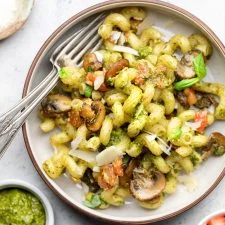
Pesto cavatappi is a quick Italian-American pasta dish tossed with basil pesto, browned mushrooms and tomato. It comes together in about 25 minutes, making it a handy choice for a flavourful weeknight dinner.
Ingredients
- 340 g (¾ pound)cavatappi pasta
- 45 ml (3 tablespoons)olive oil
- About 480 ml (2 heaping cups)sliced baby portobello mushrooms
- 2 clovesgarlic, minced
- 1 large tomato (about 240 ml/1 cup when chopped)tomato, chopped
- 60 ml (¼ cup)basil pesto
- To tastesalt and pepper
- 60 ml (¼ cup)shredded or shaved Parmesan cheese, for garnish
Instructions
- 1
Cook the pasta
Cook the cavatappi in very salty water until al dente.
- 2
Heat the oil
As the pasta cooks, warm the olive oil in a large skillet over medium heat.
- 3
Brown the mushrooms
Add the mushrooms and sauté, stirring occasionally, for about 6–8 minutes, until they have shrunk and started to brown.
- 4
Cook the garlic
Stir in the garlic and cook for 1–2 minutes, stirring frequently, until softened and fragrant.
- 5
Add tomato seasoning
Season with salt and pepper, then add the tomatoes and stir. Turn the heat to low and cook, stirring frequently, until the pasta is ready.
- 6
Toss with pesto
Drain the pasta, then add it and the pesto to the skillet. Toss to combine, taste and add salt if needed.
- 7
Finish and serve
Top with Parmesan and serve immediately.
What is pesto cavatappi?
Cavatappi is a corkscrew-shaped pasta, and pesto cavatappi pairs it with the herb-rich sauce associated with Italian cooking. This Italian-American version adds mushrooms and tomato for a simple, hearty skillet meal.
The short method makes it practical for a weeknight: the vegetables cook while the pasta boils, then everything is tossed together just before serving.
Nutrition and macros by portion
The nutrition label shows one serving as written: 510 calories, 15g protein, 68g carbs, 20g fat.
| Portion | Adjustment | kcal | Protein | Carbs | Fat |
|---|---|---|---|---|---|
| Lighter | More mushrooms, less pasta | 357 kcal | 11g | 48g | 14g |
| This serving | As written | 510 kcal | 15g | 68g | 20g |
| Hungry | Larger pasta portion | 765 kcal | 23g | 103g | 30g |
The cavatappi provides most of the carbohydrates, while olive oil and pesto contribute much of the fat. Pasta, mushrooms and Parmesan contribute protein, with Parmesan also adding fat and salt. Balance the plate with a generous serving of salad or vegetables alongside the pasta.
Choosing the ingredients
Cavatappi: its ridges and curves help catch pesto, and its firm shape holds up well when tossed with vegetables.
Mushrooms and tomato: baby portobellos bring an earthy, savoury note, while chopped tomato adds freshness and moisture. Use ripe but firm tomato so it holds some shape in the skillet.
Pesto and Parmesan: pesto supplies basil, oil and seasoning in one addition, while Parmesan gives the finished pasta a salty, savoury topping.
Build flavour in the skillet
Brown the mushrooms: give them 6–8 minutes over medium heat, stirring occasionally, so they can lose moisture and develop colour. If they are crowded together, they may soften without browning.
Add garlic later: it needs only 1–2 minutes to soften and release its aroma. Stir frequently and keep the heat moderate so it does not burn.
Get the pasta texture right
Al dente: cook the cavatappi until it is tender but still has a little bite, following the packet timing as a guide. It will be tossed again in the skillet, so avoid cooking it until very soft.
Reserve the finish for the skillet: drain the pasta and toss it with the pesto and vegetables while hot. Taste before adding more salt, since pesto and Parmesan can already be salty.
Coordinate the timing
Start the pasta and skillet close together so the mushrooms, garlic and tomato are ready around the time the cavatappi is done. Keep the skillet on low while the pasta finishes.
The recipe gives 25 minutes total, with 6–8 minutes for browning the mushrooms and a further 1–2 minutes for the garlic. Serve straight after tossing for the best texture.
Serving ideas
A crisp green salad or simply dressed leafy greens make a fresh contrast to the pesto and Parmesan. Steamed or roasted vegetables also work alongside the pasta.
For a more substantial meal, serve it with grilled chicken or white beans. Add these separately rather than changing the skillet method.
Recipe notes & tips
- Salt the pasta water generously so the cavatappi is seasoned from within.
- Stir the mushrooms now and then, but leave them undisturbed long enough to brown.
- Keep an eye on the garlic and stir frequently during its short cooking time.
- Cut the tomato into similar-sized pieces so it softens evenly.
- Taste the pasta after adding pesto before deciding whether it needs more salt.
- Serve immediately after adding the Parmesan.
Variations
- Add spinach: stir a handful into the skillet at the end until just wilted.
- Include courgette: sauté sliced courgette with the mushrooms until tender.
- Make it spicy: add a pinch of chilli flakes with the garlic.
- Use another pasta: swap in a similarly sized short shape that catches the pesto.
- Add white beans: fold in drained beans with the pasta for a more filling variation.
Common mistakes to avoid
- Crowding the mushrooms: they can steam instead of brown; use a large skillet and spread them out.
- Burning the garlic: it cooks quickly; stir it frequently and keep the heat at medium.
- Overcooking the pasta: it softens further when tossed; drain it while still al dente.
- Adding too much salt: pesto and Parmesan are seasoned; taste the finished mixture before adjusting.
- Leaving the finished pasta to sit: the sauce can cling and the pasta can cool; serve as soon as it is tossed.
How to store
Refrigerate leftovers in an airtight container for up to 3 days. Reheat gently in a skillet or microwave, adding a small splash of water if the pasta seems dry; the texture is best freshly made.
Frequently asked questions
Can I use a different pasta shape?
Yes. Choose a short pasta with curves or ridges, such as fusilli or rotini, so it can hold the pesto.
Can I use a different type of mushroom?
Yes. Button or cremini mushrooms can be used in place of baby portobellos; slice them and cook until browned and reduced.
How do I keep the mushrooms from becoming watery?
Use a large skillet, avoid crowding the pan and let the mushrooms cook until their released moisture has evaporated and they begin to brown.
Can I make this ahead?
It is best served straight after cooking. You can prepare the chopped vegetables in advance, then cook and toss the pasta just before serving.
How can I make the dish vegetarian?
Check that the pesto and Parmesan are made without animal rennet, as some versions contain it. Choose vegetarian alternatives if needed.
Can I use homemade pesto?
Yes. Use 60 ml (¼ cup), then taste the dish before adding more salt because pesto seasoning varies.
Cook it from the original
This recipe comes from lifeasastrawberry.com. Their page has the author’s own photos, notes and tips — the best place to cook it from.
Open the recipe on lifeasastrawberry.com