
Small Batch Cinnamon Rolls
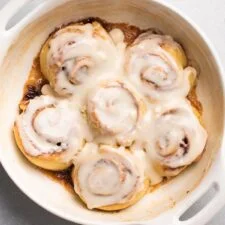
These small-batch cinnamon rolls are soft, sweet spirals filled with cinnamon sugar and finished with a cream cheese icing. The recipe makes six rolls, so it’s a good fit for a smaller gathering or a weekend treat without a large batch left over.
Ingredients
- 4 g (1 teaspoon)active dry yeast
- 50 g (60 ml; ¼ cup)warm milk
- 40 g (2 tablespoons)honey
- 1egg, lightly beaten
- 43 g (3 tablespoons)unsalted butter, melted
- 180 g (about 1½ cups, scooped and levelled)plain flour
- 1 g (¼ teaspoon)kosher salt
- 28 g (2 tablespoons)unsalted butter, melted
- 45 g (3 tablespoons)brown sugar
- 45 g (3 tablespoons)sugar
- 9 g (2 tablespoons)ground cinnamon
- 1 teaspoonunsalted butter, softened, for greasing the baking dish
- 30 ml (2 tablespoons)double cream
- 110 g (about 1 cup)icing sugar
- 2 g (½ teaspoon)vanilla extract
- 20 g (about 2 tablespoons)cream cheese
- 15–30 ml (1–2 tablespoons)milk
- A pinchkosher salt
Instructions
- 1
Activate the yeast
In a medium mixing bowl, stir together the warm milk, yeast and honey. Leave for 5–10 minutes, until the mixture looks soft and foamy.
- 2
Mix the dough
Add the egg, 43 g melted butter and flour to the bowl. Stir until almost combined, then add the salt and mix until no dry flour remains.
- 3
Knead the dough
If you like, transfer the dough to a large cutting board and knead with clean hands for 1–2 minutes, until smooth. It should feel tacky but not sticky; kneading makes it smoother and easier to roll, but is optional.
- 4
Let dough rise
Return the dough to the bowl and cover it with a clean tea towel. Leave at room temperature for 1 hour, until it has puffed up and looks a little smoother; it may not rise dramatically.
- 5
Mix the filling
In a small bowl, mix the brown sugar, sugar and cinnamon. Set aside.
- 6
Roll the dough
Turn the risen dough onto a lightly floured cutting board, unless kneading means it does not need extra flour. Roll it gently into a rough rectangle about 20 cm long and 6 mm thick.
- 7
Add the filling
Spread the 28 g melted butter evenly over the dough, right to the edges. Scatter the cinnamon sugar mixture over the butter, leaving about 6 mm clear along one long edge.
- 8
Shape the log
Starting at a long edge, roll the dough gently into a log, keeping it as tight as you can without tearing it. Pinch the seam to seal; the log should be about 15–20 cm long. If it is too long and thin, press the ends gently towards the centre.
- 9
Cut the rolls
Use a sharp knife or a strand of dental floss to cut the log into 6 equal pieces, each about 2.5–5 cm thick.
- 10
Arrange and rise
Grease the inside of a small baking dish with the softened butter, or use cooking spray. Arrange the rolls with 2.5–5 cm of space between them, cover with a clean tea towel and leave to rise for 30 minutes while the oven heats.
- 11
Heat the oven
Preheat the oven to 180°C.
- 12
Brush and bake
When the rolls have risen slightly and the oven is hot, brush their tops with a little double cream. Bake for 20–25 minutes, until risen and just beginning to brown.
- 13
Cool the rolls
Remove the baking dish from the oven and leave the rolls to cool for at least 15 minutes before making the icing.
- 14
Start the icing
In a medium mixing bowl, combine the vanilla extract and cream cheese, using a hand mixer, spoon or whisk. Add the icing sugar and stir; the mixture may be a little lumpy at this stage.
- 15
Finish the icing
Add the milk a tablespoon at a time, stirring well after each addition, until the icing is smooth and has the consistency you want.
- 16
Ice and serve
Spread the icing over the rolls while they are slightly warm, or wait until they have cooled completely. Serve and enjoy.
What are cinnamon rolls?
Cinnamon rolls are enriched yeasted buns rolled around a sweet, spiced filling and baked until soft. They are a familiar American bake, often served warm with icing.
This small-batch version makes six rolls rather than a full tray. Honey, egg and butter enrich the dough, while cream cheese gives the icing a tangy finish.
Nutrition and macros by portion
The nutrition label shows one serving as written: 391 calories, 5g protein, 64g carbs, 14g fat.
| Portion | Adjustment | kcal | Protein | Carbs | Fat |
|---|---|---|---|---|---|
| Lighter | Use less icing | 274 kcal | 4g | 45g | 9g |
| This serving | As written | 391 kcal | 5g | 64g | 14g |
| Hungry | Serve two rolls | 587 kcal | 8g | 96g | 20g |
The flour and sugars provide most of the carbohydrates, while the butter, cream and cream cheese contribute much of the fat. The egg and dairy add some protein; pair a roll with fruit and plain yoghurt for a more balanced plate.
A dough that stays soft
Yeast: Give the milk, yeast and honey 5–10 minutes to turn foamy before adding the other dough ingredients. That visible foam is a useful sign the yeast has activated.
Flour: Measure the flour by weight if possible. The dough should be tacky, not sticky; optional kneading for 1–2 minutes makes it smoother and easier to shape.
Getting a neat swirl
Filling: Spread the melted butter evenly, then scatter the cinnamon sugar across it. Leave a narrow uncovered strip along one long edge so the seam can seal.
Rolling: Roll slowly and firmly without stretching or tearing the dough. Pinch the seam closed, then cut the log with a sharp knife or dental floss for six pieces.
Rise and spacing
First rise: The dough may only puff up a little during its hour at room temperature. Look for a smoother, slightly expanded appearance rather than expecting it to double.
Second rise: Leave 2.5–5 cm between rolls in the greased dish and let them sit for 30 minutes as the oven preheats. They should look a little fuller before baking.
Bake to a gentle golden colour
Cream: Brushing the tops with double cream before baking adds a rich finish. Bake at 180°C for 20–25 minutes.
Doneness: The rolls should have risen and only just begun to brown. Leave them to cool for at least 15 minutes before icing, so the topping can be spread without immediately running off.
Icing and serving
Smooth icing: Mix the cream cheese and vanilla first, then stir in the icing sugar. Add milk gradually until the icing is smooth and reaches your preferred thickness.
Serving: A thin drizzle suits warm rolls, while thicker icing is easier to spread over fully cooled buns. Serve them as they are or alongside coffee, tea or fresh fruit.
Recipe notes & tips
- Use warm rather than hot milk when mixing with the yeast.
- Weigh the flour for a consistent dough texture.
- Flour the board lightly so the dough can be rolled without sticking.
- Leave the narrow uncovered strip along the long edge to help seal the log.
- Add the icing milk gradually so you can control its thickness.
- Let the baked rolls cool for at least 15 minutes before icing.
Variations
- Extra spice: Add a little ground nutmeg to the cinnamon sugar.
- Nutty filling: Scatter chopped pecans over the buttered dough before rolling.
- Raisin swirl: Sprinkle raisins over the cinnamon sugar before forming the log.
- Thicker topping: Use less milk in the icing for a spreadable finish.
- Simple finish: Leave off the icing and serve the rolls warm.
Common mistakes to avoid
- Milk too hot: It can stop the yeast working; use warm milk.
- Too much flour: The dough can turn dry and stiff; weigh the flour and add only a light dusting to the board.
- Loose rolling: The spirals can unfurl; roll snugly without tearing the dough and pinch the seam closed.
- Crowded dish: Rolls may have less room to expand; leave 2.5–5 cm between them.
- Overbaking: The rolls can dry out; check from 20 minutes and remove them when just beginning to brown.
- Icing too thin: It may run off the rolls; add milk a little at a time and stop when it reaches your preferred consistency.
How to store
Store cooled rolls in an airtight container at room temperature for up to 2 days, or refrigerate for up to 4 days. Warm individual rolls briefly in the microwave; icing may soften as they reheat.
Frequently asked questions
Can I make the dough without kneading it?
Yes. Kneading is optional in this recipe, though a brief 1–2 minutes of kneading makes the dough smoother and easier to roll.
How warm should the milk be?
Use warm milk, not hot. The yeast mixture should become foamy after 5–10 minutes.
What pan can I use?
An 8-inch (about 20 cm) round baking pan is one option. A square cake pan, small casserole dish or cast-iron skillet can also be used.
How do I know when the rolls are baked?
They should have risen and only just begun to brown after 20–25 minutes at 180°C.
Can I make the icing thicker or thinner?
Yes. Add the milk a tablespoon at a time, stopping when the icing is as thick or drizzle-able as you like.
Should I ice the rolls while they are warm?
You can ice them while slightly warm for a softer drizzle, or wait until they are fully cool if you prefer.
Cook it from the original
This recipe comes from lifeasastrawberry.com. Their page has the author’s own photos, notes and tips — the best place to cook it from.
Open the recipe on lifeasastrawberry.com