
Italian Sausage Bolognese
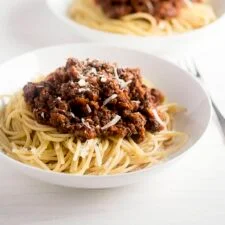
This Italian-American sausage Bolognese is a slowly reduced, hearty pasta sauce for chilly evenings. A purée of vegetables, red wine and tomato paste build a rich sauce around browned Italian sausage.
Ingredients
- 2 largecarrots
- 2celery stalks
- 2 cloves, peeledgarlic
- 1/2 largeyellow onion
- 30 ml (2 Tbsp.)extra virgin olive oil
- to tastesalt and pepper
- 454 g (1 lb.)Italian sausage
- 473 ml (2 cups)hearty red wine, such as Cabernet Sauvignon, Merlot or Syrah
- 120 ml (1/2 cup)tomato paste
- 240–950 ml (2–4 cups), you may not need it allwater
- 2bay leaves
- 454 g (1 lb.)pasta, such as spaghetti
- 50 g (1/2 cup), optionalshredded Parmesan cheese, for garnish
Instructions
- 1
Purée the vegetables
Put the carrots, celery, garlic and onion in a food processor and blend to a thick paste.
- 2
Brown the vegetables
Heat the olive oil in a large saucepan over medium heat. Add the vegetable purée, salt and pepper, then sauté for about 10 minutes, until cooked and browned. It is fine if some of the mixture sticks; you will deglaze the pan later.
- 3
Brown the sausage
Add the Italian sausage and break it up with a spoon or spatula as it cooks. Sauté for about 8 minutes, until browned and cooked through.
- 4
Cook the paste
Stir in the tomato paste until combined with the other ingredients, then cook for 1 minute.
- 5
Add the wine
Pour in 120 ml (1/2 cup) of the red wine and stir, loosening any clumps of meat and vegetables. Add the remaining wine and the bay leaves, then bring the mixture to a simmer.
- 6
Reduce the wine
Simmer for about 10–15 minutes, until the wine has reduced by half.
- 7
Build the sauce
Add 240 ml (1 cup) of water, bring the sauce back to a low simmer and cook until the water has reduced by half, about 15–20 minutes. Repeat with another 240 ml (1 cup) at a time, allowing each addition to reduce, until you are ready to eat; you may not need all the water. Adjust the seasoning as needed, then reduce the sauce one final time to your desired consistency.
- 8
Cook the pasta
Cook the pasta according to the packet or recipe directions, stopping 1 minute before it is al dente. Drain it, reserving 120 ml (1/2 cup) of the pasta water.
- 9
Finish and serve
Stir the reserved pasta water into the sauce. Spoon the Bolognese over the pasta, finish with shredded Parmesan if using and serve immediately.
What is sausage Bolognese?
Bolognese takes its name from Bologna, in northern Italy, and is known as a slowly cooked meat sauce. This version is Italian-American in style, using Italian sausage and red wine for a hearty pasta topping.
Vegetables blended into a paste form the sauce's base, while repeated reductions build flavour and a thick, savoury consistency.
Nutrition and macros by portion
The nutrition label shows one serving as written: 498 calories, 21g protein, 68g carbs, 15g fat.
| Portion | Adjustment | kcal | Protein | Carbs | Fat |
|---|---|---|---|---|---|
| Lighter | Less pasta, more vegetables | 349 kcal | 14g | 48g | 11g |
| This serving | As written | 498 kcal | 21g | 68g | 15g |
| Hungry | Larger pasta portion | 747 kcal | 31g | 102g | 23g |
The pasta supplies most of the carbohydrates, while the sausage contributes much of the protein and fat. Olive oil, sausage and Parmesan also add fat; serve with a green salad or vegetables to balance the meal.
The vegetable base
Vegetable purée: carrots, celery, garlic and onion are processed together until thick. This helps them cook down into the sauce rather than leaving large pieces.
Browning: give the purée about 10 minutes over medium heat, letting it cook and brown. A little sticking is expected, as the wine will help loosen the pan later.
Choosing the sausage and wine
Italian sausage: break it into small pieces as it cooks so it mingles with the vegetable base. Brown it thoroughly before adding the tomato paste.
Red wine: a hearty style such as Cabernet Sauvignon, Merlot or Syrah suits the recipe. The wine is added in stages and simmered down before water is used to continue building the sauce.
Reducing the sauce
Wine stage: simmer until the wine has reduced by half, which the recipe estimates will take 10–15 minutes. Keep the sauce at a simmer rather than a vigorous boil.
Water stage: add water 240 ml (1 cup) at a time and let each addition reduce by half before adding more. The total amount needed can vary, so stop when the sauce is ready and finish with one last reduction to your preferred consistency.
Pasta and sauce texture
Pasta timing: cook it for 1 minute less than the packet or recipe directions recommend for al dente. The reserved pasta water is stirred into the sauce before serving.
Doneness cue: the sauce should be reduced to the consistency you like, and the sausage should be browned and cooked through. Serve the sauce over the pasta straight away.
Serving ideas
Parmesan: scatter the optional shredded cheese over each serving for a savoury finish. Add it just before serving.
On the side: a simple green salad or cooked vegetables can add freshness alongside the rich sauce and pasta.
Recipe notes & tips
- Process the vegetables until they form a thick paste so they cook down into the sauce.
- Break the sausage into small pieces as it browns for a more even mixture.
- Let the wine reduce by half before moving on to the water additions.
- Add water gradually; you may not need the full amount listed.
- Reserve the pasta water before draining, as it is needed to finish the sauce.
- Stop cooking the pasta 1 minute before al dente, as directed.
Variations
- Use spaghetti: it is the pasta used in the recipe.
- Try another red wine: choose a hearty Cabernet Sauvignon, Merlot or Syrah.
- Skip the Parmesan: leave off the optional garnish when serving.
- Adjust the seasoning: taste and add more salt or pepper during the water-reduction stage.
- Serve with greens: add a simple salad or cooked vegetables alongside.
Common mistakes to avoid
- Skipping the browning: cook the vegetable purée until browned, about 10 minutes, before adding the sausage.
- Leaving large sausage clumps: break the meat apart with a spoon or spatula as it cooks.
- Adding all the water at once: add it 240 ml (1 cup) at a time and reduce each addition.
- Reducing the sauce too little: finish with a final reduction until it reaches your preferred consistency.
- Overcooking the pasta: stop 1 minute short of al dente, as the recipe directs.
- Forgetting the pasta water: reserve 120 ml (1/2 cup) before draining and stir it into the sauce.
How to store
Refrigerate leftover sauce and pasta in an airtight container and use within 3 days. Reheat gently in a saucepan or microwave until piping hot; add a splash of water if the sauce has thickened. Store the sauce separately from the pasta if possible.
Frequently asked questions
Can I use a different pasta shape?
Yes. Spaghetti is the pasta used here, but you can follow the same cooking method with another pasta shape.
Do I need to use all the water?
No. Add it 240 ml (1 cup) at a time and stop when the sauce has the consistency you want. The recipe notes that you may not need all 2–4 cups.
Which red wine works best?
The recipe suggests a hearty red such as Cabernet Sauvignon, Merlot or Syrah.
Can I make the sauce ahead?
Yes. Cook the sauce ahead and refrigerate it in an airtight container for up to 3 days. Reheat it gently before serving with freshly cooked pasta.
How do I know when the sauce is ready?
Reduce it until it reaches your preferred consistency. The sausage should be browned and cooked through, and the wine and water should have reduced as described.
Is the Parmesan essential?
No. It is an optional garnish, so you can omit it or serve it separately.
Cook it from the original
This recipe comes from lifeasastrawberry.com. Their page has the author’s own photos, notes and tips — the best place to cook it from.
Open the recipe on lifeasastrawberry.com