
Apple Butter French Toast
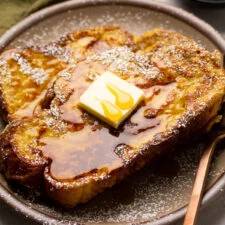
Apple butter French toast coats thick slices of challah in a spiced-fruit-and-cream egg mixture, then fries them until golden. It makes a cosy American-style breakfast or brunch with familiar French toast richness and an autumnal apple flavour.
Ingredients
- 3eggs
- 120 ml (½ cup)apple butter
- 80 ml (⅓ cup)double cream
- 2.5 ml (½ teaspoon)vanilla extract
- A pinchsalt
- 8 slices, about 2.5 cm (1 inch) thickchallah bread
- 28 g (2 tablespoons), dividedunsalted butter
- 15 ml (1 tablespoon), dividedrapeseed oil or another neutral oil
- To serve, optionalmaple syrup and icing sugar
Instructions
- 1
Mix the custard
In a shallow bowl or baking dish, whisk together the eggs, apple butter, double cream, vanilla extract and a pinch of salt.
- 2
Dip the challah
Press one slice of challah into the egg mixture and leave it for a minute or two. Turn it over and let the other side soak in the same way.
- 3
Heat the pan
Over a medium heat, melt a small knob of butter, about 1 teaspoon, with a small drizzle of rapeseed oil in a large non-stick frying pan.
- 4
Lift and drain
Use a fork to lift each slice from the egg mixture. Let excess mixture drip off, then place the bread in the hot pan.
- 5
Cook until golden
Cook each slice for 2–4 minutes per side, until golden brown. Add more butter and rapeseed oil a little at a time between batches, and repeat the dipping and frying process until all the French toast is cooked.
- 6
Top and serve
Transfer the cooked French toast to a plate. Finish with any remaining butter, icing sugar and maple syrup, then serve immediately.
What is apple butter French toast?
French toast is a familiar American breakfast made by soaking bread in an egg mixture and frying it. Apple butter, a concentrated apple spread traditionally associated with American cooking, gives this version a fruity, gently spiced flavour.
Challah works particularly well because its soft, enriched crumb absorbs the custard while holding its shape. Cream adds richness, and the pan-fried outside brings a golden contrast to the tender centre.
Nutrition and macros by portion
The nutrition label shows one serving as written: 627 calories, 13g protein, 88g carbs, 25g fat.
| Portion | Adjustment | kcal | Protein | Carbs | Fat |
|---|---|---|---|---|---|
| Lighter | Use less finishing butter | 439 kcal | 9g | 62g | 17g |
| This serving | As written | 627 kcal | 13g | 88g | 25g |
| Hungry | Add another challah slice | 941 kcal | 20g | 132g | 37g |
Most of the carbohydrates come from the challah, apple butter and optional syrup, while the butter, cream and cooking oil contribute much of the fat. Eggs, challah and cream provide the protein. Serve with fresh fruit alongside and keep extra syrup to taste for a more balanced plate.
The apple butter custard
Apple butter: whisk it thoroughly with the eggs and cream so it is spread evenly through the dipping mixture. Its sweetness and concentrated apple taste mean the finished toast needs only as much syrup as you like.
Challah: use slices about 2.5 cm thick, as specified, so they can take on the mixture without becoming too delicate to lift. The enriched bread also gives the cooked toast a soft, substantial texture.
Soaking each slice
One side at a time: press a slice into the custard and leave it for a minute or two before turning it. This gives the mixture time to soak in rather than merely coat the surface.
Drain gently: lift the bread with a fork and let excess custard drip back into the dish before it goes into the pan. That makes it easier to transfer and helps avoid a puddle of uncooked mixture around the slice.
Getting a golden finish
Steady heat: keep the pan over medium heat so the bread can brown without the butter scorching too quickly. Cook for 2–4 minutes per side, watching for a golden surface.
Batch cooking: add small amounts of butter and oil between batches, as directed. Avoid crowding the pan so each slice has contact with the hot surface.
When the toast is done
Look for a golden-brown exterior after 2–4 minutes on each side. The bread should feel set rather than wet on the surface; use the stated cooking time as a guide, since pan heat and slice thickness can vary.
Serve the slices as soon as they are cooked. The recipe finishes them with any remaining butter, icing sugar and maple syrup.
Serving ideas
Maple syrup and icing sugar are optional toppings, so add them to taste rather than treating them as essential to the recipe. For a brunch plate, pair the toast with fresh fruit or plain yoghurt for a fresh, lightly tangy contrast.
The toast is rich and filling on its own. If serving several people, cook in batches and bring the slices to the table promptly for the best contrast between the golden outside and soft middle.
Recipe notes & tips
- Whisk the apple butter well into the eggs and cream before dipping the bread.
- Use a shallow dish wide enough to hold a slice of challah comfortably.
- Let each slice soak for a minute or two per side, as directed.
- Allow excess custard to drip off before placing bread in the pan.
- Add the butter and oil gradually between batches.
- Serve straight from the pan with toppings added to taste.
Variations
- Add cinnamon: whisk a little into the custard for a warmer spice note.
- Use brioche: swap in thick slices of brioche if challah is unavailable.
- Choose fruit toppings: serve with sliced apple or berries instead of extra syrup.
- Add toasted nuts: scatter chopped pecans over the finished toast for crunch.
- Skip the icing sugar: rely on the apple butter and maple syrup for sweetness.
Common mistakes to avoid
- Soaking too briefly: give each side a minute or two in the custard so it has time to absorb.
- Leaving excess custard on the bread: let it drip back into the dish before frying.
- Using high heat: keep the pan at medium so the outside can brown without the butter scorching quickly.
- Overcrowding the pan: cook in batches so the slices can brown against the pan.
- Adding all the fat at once: replenish butter and oil a little at a time between batches.
How to store
Refrigerate leftover French toast in a covered container and eat within 2–3 days. Reheat in a frying pan over a gentle heat or in the oven until warmed through; add the toppings after reheating.
Frequently asked questions
Can I use bread other than challah?
Yes. Thick-cut brioche is a close alternative, or use another soft, enriched bread that can hold its shape when soaked.
How long should I soak the bread?
The method calls for a minute or two on each side. Lift the slice carefully and let excess mixture drip off before cooking.
How do I know when each slice is cooked?
Cook for 2–4 minutes per side, looking for a golden-brown surface. The precise time can vary with the pan and the thickness of the bread.
Can I make the custard ahead?
The recipe does not require advance preparation. For the best result, whisk the mixture and dip the bread shortly before cooking.
Can I leave off the maple syrup and icing sugar?
Yes. Both are optional serving toppings, and the apple butter already brings sweetness and apple flavour.
Can I reheat leftovers?
Yes. Warm refrigerated slices in a frying pan over a gentle heat or in the oven until heated through, then add any toppings.
Cook it from the original
This recipe comes from lifeasastrawberry.com. Their page has the author’s own photos, notes and tips — the best place to cook it from.
Open the recipe on lifeasastrawberry.com