
Pressure Cooker Bean and Bacon Soup
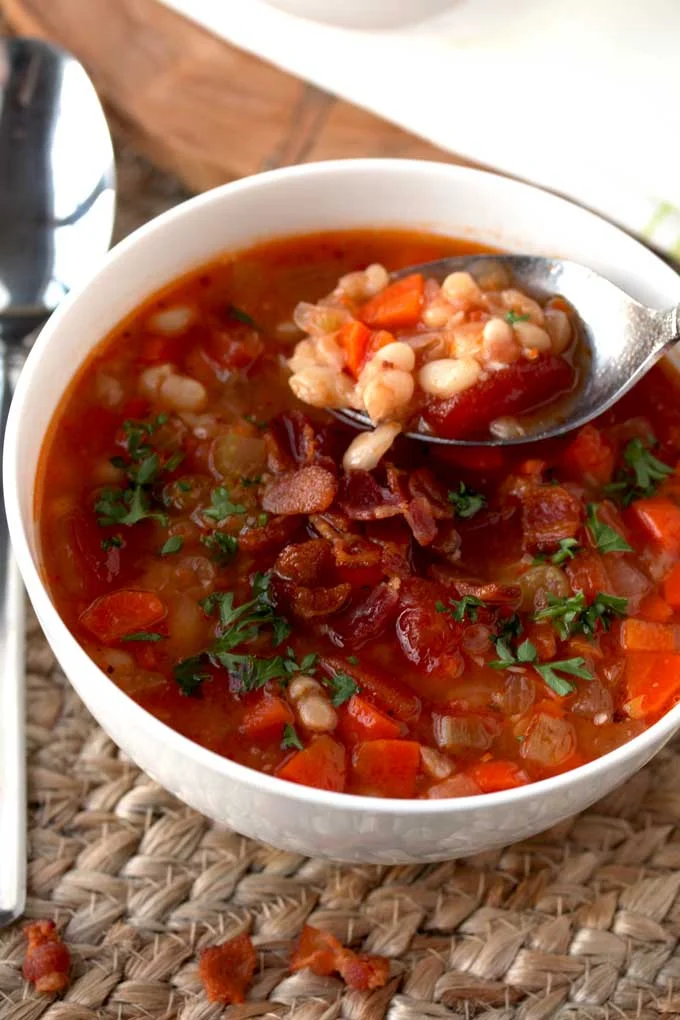
A broth-based American soup of navy beans, bacon, tomatoes and vegetables, made in a pressure cooker or slow cooker. It is a hearty option when you want a savoury soup without a creamy base.
Ingredients
- 454 gnavy beans
- 227 gbacon, chopped into small pieces
- 2carrots, chopped
- 2celery ribs, chopped
- 1 smallonion, chopped
- 1 tbsptomato purée
- 1 can (425 g)diced tomatoes
- 1.42 litreslow-sodium chicken stock
- 2bay leaves
- 1 tspchicken bouillon (optional but highly recommended)
- to tastesalt and pepper
Instructions
- 1
Soak the beans
Soak the beans, then rinse and drain them. The original post provides instructions for a quick soak.
- 2
Crisp the bacon
Select the pressure cooker's sauté setting. Add the chopped bacon and cook, stirring often, until crisp. Transfer it to a plate lined with kitchen paper.
- 3
Sauté the vegetables
Pour off the bacon fat, leaving about 1 tablespoon in the pressure cooker. Add the carrots, celery and onion, and sauté for about 4 minutes, until the onion is translucent. Stir in the tomato purée, diced tomatoes, stock, bay leaves and drained beans.
- 4
Cook under pressure
Close and lock the lid. Cook on Manual for 15 minutes, then allow the pressure to release naturally. Stir in the chicken bouillon, if using, and season to taste with salt and pepper.
- 5
Finish the soup
Stir the crisp bacon into the soup, or keep it aside to garnish each serving. Use the pressure cooker's warm setting if you want to hold the soup in the pot.
- 6
Soak the beans
For the slow cooker method, soak the beans, then rinse and drain them. The original post provides instructions for a quick soak.
- 7
Cook the bacon
Heat a frying pan over a medium-high heat. Add the chopped bacon and cook, stirring often, until crisp. Transfer it to a plate lined with kitchen paper.
- 8
Sauté the vegetables
Pour off the bacon fat, leaving about 1 tablespoon in the pan. Add the carrots, celery and onion, and sauté for about 4 minutes, until the onion is translucent. Add the tomato purée and cook for about 2 minutes.
- 9
Slow cook the soup
Put the cooked vegetables, diced tomatoes, stock, bay leaves and drained beans in the slow cooker. Cook on Low for 8 hours or on High for 4–5 hours.
- 10
Season and serve
Stir in the bouillon, if using, then season to taste with salt and pepper. Mix the crisp bacon into the soup or use it to garnish each serving.
What is bean and bacon soup?
Bean and bacon soup is an American-style, savoury soup built around dried beans, smoky bacon and vegetables in a seasoned broth. This version includes tomatoes, carrots, celery and onion, rather than a creamy base.
Navy beans soften and thicken the broth as they cook, while crisp bacon adds a salty, smoky contrast. Pressure cooking makes the long-cooking beans practical for a meal with a 35-minute stated total time, provided the beans have been soaked.
Nutrition and macros by portion
The nutrition label shows one serving as written: 241 calories, 12g protein, 20g carbs, 12g fat.
| Portion | Adjustment | kcal | Protein | Carbs | Fat |
|---|---|---|---|---|---|
| Lighter | Use less bacon | 169 kcal | 8g | 14g | 8g |
| This serving | As written | 241 kcal | 12g | 20g | 12g |
| Hungry | Serve a larger bowl | 362 kcal | 18g | 30g | 18g |
The beans and tomatoes provide most of the carbohydrate, while bacon supplies much of the fat and some of the protein; the beans and chicken stock also contribute protein. Serve a bowl with salad or extra vegetables, and add bread if you would like a more filling meal.
Why soak the beans?
Soaked beans are rinsed and drained before they go into the cooker. This recipe also refers to quick-soaking instructions in its original post, which can be useful if you have not soaked the beans ahead.
Build flavour before cooking
Bacon fat: Leave about 1 tablespoon behind after crisping the bacon; it gives the vegetables a savoury base without needing to add another cooking fat.
Vegetables: Sauté the carrots, celery and onion until the onion turns translucent. In the slow cooker method, the tomato purée cooks with the vegetables for about 2 minutes before they go into the pot.
What to look for after cooking
Beans: They should be tender when the cooking is complete. If they are not, the recipe does not specify extra cooking time, so check them before serving and continue cooking as needed.
Broth: This is intended to be a broth-based soup, not a thick, creamy one. Stir gently after cooking and taste the broth before adding salt, since the bacon, stock and optional bouillon all contribute seasoning.
When to add the bacon
For the crispest finish, reserve the bacon and sprinkle it over individual bowls just before serving. Stirring it into the pot is convenient, but it will soften as it sits in the broth.
Pressure cooker or slow cooker?
Pressure cooker: After sautéing the bacon and vegetables, cook the soup on Manual for 15 minutes and let the pressure release naturally.
Slow cooker: Brown the bacon and sauté the vegetables in a separate pan first, then transfer them with the remaining soup ingredients. Cook on Low for 8 hours or High for 4–5 hours.
What to serve with it
A slice of crusty bread or toast is useful for dipping into the savoury broth. For a more substantial meal, pair the soup with a simple green salad or steamed vegetables.
Recipe notes & tips
- Soak, rinse and drain the beans before starting either cooking method.
- Cut the bacon into small pieces so it browns evenly.
- Keep roughly 1 tablespoon of bacon fat in the pot or pan for sautéing the vegetables.
- Wait for the onion to turn translucent before adding the remaining soup ingredients.
- Taste the finished broth before seasoning, especially if using bouillon.
- Keep the bacon separate until serving if you want it to stay crisp.
Variations
- Extra vegetables: Add more chopped carrots or celery while sautéing.
- More tomato: Stir in additional diced tomatoes for a more pronounced tomato flavour.
- Herby broth: Add a little dried thyme alongside the bay leaves.
- Spicy bowl: Finish servings with a pinch of chilli flakes.
- Crisp topping: Reserve all the bacon and scatter it over the bowls just before eating.
Common mistakes to avoid
- Skipping the soak: The method calls for soaked beans, so prepare them ahead or use the quick-soak instructions mentioned in the original post.
- Discarding all the bacon fat: Leave about 1 tablespoon in the pot or pan to sauté the vegetables.
- Adding the bacon too early: It softens in the broth; reserve it for a crisp garnish if preferred.
- Over-salting before tasting: Stock, bacon and bouillon can all be salty, so season the finished soup to taste.
- Using the wrong slow-cooker setting: Allow 8 hours on Low or 4–5 hours on High as specified.
How to store
Cool leftovers promptly and refrigerate in a covered container for up to 3 days. Reheat gently on the hob or in the microwave until piping hot, adding a splash of stock or water if needed; store reserved bacon separately for a crisper topping.
Frequently asked questions
Can I use the slow cooker instead of a pressure cooker?
Yes. Brown the bacon and sauté the vegetables in a frying pan, then transfer them and the other soup ingredients to the slow cooker. Cook on Low for 8 hours or High for 4–5 hours.
Do the beans need to be soaked?
Yes, the recipe instructs you to soak, rinse and drain them. It also refers to quick-soaking instructions in the original post.
When should I add the chicken bouillon?
For the pressure cooker method, stir it in after the natural pressure release. For the slow cooker method, add it when seasoning the finished soup.
How do I keep the bacon crisp?
Keep the cooked bacon out of the soup and use it as a garnish on each bowl just before serving.
Can I make the soup ahead?
Yes. Refrigerate the cooked soup in a covered container and reheat it until piping hot. For a crisp topping, store the bacon separately.
Is this soup meant to be thick?
No, it is described as a broth-based soup rather than a creamy one. The beans will soften and add some body to the stock.
Cook it from the original
This recipe comes from lemonblossoms.com. Their page has the author’s own photos, notes and tips — the best place to cook it from.
Open the recipe on lemonblossoms.com