
Peach Pavlova - Easy Pavlova Recipe
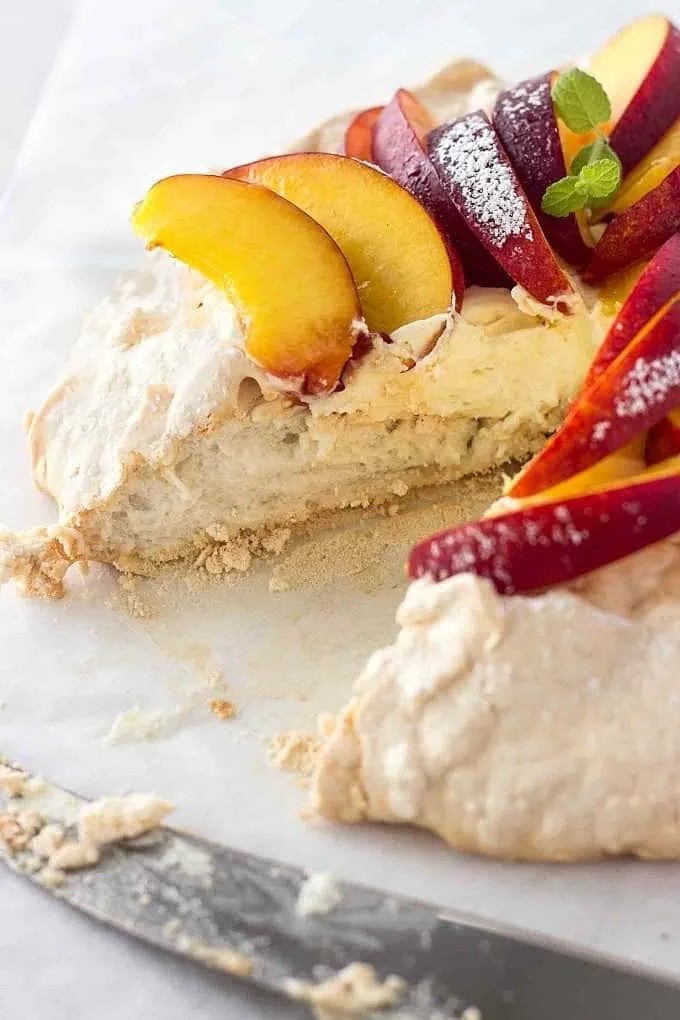
This peach pavlova pairs a crisp-edged, soft-centred meringue with mascarpone cream and fresh fruit. It makes an elegant dessert for sharing, with most of the work happening while the pavlova bakes and cools.
Ingredients
- 4egg whites, chilled
- 150 g (¾ cup)caster sugar or icing sugar
- 2 teaspoonscornflour
- 1 teaspoonlemon juice
- 1 teaspoonvanilla
- 60 ml (¼ cup)double cream
- 60 g (¼ cup)mascarpone
- 1 teaspoonvanilla extract
- 25 g (2 tablespoons)sugar
- 2peaches or nectarines, stones removed and cut into thin wedges
Instructions
- 1
Heat the oven
Preheat the oven to 120°C (250°F).
- 2
Whisk the whites
Put the egg whites in a clean, dry bowl and whisk on a low speed with a hand mixer or stand mixer fitted with a whisk until firm peaks form.
- 3
Add the sugar
Increase the speed and add the sugar one tablespoon at a time, ensuring each addition dissolves into the egg whites before adding the next.
- 4
Whisk to stiff peaks
Beat at medium speed until the meringue forms stiff peaks that hold their shape when you lift the whisk.
- 5
Avoid overbeating
Take care not to beat the egg whites for too long.
- 6
Fold in flavourings
Once all the sugar is incorporated and the meringue is glossy and holds its shape, gently fold in the cornflour, lemon juice and vanilla.
- 7
Mark the tray
Line a baking tray with baking parchment and draw an 20 cm (8-inch) circle in the centre.
- 8
Shape the meringue
Turn the parchment over, then spoon the meringue inside the circle and make a shallow dip in the middle.
- 9
Bake the pavlova
Bake for 45–50 minutes, until the outside feels dry to the touch.
- 10
Cool in the oven
Turn off the oven and, without opening the door, leave the pavlova inside until it has cooled completely.
- 11
Whip the topping
Meanwhile, beat the double cream, mascarpone, vanilla extract and sugar together in a large bowl.
- 12
Finish and serve
Take the pavlova out of the oven, spoon the mascarpone cream into the dip and top with fresh peach or nectarine wedges. Serve.
What is peach pavlova?
Pavlova is a meringue-based dessert associated with Australia and New Zealand, named for the ballerina Anna Pavlova. Its contrast of a delicate, crisp shell and a soft middle makes it distinct from a firm, dry meringue.
This version uses peaches or nectarines over a mascarpone and cream topping. The fruit's fresh, juicy texture complements the sweet meringue, while the shallow centre helps hold the topping.
Nutrition and macros by portion
The nutrition label shows one serving as written: 204 calories, 5g protein, 35g carbs, 7g fat.
| Portion | Adjustment | kcal | Protein | Carbs | Fat |
|---|---|---|---|---|---|
| Lighter | Use less mascarpone cream | 143 kcal | 3g | 25g | 5g |
| This serving | As written | 204 kcal | 5g | 35g | 7g |
| Hungry | Serve a larger slice | 306 kcal | 7g | 53g | 11g |
The meringue sugar and fruit provide most of the carbohydrates, while the cream and mascarpone contribute most of the fat; egg whites add some protein. Serve a modest slice with extra fresh fruit to balance the rich topping.
Building a stable meringue
Clean bowl: Make sure the bowl and whisk are free from grease, and keep yolk out of the whites, so they can whip properly.
Sugar: Add it gradually and let each spoonful dissolve before adding the next. This helps the finished meringue become smooth and glossy rather than gritty.
Folding and shaping
Gentle folding: Once the meringue is ready, fold in the cornflour, lemon juice and vanilla without knocking out too much air.
Marked circle: Draw the circle on the underside of the parchment so the pencil or pen does not touch the meringue. Shape a slight hollow in the centre to make room for the topping.
How to judge doneness
Dry exterior: The outside should feel dry after 45–50 minutes in the oven. The centre is meant to remain softer, so do not expect the pavlova to be crisp all the way through.
Gradual cooling: Leave it in the switched-off oven with the door closed until completely cool. The recipe relies on this slow cooling rather than an abrupt change in temperature.
Whipping the mascarpone topping
Cream and mascarpone: Beat them with the sugar and vanilla until combined and thick enough to spoon onto the pavlova. Stop once the mixture holds its shape; continued beating can make it overly firm.
Timing: Add the topping and fruit shortly before serving. That keeps the meringue from sitting under the moist cream and fruit for too long.
Serving ideas
Fruit: Arrange the peach or nectarine wedges over the cream just before bringing the pavlova to the table.
Alongside: Serve it after a meal with tea or coffee, or pair it with extra fresh fruit for a lighter-feeling dessert plate.
Recipe notes & tips
- Use a grease-free bowl and whisk before starting the meringue.
- Add the sugar slowly and check that it dissolves between additions.
- Keep the marked circle on the underside of the baking parchment.
- Let the pavlova cool completely in the closed oven before taking it out.
- Top the pavlova shortly before serving for the best contrast in texture.
Variations
- Use nectarines: Swap in nectarines for the peaches, or use a mix of both.
- Change the fruit: Top with sliced strawberries or other fresh fruit instead of peaches.
- Add berries: Scatter a handful of fresh berries over the mascarpone cream.
- Citrus note: Add a little finely grated lemon zest to the cream for a brighter flavour.
- Make smaller nests: Shape the meringue into individual portions, keeping an indentation in each centre.
Common mistakes to avoid
- Greasy bowl: The whites may not whip well; wash and dry the bowl and whisk thoroughly first.
- Sugar added too quickly: The meringue can stay grainy; add it one tablespoon at a time and allow it to dissolve.
- Overbeating: The mixture can lose its smooth, glossy texture; stop once it holds stiff peaks.
- Opening the oven early: A sudden temperature change can affect the pavlova; leave the door closed while it cools.
- Topping too soon: Moisture can soften the meringue; add the cream and fruit shortly before serving.
How to store
Store leftover pavlova covered in the refrigerator and eat within 1–2 days; the meringue will soften once topped. Keep the baked, untopped pavlova in an airtight container in a cool, dry place and add the cream and fruit just before serving.
Frequently asked questions
Can I make the pavlova ahead?
Bake it ahead and leave it to cool completely in the oven. Store it untopped in an airtight container in a cool, dry place, then add the cream and fruit shortly before serving.
How do I know when the meringue is ready?
The meringue should be glossy and hold stiff peaks before shaping. After baking for 45–50 minutes, the outside should feel dry to the touch.
Can I use icing sugar instead of caster sugar?
Yes. The recipe allows either caster or powdered sugar; add it gradually and make sure it is dissolved into the whipped whites.
Why does the pavlova need to cool in the oven?
The method calls for gradual cooling with the door closed, which avoids a sudden temperature change. Leave it there until it is completely cool.
Can I use frozen peaches?
Fresh peaches or nectarines are specified for the topping. Thawed fruit can release extra liquid, so drain it well before using if you substitute it.
What can I use instead of mascarpone?
The recipe specifies mascarpone, which gives the cream topping its rich texture. For a different result, you could use thickened double cream, though the topping will not be the same.
Cook it from the original
This recipe comes from lavenderandmacarons.com. Their page has the author’s own photos, notes and tips — the best place to cook it from.
Open the recipe on lavenderandmacarons.com