
Creamy Risotto Al Limone (Lemon Risotto)
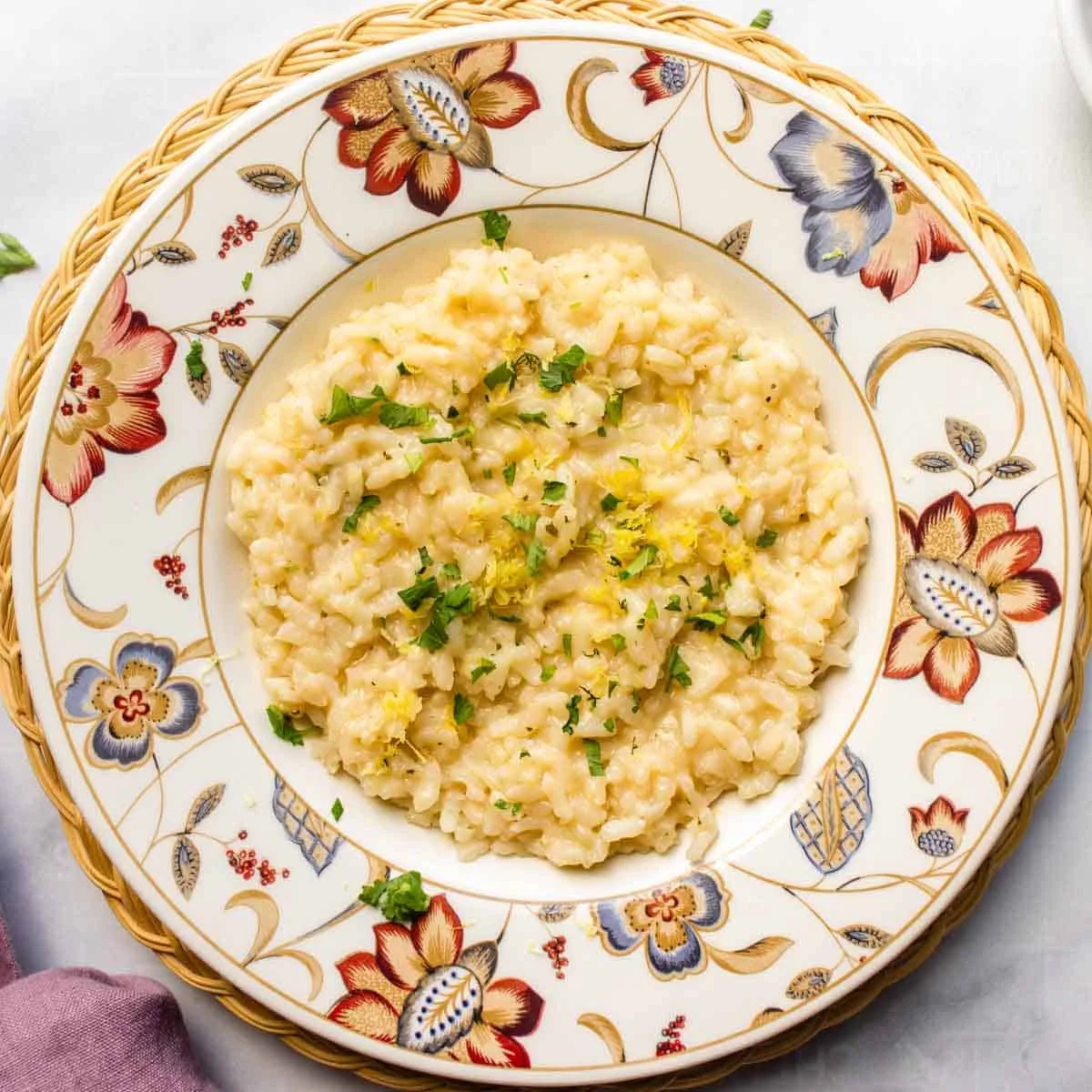
This Italian-style lemon risotto is made by slowly cooking Arborio rice in warm broth until creamy, then finishing it with lemon, butter and Parmigiano-Reggiano. It makes a comforting main or side with a fresh, bright finish.
Ingredients
- 15 ml (1 tablespoon)olive oil
- 1 mediumshallot
- 190 g (1 cup)Arborio rice
- 1.2 litres (5 cups)chicken broth or vegetable broth
- ½ teaspoondried marjoram
- 1lemon, zested and juiced
- 28 g (2 tablespoons)butter
- 50 g (½ cup)Parmigiano-Reggiano
- ¾ teaspoonsalt
- ¼ teaspoonblack pepper
Instructions
- 1
Warm the broth
Pour the broth into a medium saucepan and bring it to a simmer. Keep it warm over low heat while you prepare the risotto.
- 2
Soften the shallot
Heat the olive oil in a large pan over medium heat. Add the shallot and cook for 4–5 minutes, until softened.
- 3
Toast the rice
Add the Arborio rice and stir for 2–3 minutes, until the edges of the grains look translucent while their centres remain opaque.
- 4
Cook the risotto
Add 240–360 ml (1–1½ cups) of warm broth, along with the marjoram, salt and pepper, and stir gently. Once the liquid has been absorbed, add more broth 240 ml (1 cup) at a time, stirring frequently, until the rice is al dente or cooked to your preference.
- 5
Add the lemon
Stir in 1 tablespoon of lemon juice and the lemon zest. Cook for another 1–2 minutes.
- 6
Finish with butter
Turn off the heat and stir in the butter and cheese until melted and creamy.
- 7
Season and serve
Taste and adjust the seasoning as needed, then serve immediately.
What is lemon risotto?
Risotto is a northern Italian rice dish made by gradually cooking short-grain rice with broth until it releases enough starch to create a creamy texture. Al limone means “with lemon”, and here the zest and juice give the rich rice a fresh, fragrant finish.
This version uses Arborio rice, a common risotto choice, and finishes the pan with butter and Parmigiano-Reggiano. The method keeps the lemon bright while the cheese and butter make the rice silky.
Nutrition and macros by portion
The nutrition label shows one serving as written: 332 calories, 10g protein, 43g carbs, 13g fat.
| Portion | Adjustment | kcal | Protein | Carbs | Fat |
|---|---|---|---|---|---|
| Lighter | Less butter and cheese | 232 kcal | 7g | 30g | 9g |
| This serving | As written | 332 kcal | 10g | 43g | 13g |
| Hungry | Larger risotto portion | 498 kcal | 15g | 65g | 20g |
Most of the carbohydrates come from the Arborio rice, while olive oil, butter and cheese supply much of the fat. The rice and Parmigiano-Reggiano contribute protein, with the broth also adding flavour and seasoning. Pair a serving with vegetables or a salad for a more balanced plate.
The ingredients that matter
Arborio rice: its short, starchy grains help thicken the broth as they cook. Avoid rinsing it, since that would wash away some of the starch that helps give risotto its characteristic texture.
Warm broth: keeping the broth at a simmer means each addition can go straight into the hot rice. Chicken broth gives a savoury base; vegetable broth is an alternative.
Lemon and cheese: zest brings aromatic lemon flavour, while the juice adds a sharper note. Parmigiano-Reggiano contributes savouriness and helps enrich the finished rice.
Build the creamy texture
Toasting the rice in the shallot and oil helps coat the grains before the broth goes in. Stir for the stated 2–3 minutes and look for translucent edges with opaque centres.
Add broth in stages rather than all at once, stirring frequently as the rice absorbs each addition. This gradual cooking is the key technique in the recipe, not a need to stir constantly.
Check the rice as it cooks
The rice is ready when it is al dente or suits your preference, as the method specifies. Taste a grain near the end of cooking to judge its texture rather than relying only on the clock.
Risotto should be creamy, not dry or stiff. If the rice is still firmer than you like, continue adding warm broth a little at a time and let it absorb.
Finish off the heat
The lemon goes in near the end and cooks briefly, preserving its fresh character. The recipe calls for 1 tablespoon of juice along with the zest, so add those before the final enrichment.
Turn off the heat before stirring in the butter and cheese. This lets them melt into the rice without prolonged cooking, leaving the finished risotto smooth and creamy.
Serve it straight away
Risotto is at its best just after cooking, when the rice is tender and the texture is still loose and creamy. Serve it as a main course or alongside simply cooked vegetables.
A crisp green salad or roasted vegetables make a fresh counterpoint to the buttery rice. If serving it with another dish, keep the accompaniment straightforward so the lemon remains noticeable.
Recipe notes & tips
- Keep the broth warm in a separate saucepan while cooking the rice.
- Stir the rice frequently as it absorbs each addition of broth.
- Use the recipe’s visual cue when toasting: translucent edges and opaque centres.
- Taste the rice near the end so you can stop when it reaches your preferred doneness.
- Add the butter and cheese after turning off the heat.
- Serve as soon as the final seasoning is adjusted.
Variations
- Vegetable broth: use it instead of chicken broth for the alternative specified in the ingredients.
- More lemon: add a little extra juice at the end if you prefer a sharper finish.
- Fresh herbs: replace the dried marjoram with fresh marjoram, adding it near the end.
- Extra cheese: finish with a little more Parmigiano-Reggiano for a stronger savoury note.
- Peppery finish: add more black pepper to taste just before serving.
Common mistakes to avoid
- Adding cold broth: keep it warm so it can be added to the rice without cooling the pan.
- Pouring in all the broth at once: add it gradually so the rice can absorb each addition.
- Skipping the toast: stir the rice in the oil for 2–3 minutes before adding broth.
- Overcooking the rice: taste it as it approaches doneness and stop when it is al dente or suits your preference.
- Cooking the lemon for too long: add the zest and juice near the end and cook for only another minute or two.
- Adding cheese over high heat: turn off the heat first, then stir in the butter and cheese.
How to store
Refrigerate leftovers in a covered container and use within 3 days. Reheat gently in a saucepan with a splash of broth or water, stirring until hot; the rice may be thicker after chilling.
Frequently asked questions
Can I use vegetable broth instead of chicken broth?
Yes. The ingredients list vegetable broth as an alternative, and you can follow the same method.
Do I need to stir risotto constantly?
The method calls for frequent, gentle stirring as the rice absorbs the broth. You do not need to stir without stopping.
How do I know when the rice is done?
Taste a grain near the end of cooking. It should be al dente or cooked to your preference, while the overall risotto remains creamy.
Can I make this ahead?
Risotto is best served immediately after cooking, so making it just before serving is the best option. Leftovers can be refrigerated and reheated gently.
Can I use another rice instead of Arborio?
Arborio is the rice specified for this recipe and helps create its creamy texture. The result may differ if you substitute another type.
When should I add the lemon?
Stir in the lemon juice and zest near the end, then cook for another minute or two before turning off the heat.
Cook it from the original
This recipe comes from lavenderandmacarons.com. Their page has the author’s own photos, notes and tips — the best place to cook it from.
Open the recipe on lavenderandmacarons.com