
Japanese Curry using S&B Golden Curry
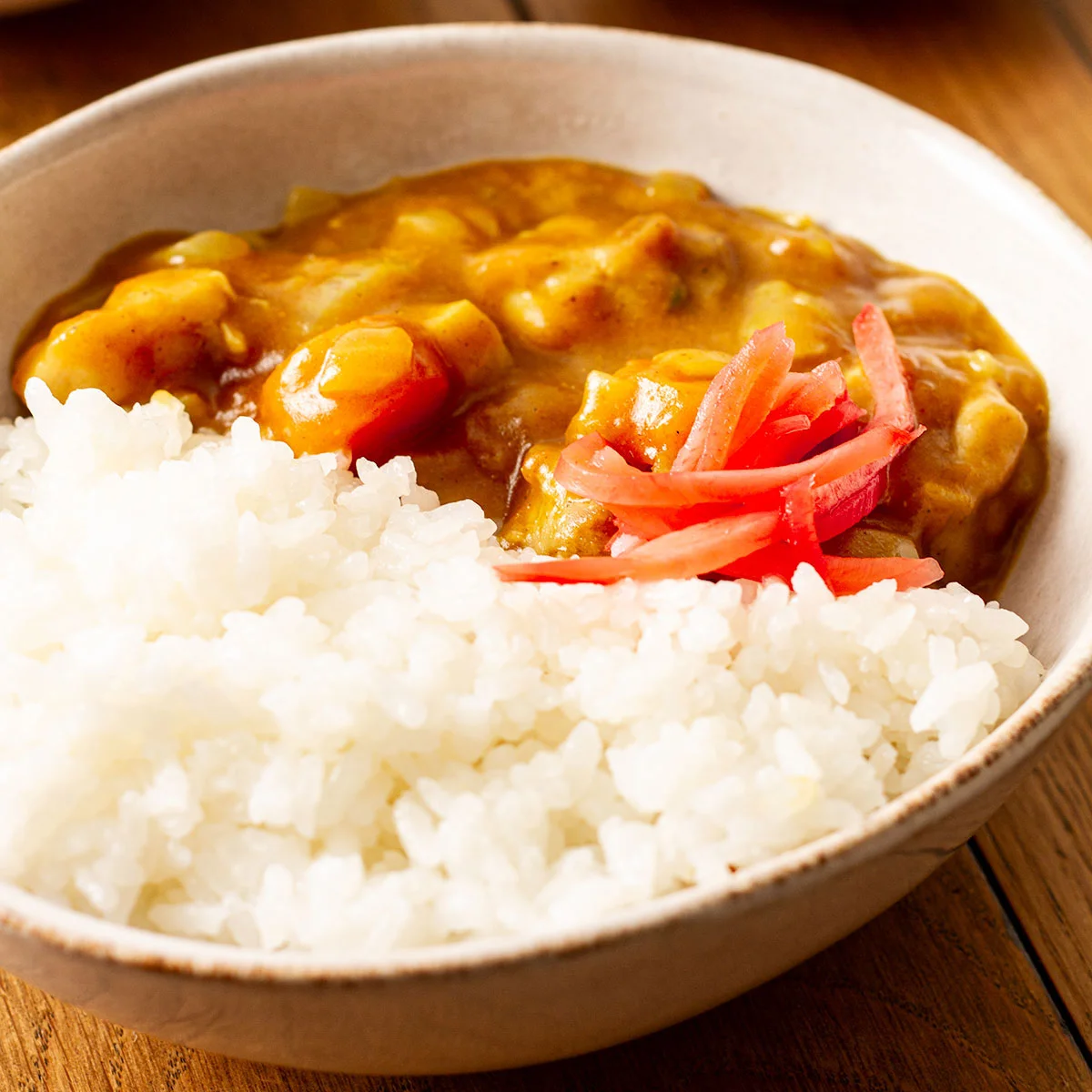
This quick Japanese curry combines chicken or pork, vegetables and S&B Golden Curry roux in a thick, savoury sauce. It is an easy weeknight option, ready in about 20 minutes and good served with rice.
Ingredients
- 15 ml (1 tbsp)neutral oil
- 1onion, finely chopped
- 2carrots, sliced
- 600 ml (2.5 cups)water
- 400 g (14 oz)chicken thighs or pork shoulder, chopped into bite-sized pieces
- 4S&B Golden Curry roux cubes
- 15 ml (1 tbsp)honey
Instructions
- 1
Brown the meat
Heat 15 ml (1 tbsp) of oil in a frying pan over medium heat. Add the chicken or pork and cook for a few minutes, until it begins to brown. Remove it from the pan and set aside.
- 2
Fry the onion
Cook the onion in the pan for a few minutes, until translucent. Add a little more oil if needed.
- 3
Cook the carrots
Add the sliced carrots and fry for a few more minutes.
- 4
Simmer the vegetables
Pour in the water and bring it to the boil. Reduce the heat and simmer gently for 10 minutes.
- 5
Add the curry roux
Add the curry roux cubes and stir until the sauce thickens, then stir in the honey.
- 6
Finish the curry
Return the browned chicken or pork to the pan. Cover and simmer for 5 more minutes, until the meat is cooked through.
- 7
Serve with rice
Serve the curry with rice and your choice of toppings.
What is Japanese curry?
Japanese curry is a mild, thick curry commonly served with rice. Curry was introduced to Japan via British influences, and the roux-block style makes it straightforward to prepare at home.
This version uses S&B Golden Curry cubes for seasoning and thickening, with onion, carrot and chicken or pork for a quick, hearty meal.
Nutrition and macros by portion
The nutrition label shows one serving as written: 307 calories, 14g protein, 19g carbs, 19g fat.
| Portion | Adjustment | kcal | Protein | Carbs | Fat |
|---|---|---|---|---|---|
| Lighter | Use less oil | 215 kcal | 10g | 13g | 13g |
| This serving | As written | 307 kcal | 14g | 19g | 19g |
| Hungry | Serve with extra rice | 461 kcal | 21g | 29g | 29g |
The chicken or pork supplies most of the protein, while the carrots, onion and curry roux contribute carbohydrates; the meat, oil and roux also contribute fat. Serve with rice for a more substantial plate, or add a side of vegetables for extra variety.
Why the roux cubes work
Curry roux: the cubes bring seasoning and thickening ingredients together, so there is no need to build a separate spice blend. Stir them into the simmering liquid until they dissolve and the sauce thickens.
Build flavour in the pan
Meat: browning the bite-sized pieces first gives them colour before they finish cooking in the sauce. Set them aside while the vegetables cook.
Onion and carrot: frying the onion until translucent softens its flavour, while a short fry for the carrots starts them cooking before the simmer.
Get the sauce texture right
Dissolve the roux cubes thoroughly, stirring so they do not remain in lumps. The sauce should become thicker after the cubes are added; avoid rushing this step.
Honey: stir it in once the roux has thickened the sauce. Its sweetness rounds out the savoury curry flavour.
Check the meat is cooked
The final covered simmer lasts 5 minutes, but cooking time can vary with the size of the pieces and the pan. Check that the chicken or pork is cooked through before serving.
Serve it with rice
Rice is the classic partner for this thick sauce and makes it easy to serve as a complete meal. Add toppings of your choice at the table, keeping them separate until serving so everyone can customise their bowl.
Recipe notes & tips
- Cut the meat into similar-sized pieces so it browns and cooks at a similar pace.
- Use a pan with enough room to brown the meat rather than crowding the pieces.
- Stir the vegetables occasionally while frying to help them cook evenly.
- Lower the heat before adding the roux if the liquid is boiling vigorously.
- Check the meat is cooked through before serving.
Variations
- Choose pork: use pork shoulder in place of the chicken for a richer-tasting curry.
- Add more vegetables: include extra carrots or onion, allowing for a less concentrated sauce.
- Adjust the sweetness: use less honey or leave it out if you prefer a less sweet curry.
- Try a topping: add your chosen toppings at the table for individual servings.
- Change the base: serve over another cooked grain instead of rice.
Common mistakes to avoid
- Crowding the pan: the meat may steam instead of brown, so cook it in batches if the pan is small.
- Cutting uneven pieces: larger chunks may need longer to cook, so aim for similarly sized bites.
- Adding roux to a rolling boil: reduce the heat first and stir until the cubes dissolve.
- Leaving roux lumps: keep stirring as the cubes melt so the sauce thickens evenly.
- Skipping the final check: make sure the meat is cooked through before serving.
How to store
Refrigerate leftovers promptly in a covered container and use within 3 days. Reheat gently in a pan, stirring occasionally and adding a splash of water if the sauce has thickened; make sure it is piping hot throughout.
Frequently asked questions
Can I use chicken or pork?
Yes. The recipe gives chicken thighs and pork shoulder as alternatives; chop either into bite-sized pieces.
How do I know when the curry sauce is thick enough?
After the roux cubes dissolve, the sauce should visibly thicken. Stir well so the roux is evenly mixed through.
Can I make this without honey?
Yes. The honey adds sweetness, but you can reduce it or leave it out to suit your taste.
What should I serve with Japanese curry?
Serve it with rice, as suggested in the method, and add any toppings you like.
Can I prepare the curry ahead?
Yes. Cook it, cool it promptly and refrigerate it in a covered container. Reheat thoroughly before serving.
Cook it from the original
This recipe comes from knifeandsoul.com. Their page has the author’s own photos, notes and tips — the best place to cook it from.
Open the recipe on knifeandsoul.com