
Singapore Chow Mein
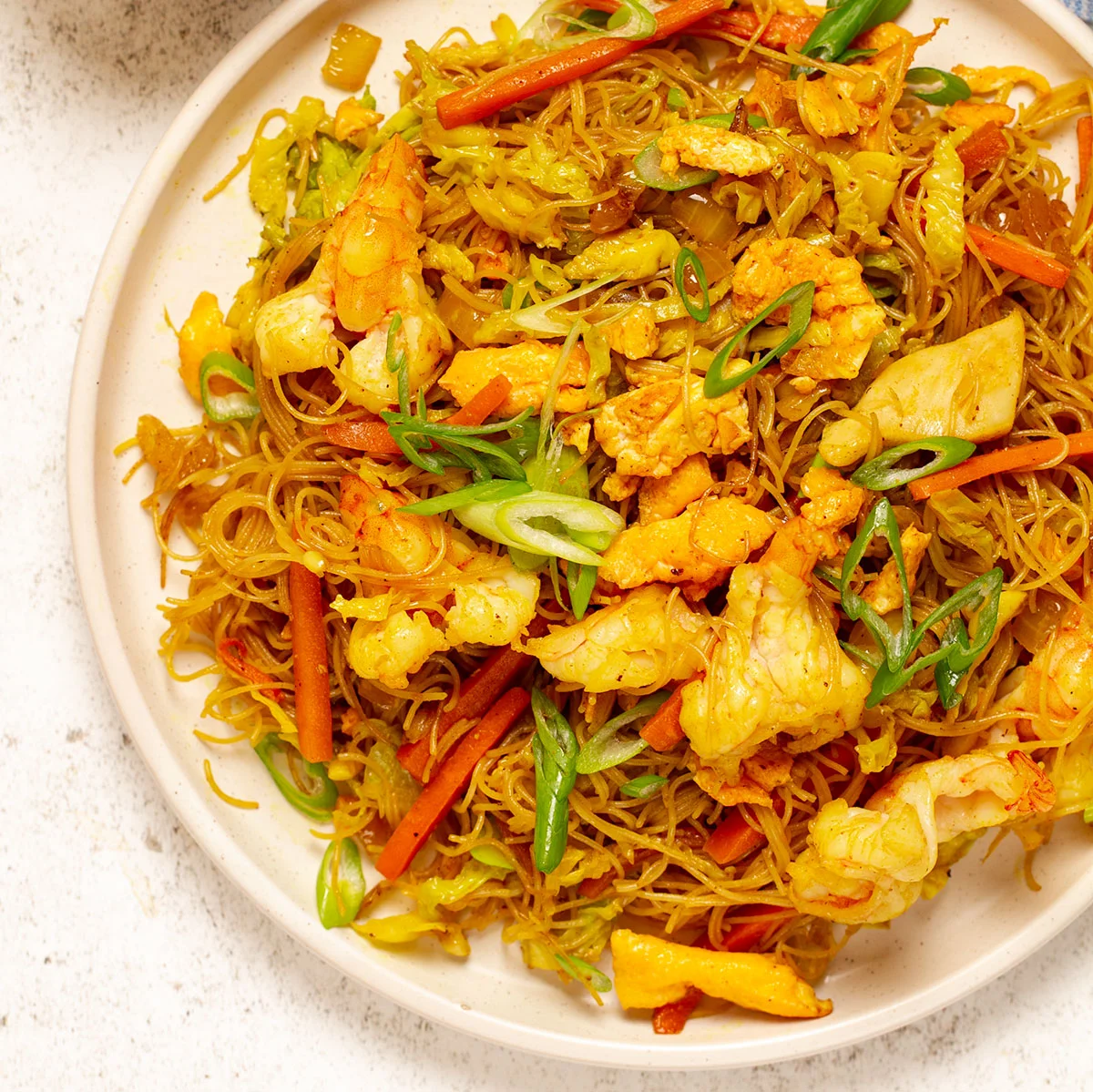
Singapore Chow Mein is a quick stir-fry of rice vermicelli, chicken, prawns, egg and vegetables, brought together with curry powder and a savoury soy-based sauce. It makes a colourful, satisfying meal in about 25 minutes.
Ingredients
- 1/2 tspsalt
- 1/2 tspwhite pepper
- 1 tbspcurry powder
- 4 tspsugar
- 5 tbspsoy sauce
- 2.5 tbspShaoxing rice wine
- 4 tspsesame oil
- 200 grice vermicelli noodles
- 3 tbspneutral oil
- 2 largechicken thighs
- 200 gprawns, peeled and deveined
- 1onion, finely chopped
- 2spring onions, finely chopped, green and white parts separated
- 240 gcabbage, finely shredded
- 1 largecarrot, cut into matchsticks
- 2 clovesgarlic, crushed
- 4eggs, beaten
Instructions
- 1
Cook the noodles
Cook the rice vermicelli according to the packet instructions, then rinse under cold water and set aside. Stop while they are slightly underdone, as they will cook further in the wok.
- 2
Mix the spices
Combine the salt, white pepper and curry powder in a small bowl.
- 3
Mix the sauce
Stir the sugar, soy sauce, Shaoxing rice wine and sesame oil together in another small bowl.
- 4
Heat the wok
Set a wok or large frying pan over medium-high heat and add 1/2 tbsp of the neutral oil.
- 5
Scramble the eggs
When the oil is hot, add the beaten eggs. Let them start to set for a few seconds, scramble with chopsticks or a spatula, then transfer them from the pan and set aside.
- 6
Brown the chicken
Turn the heat up, add half of the remaining oil and fry the chicken pieces for a few minutes, until lightly browned.
- 7
Cook the prawns
Add the prawns and cook for 1–2 minutes, until opaque. Remove them and the chicken from the pan and set aside.
- 8
Soften the onion
Turn the heat up, add the remaining oil, then add the onion and cook for a few minutes, until translucent.
- 9
Cook the vegetables
Add the white parts of the spring onions, carrot and cabbage. Cook for a few minutes, until the vegetables are tender.
- 10
Add the spices
Turn the heat down to medium and add the garlic. Cook for 1 minute, until fragrant, then stir in the spice mix.
- 11
Toss the noodles
Add the noodles and toss until hot.
- 12
Combine everything
Pour in the sauce, then add the cooked chicken, prawns and scrambled egg. Toss everything together.
- 13
Serve the noodles
Serve immediately, topped with the green parts of the spring onions.
What is Singapore Chow Mein?
This dish is also known as Singapore noodles: rice vermicelli stir-fried with vegetables, egg and a mix of proteins, with curry powder giving it its characteristic aroma. Despite the name, it is a Chinese-style restaurant dish rather than a traditional Singaporean noodle preparation.
Here, chicken and prawns make it hearty, while a soy, wine and sesame sauce seasons the noodles. Cooking the components in stages helps them brown or soften without overcrowding the pan.
Nutrition and macros by portion
The nutrition label shows one serving as written: 570 calories, 32g protein, 57g carbs, 22g fat.
| Portion | Adjustment | kcal | Protein | Carbs | Fat |
|---|---|---|---|---|---|
| Lighter | Use less oil | 399 kcal | 22g | 40g | 15g |
| This serving | As written | 570 kcal | 32g | 57g | 22g |
| Hungry | Add more noodles | 855 kcal | 48g | 86g | 33g |
The rice vermicelli and sugar provide most of the carbohydrate, while the neutral oil, sesame oil, egg yolks and chicken contribute much of the fat. Chicken, prawns and eggs provide protein. For a more balanced plate, serve a portion with extra vegetables, such as lightly steamed greens.
Get the noodles right
Undercook the vermicelli slightly when following the packet directions, since it will heat through again in the pan. Rinsing it under cold water stops the cooking and helps keep the strands from sticking together.
Drain the noodles well before stir-frying. Excess water can dilute the sauce and make the finished dish soggy.
Build flavour in stages
Spice mix: combining the salt, white pepper and curry powder first makes it easy to add them evenly after the vegetables and garlic are in the pan.
Sauce: mixing the sugar, soy sauce, Shaoxing rice wine and sesame oil separately means it can be poured over the noodles all at once. Keep the heat controlled once it goes in so the noodles warm through without catching.
Cook the proteins separately
Egg: scramble it briefly, then take it out of the wok while you cook the other ingredients. This keeps it tender rather than letting it break down in the pan.
Chicken and prawns: cook them before the vegetables, then set them aside. The prawns are ready when opaque; returning both proteins at the end warms them through without prolonged cooking.
Watch the vegetable texture
Onion: cook it until translucent before adding the other vegetables, so it softens and sweetens in the pan.
Cabbage and carrot: cook them for a few minutes until tender, but keep an eye on them so they retain some texture. Add the garlic after the vegetables and cook it for just 1 minute, until fragrant.
Serve straight from the pan
Once the sauce, noodles, chicken, prawns and egg are tossed together, serve the dish immediately. Rice vermicelli can turn soft if it sits for long in the hot, moist pan.
Finish with the reserved green spring onion parts for a fresh, lightly sharp contrast. The noodles are substantial enough to serve on their own, or alongside a simple vegetable side.
Recipe notes & tips
- Prepare the vegetables, proteins and sauce before heating the wok, as the stir-frying moves quickly.
- Cut the chicken into evenly sized pieces so it cooks at a similar rate.
- Drain the rinsed noodles thoroughly before adding them to the pan.
- Use a large wok or frying pan to give the ingredients room to toss.
- Keep the green spring onion parts aside until serving for a fresh finish.
Variations
- More vegetables: Add extra shredded cabbage or carrot while cooking the other vegetables.
- Milder curry: Use less curry powder for a gentler aroma.
- Tofu option: Replace the chicken and prawns with firm tofu, browning it before the vegetables.
- Extra heat: Add sliced fresh chilli while cooking the vegetables.
- No prawns: Leave them out and use additional chicken instead.
Common mistakes to avoid
- Overcooking the noodles: They soften further in the wok, so stop cooking them while slightly underdone.
- Wet noodles: Drain them well after rinsing so they do not water down the sauce.
- Crowding the pan: Cook in a roomy wok or large frying pan so the ingredients can heat and toss properly.
- Leaving the egg in the pan: Remove it after scrambling and add it back at the end to keep it tender.
- Overcooking the prawns: Take them out as soon as they turn opaque, then return them to warm through with the noodles.
How to store
Refrigerate leftovers in an airtight container for up to 2 days. Reheat in a frying pan over medium heat until piping hot, adding a small splash of water if the noodles seem dry.
Frequently asked questions
Can I make Singapore Chow Mein ahead?
It is best freshly cooked because the vermicelli continues to soften as it sits. You can prepare the vegetables and mix the sauce ahead, then cook the dish just before serving.
How do I know when the prawns are cooked?
They should turn opaque after 1–2 minutes in the pan. Remove them then, as they will warm through again when tossed with the noodles.
Can I use another type of noodle?
Rice vermicelli is the noodle specified for this recipe and gives the dish its familiar texture. Other noodles may need different cooking times, so follow their packet instructions and keep them slightly underdone before stir-frying.
What can I use instead of Shaoxing rice wine?
The recipe calls for Shaoxing rice wine. If you do not have it, you can omit it, though the sauce will lack some of its characteristic savoury depth.
Why are the noodles rinsed under cold water?
Rinsing cools them and stops them cooking further after boiling. It also helps prevent them from clumping before they go into the wok.
Cook it from the original
This recipe comes from knifeandsoul.com. Their page has the author’s own photos, notes and tips — the best place to cook it from.
Open the recipe on knifeandsoul.com