
Songpyeon (half-moon shaped rice cakes)
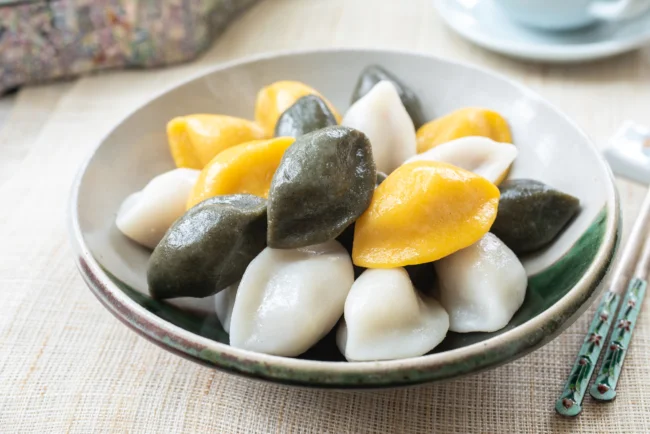
Songpyeon are Korean half-moon rice cakes traditionally made for Chuseok, with a sweet sesame filling tucked inside a chewy rice dough. This version offers several naturally coloured dough options and finishes the cakes with a light coating of sesame oil.
Ingredients
- 320 g (2 cups) per batch (about 16 songpyeon)wet rice powder
- 113–142 g (4–5 ounces), optionalpine needles, rinsed 2–3 times and air-dried or patted dry
- 1 teaspoonsesame oil
- 320 g (2 cups), thawed to room temperature if frozenwet rice powder
- 4 tablespoons (60 ml), plus more as needed in 1-teaspoon incrementsboiling-hot water
- 320 g (2 cups), thawed to room temperature if frozenfrozen rice powder
- 1½–2 tablespoonsmugwort powder (ssuk garu, 쑥가루), or matcha or green tea powder
- 5–6 tablespoons (75–90 ml), plus more as needed in teaspoon incrementsboiling-hot water
- 320 g (2 cups), thawed to room temperature if frozenfrozen rice powder
- 75 g (⅓ cup), cooked and steaming hot; about ¼ small kabocha, steamed in the microwave for about 5 minuteskabocha squash (danhobak, 단호박)
- 1 tablespoon plus 1–2 teaspoons (20–30 ml)boiling-hot water
- 320 g (2 cups), thawed to room temperature if frozenfrozen rice powder
- 4 tablespoons plus 1–2 teaspoons (70–90 ml)boiling-hot blueberry juice
- 320 g (2 cups), thawed to room temperature if frozenfrozen rice powder
- 4 tablespoonsraspberry juice (made by finely puréeing 60 g (½ cup) fresh or frozen raspberries with 120 ml (½ cup) water, straining, and boiling)
- 50 g (⅓ cup)roasted sesame seeds
- 1½ tablespoonssugar
- 1 tablespoonhoney
- A pinchsalt
Instructions
- 1
Mix the dough
For each dough colour you choose, sift the rice powder into a bowl. Prepare its flavouring and liquid ingredients, then quickly stir the specified amount of the hot solid and/or liquid into the powder with a spoon. Hold back a teaspoon or two of liquid at first and add it only if needed.
- 2
Knead and rest
Knead by pressing and stretching with the heel of your hand, then folding and turning the dough. Continue for 4–5 minutes. If it remains sticky, add rice powder 1 tablespoon at a time; if it cracks easily or feels stiff, add boiling-hot water 1 teaspoon at a time. Cover with cling film or a damp towel and rest for 20–30 minutes.
- 3
Make the filling
Roughly grind the sesame seeds in a grinder or blender. Stir in the sugar, honey and salt until evenly combined.
- 4
Shape the dough
Tear off enough dough to make a ball about 2.5 cm (1 inch) across. Roll it tightly between your palms, then press your thumb into the centre to make a well. Use both thumbs to gently widen the inside walls of the opening.
- 5
Fill and seal
Put ½ teaspoon of filling into the well and squeeze the edges firmly together to seal. Lightly squeeze the cake in your palm to firm it, then roll it gently between your hands to smooth the surface. Shape it into a crescent and pinch along the edge to make a wing. Repeat with the remaining dough and filling.
- 6
Prepare the steamer
Bring water to the boil in a steamer over high heat. Line the insert with a thin layer of pine needles, a silicone liner or a damp kitchen cloth. Once steam is rising, arrange the rice cakes in the insert with space between them. Cover with another thin layer of pine needles if using.
- 7
Steam the cakes
Cover the steamer and steam the rice cakes for about 20 minutes.
- 8
Rinse and finish
Prepare a large bowl of cold water. Use a long-handled spoon or tongs to lift out the rice cakes, then briefly rinse them in the cold water, removing any pine needles. Drain in a colander. Lightly coat your hands with sesame oil and rub it over the cakes in batches. Serve warm or at room temperature.
What is songpyeon?
Songpyeon is a Korean rice cake associated with Chuseok, the autumn harvest festival. Its name is linked to the pine needles traditionally used to line the steamer, which also lend the cakes a gentle pine fragrance.
This version shapes the cakes into small crescents and fills them with sweetened sesame. The dough can be coloured and flavoured with mugwort, kabocha, blueberry juice or raspberry juice.
Nutrition and macros by portion
The nutrition label shows one serving as written: 1400 calories, 6g protein, 320g carbs, 9g fat.
| Portion | Adjustment | kcal | Protein | Carbs | Fat |
|---|---|---|---|---|---|
| Lighter | Use less sesame filling | 980 kcal | 4g | 224g | 6g |
| This serving | As written | 1400 kcal | 6g | 320g | 9g |
| Hungry | Serve extra songpyeon | 2100 kcal | 9g | 480g | 14g |
The rice powder supplies most of the carbohydrates, while sesame seeds, honey and sugar contribute energy to the filling; the sesame seeds also provide most of the fat and some protein. For a more balanced plate, serve a modest portion alongside fruit or a savoury dish with vegetables and a protein source.
Choosing the rice powder
Wet rice powder: use the specified wet rice powder for the dough, thawing frozen powder to room temperature before mixing. Its moisture content can vary, so hold back some of the added liquid until you see how the dough comes together.
Colouring ingredients: the mugwort, squash and juices are alternatives for making different dough colours. Prepare the hot liquid or cooked squash for the colour you choose before adding it to the rice powder.
Getting the dough texture right
Hot liquid: stir it in quickly while it is boiling hot, as directed in the method. Adding it gradually gives you a chance to judge whether the dough needs all of it.
Kneading: press and stretch the dough with the heel of your hand, then fold and rotate it for 4–5 minutes. A workable dough should hold together without sticking excessively or breaking when handled.
Making the filling
Sesame seeds: grind them only roughly, so the filling retains a little texture. Mix in the sugar, honey and salt until the sweeteners are distributed through the seeds.
Filling amount: use ½ teaspoon in each cake and keep it centred in the well. Too much filling can make the edges difficult to seal.
Sealing the crescents
The well: make a small ball first, then press into its centre with your thumb and widen the hollow gently with both thumbs. Keep the outer walls thick enough to hold the filling.
The seal: bring the edges together and pinch them firmly before shaping the cake. Smooth it with gentle rolling, then pinch along one side to form the characteristic wing.
Steaming and finishing
Lining: pine needles are optional; a silicone liner or damp kitchen cloth can line the steamer instead. Leave room between the cakes so they do not touch as they steam.
Doneness: steam for about 20 minutes, then rinse the cakes briefly in cold water and drain them. A light coating of sesame oil helps keep the surfaces from sticking together.
How to serve songpyeon
Serve the cakes warm or at room temperature, as the recipe directs. They work well as a small sweet course after a meal or alongside tea.
Because the rice dough is filling and the sesame centre is sweet, pair a few cakes with a savoury meal or fresh fruit if you want a more balanced spread.
Recipe notes & tips
- Thaw frozen rice powder to room temperature before mixing it into the dough.
- Hold back a little of the boiling liquid and add it only if the dough needs it.
- Keep dough covered with cling film or a damp towel while you shape the cakes.
- Seal each cake firmly before smoothing it into a crescent.
- Leave space between the cakes in the steamer so they do not touch.
- Briefly rinse the steamed cakes and drain them before applying sesame oil.
Variations
- Mugwort dough: Use mugwort powder for a green, herbal variation.
- Matcha dough: Swap the mugwort powder for matcha or green tea powder.
- Kabocha dough: Mix in the cooked hot kabocha for a squash-coloured dough.
- Blueberry dough: Use boiling-hot blueberry juice to colour and flavour the dough.
- Raspberry dough: Use the strained, boiled raspberry juice for a fruit-coloured version.
- Pine-scented finish: Line the steamer with rinsed pine needles if you have them.
Common mistakes to avoid
- Adding all the liquid at once: hold a little back and add it only if the dough needs it.
- Sticky dough: add rice powder 1 tablespoon at a time until it is easier to handle.
- Cracking dough: add boiling-hot water 1 teaspoon at a time until it holds together.
- Overfilling the cakes: measure ½ teaspoon of filling and keep it inside the well.
- Loose seams: squeeze the edges firmly together before shaping the crescent.
- Crowded steamer: arrange the cakes with space between them so they do not touch.
How to store
Store leftover songpyeon in an airtight container in the refrigerator and eat within 2–3 days. Reheat gently in a steamer until soft, or briefly microwave with a few drops of water; the rice cakes may firm up as they chill.
Frequently asked questions
Can I use frozen rice powder?
Yes. Thaw it to room temperature before using, as specified in the recipe.
Do I have to use pine needles?
No. Line the steamer insert with a silicone liner or damp kitchen cloth instead. Pine needles are optional.
How do I know whether the dough needs more liquid?
If it breaks easily or feels too stiff after kneading, add boiling-hot water in 1-teaspoon increments. If it is sticky, add rice powder a tablespoon at a time.
Can I make the dough in just one colour?
Yes. Choose one of the dough options and prepare that batch; the coloured doughs are alternatives.
How long should I steam songpyeon?
Steam them for about 20 minutes once the steamer is producing steam.
Can songpyeon be served at room temperature?
Yes. The recipe recommends serving them warm or at room temperature.
Cook it from the original
This recipe comes from koreanbapsang.com. Their page has the author’s own photos, notes and tips — the best place to cook it from.
Open the recipe on koreanbapsang.com