
Naengmyeon (Cold Noodles)
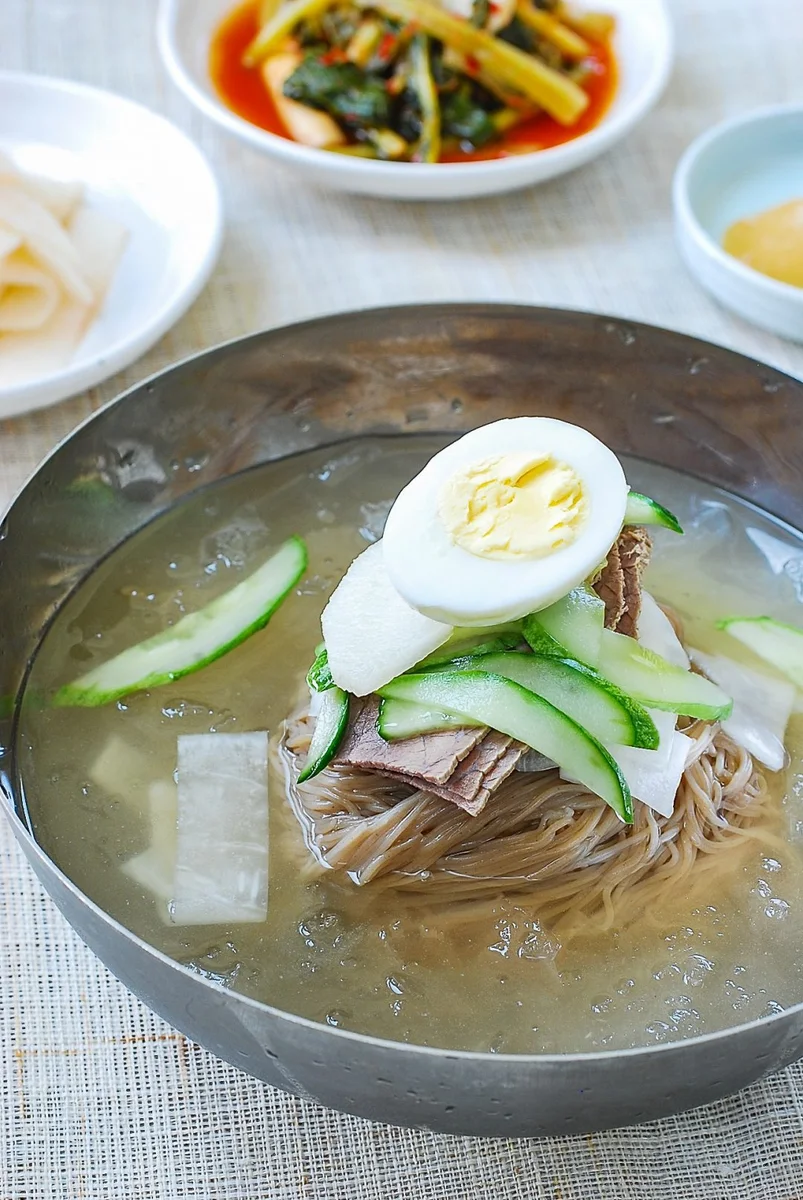
Naengmyeon is a Korean dish of thin, chewy noodles served cold, either in a chilled beef broth or with a spicy, sweet-tangy sauce. Make it when you want a refreshing meal with crisp toppings and the choice of a soupy or boldly dressed bowl.
Ingredients
- 454 g (1 lb)Korean radish (mu)
- 3 tablespoons (45 ml)vinegar
- 2 tablespoons (25 g)sugar
- 1 teaspoon (5 g)salt
- 230 g (½ lb)beef brisket (yangjimeori)
- 170 g (6 oz)Korean radish (mu)
- ½ mediumonion
- 6 clovesgarlic
- 3 thin slices (about 2.5 cm round)ginger
- 2 largescallion white parts
- ½ teaspoonpeppercorns
- 2 tablespoons (30 ml)soup soy sauce
- 1 teaspoon (4 g)sugar
- to tastesalt
- as neededdongchimi broth (see quick dongchimi recipe)
- 2 servingsnaengmyeon noodles
- 1boiled egg, halved
- ½Korean cucumber (or 1 Kirby cucumber)
- 2 thin half-moon slices (optional)Korean pear
- to servevinegar
- to servehot mustard paste
- 4 tablespoons (28 g)finely ground gochugaru
- 4 tablespoons (60 ml)beef broth or water
- 3 tablespoons (about 45 g)grated Korean pear or apple
- 2 tablespoons (25 g)sugar
- 1 tablespoon (15 ml)corn syrup, or more sugar
- 2 teaspoonsminced garlic
- 1 tablespoon (15 ml)soy sauce
- 1 teaspoon (5 g)salt
- to drizzlesesame oil
Instructions
- 1
Prepare the radish
Scrub the radish clean, scraping off any stubborn dirt with a knife. If it is long, cut it crosswise into pieces 5–7.5 cm long. Set each piece cut-side down, slice it lengthways as thinly as possible, then cut the slices into strips about 2 cm wide. A mandoline can help make thin slices.
- 2
Pickle the radish
Add the vinegar, sugar and salt, then mix by hand until the sugar dissolves. Taste and adjust with more vinegar or sugar if you like.
- 3
Simmer the broth
Put the brisket, 170 g radish, onion, scallions, garlic, ginger and peppercorns in a large pot with 3.3 litres of water. Bring to the boil uncovered, then reduce the heat to medium or medium-low to maintain a steady boil and skim off any scum. Cover and cook until the meat is tender, about 1 hour; stir in the soup soy sauce for the final 10 minutes. Remove and cool the meat, discard the vegetables and leave the broth to cool.
- 4
Chill the broth
Measure 1.2 litres of broth into a bowl, about 600 ml per serving. Stir in 1 teaspoon of sugar and salt to taste, about 1 teaspoon. If using dongchimi broth, add 240–475 ml and reduce the beef broth by the same amount; use less salt. Freeze for 1–2 hours, until slushy, and refrigerate or freeze the remaining broth for later.
- 5
Prepare toppings
Halve the cucumber lengthways and slice it thinly crosswise. Sprinkle lightly with salt and leave until the slices soften. Slice the beef thinly against the grain, and cut the pear into thin half-moons if using.
- 6
Cook and chill noodles
Bring a medium pot of water to the boil and prepare an ice bath. Cook the noodles according to the packet instructions, drain quickly and transfer to the ice water to stop the cooking. Drain and rinse again in icy water until thoroughly cold.
- 7
Shape noodle portions
Divide the noodles into two individual mounds and place them in a colander to drain.
- 8
Assemble broth bowls
Put one portion of noodles in the centre of a serving bowl. Arrange the pickled radish, beef, cucumber, pear if using, and half an egg on top, then pour half the chilled broth around the noodles. Repeat for the second bowl and serve with vinegar and hot mustard paste on the side.
- 9
Mix the sauce
Combine all the sauce ingredients and chill in the fridge. The sauce can be made ahead.
- 10
Prepare bibim toppings
Use the noodle-cooking and topping-preparation instructions above. For bibim naengmyeon, slice or julienne the cucumber without salting it.
- 11
Assemble spicy bowls
Put the noodles in a serving bowl and drizzle 1 teaspoon of sesame oil over them. Add the pickled radish, cucumber, pear, sliced beef if available, and half an egg. Add a few ice cubes to keep the dish cool as you eat; if available, pour 60 ml of beef broth into the bottom of the bowl. Spoon the sauce over the noodles or serve it separately, with vinegar and hot mustard on the side.
What is naengmyeon?
Naengmyeon is a Korean cold-noodle dish, commonly served either in a chilled broth as mul naengmyeon or mixed with a spicy sauce as bibim naengmyeon. The noodles are characteristically thin and springy, and the cold temperature is central to the dish.
This version lets you choose between both styles, using a brisket broth for the soup bowl and a gochugaru-based sauce for the mixed bowl. Pickled radish, cucumber and optional pear add sweet-tart crunch.
Nutrition and macros by portion
The nutrition label shows one serving as written: 640 calories, 31g protein, 94g carbs, 13g fat.
| Portion | Adjustment | kcal | Protein | Carbs | Fat |
|---|---|---|---|---|---|
| Lighter | More cucumber, less noodles | 448 kcal | 22g | 66g | 9g |
| This serving | As written | 640 kcal | 31g | 94g | 13g |
| Hungry | Extra noodles and brisket | 960 kcal | 47g | 141g | 20g |
The noodles and sugar provide most of the carbohydrates, while brisket supplies protein and contributes fat; sesame oil adds a little more fat to the bibim version. Balance the bowl with extra cucumber or other fresh vegetables, and adjust the amount of broth or sauce to suit your taste.
Build a clear, savoury broth
Beef brisket: simmer it with radish, onion, scallions, garlic, ginger and peppercorns until tender. Skimming the surface as the pot boils helps keep the broth clean-tasting.
Seasoning: soup soy sauce goes in for the final 10 minutes, while sugar and salt are added to the portion of broth that will be chilled. Dongchimi broth is optional; if you use it, reduce the beef broth by the same volume and go lighter on the salt.
Make the radish crisp and tangy
Thin slices: cut the radish as finely as you can, by hand or with a mandoline, so the vinegar, sugar and salt can season it evenly. Mix until the sugar dissolves, then taste and adjust the sweet-sour balance.
The same pickled radish works as a topping for either style of naengmyeon. Keep it separate from the noodles until serving so its sharp flavour and texture remain distinct.
Chill the broth to a slush
Give the cooked broth time to cool before putting it in the freezer. After 1–2 hours, check it: the aim is a slushy, icy broth, not a solid block.
The remaining broth can be kept for another use. If you are making bibim naengmyeon, a small amount of beef broth in the bowl is optional rather than essential.
Keep the noodles springy
Follow the packet timing, then drain the noodles promptly and plunge them into an ice bath. Rinsing again in very cold water cools them through and removes loose surface starch.
Let each portion drain well before plating. Excess water can dilute the broth or loosen the sauce, while overcooking makes the noodles less pleasantly chewy.
Choose your bowl style
Mul naengmyeon: pour the icy broth around the noodle mound and arrange the toppings on top. Serve vinegar and hot mustard alongside so each person can season their bowl.
Bibim naengmyeon: dress the noodles with the chilled gochugaru sauce, or serve the sauce separately. The recipe suggests unsalted cucumber for this version and a few ice cubes to keep the bowl cool.
Serve with crisp toppings
Cucumber: salt it lightly for the broth version and leave it until softened, or slice it without salting for the spicy version. The optional pear brings a fresh, fruity contrast to the savoury beef and chilli.
Egg and beef: add half a boiled egg to each bowl and slice the cooked brisket thinly against the grain. Arrange the toppings just before serving so they stay neat and the noodles remain cold.
Recipe notes & tips
- Use a sharp knife or mandoline to cut the radish into consistently thin slices.
- Skim the broth during simmering for a cleaner finish.
- Cool the broth before freezing it so it reaches a slushy texture more evenly.
- Keep the noodles in icy water until you are ready to drain and plate them.
- Serve the vinegar and hot mustard on the side so everyone can season their own bowl.
Variations
- Use dongchimi broth: replace some beef broth with the same amount of dongchimi broth and reduce the added salt.
- Make it bibim-style: toss or top the cold noodles with the gochugaru sauce instead of pouring slushy broth around them.
- Swap the fruit: use grated apple in the sauce if Korean pear is unavailable.
- Omit the pear: leave it out of the toppings for a simpler bowl.
- Adjust the heat: serve the sauce separately so each person can add as much as they prefer.
Common mistakes to avoid
- Cutting the radish too thick: it may not season evenly; slice it as thinly as possible.
- Letting the broth freeze solid: check it after 1–2 hours and use it when slushy.
- Overcooking the noodles: follow the packet directions and transfer them straight to the ice bath.
- Leaving excess water on the noodles: drain them well so the broth or sauce is not diluted.
- Salting bibim cucumber: leave it unsalted for the spicy version, as directed.
How to store
Keep leftover broth and sauce covered in the fridge, and store cooked beef and pickled radish separately; use them within 3 days. Store noodles separately if possible, then rinse briefly in cold water before serving; reheat broth for another use, but serve naengmyeon noodles cold.
Frequently asked questions
Can I make the broth ahead?
Yes. Cook and cool the broth, then refrigerate or freeze it. Chill the portion for mul naengmyeon in the freezer for 1–2 hours before serving, checking for a slushy consistency.
Can I make the sauce ahead?
Yes. Mix the bibim sauce ingredients and keep the sauce chilled in the fridge until you are ready to assemble the bowls.
Do I have to use Korean pear?
No. Pear is optional as a topping, and the sauce can use grated Korean pear or apple.
How do I keep the noodles chewy?
Cook them according to the packet instructions, then drain and cool them quickly in an ice bath. Rinse again with very cold water and drain well before serving.
Can I use dongchimi broth?
Yes. Add 240–475 ml to the broth portion and reduce the beef broth by the same amount. Use less salt, then taste before serving.
What is the difference between mul and bibim naengmyeon?
Mul naengmyeon is served with icy broth, while bibim naengmyeon is served with a spicy sauce mixed with the noodles. This recipe gives instructions for making either style.
Cook it from the original
This recipe comes from koreanbapsang.com. Their page has the author’s own photos, notes and tips — the best place to cook it from.
Open the recipe on koreanbapsang.com