
Poached Chicken
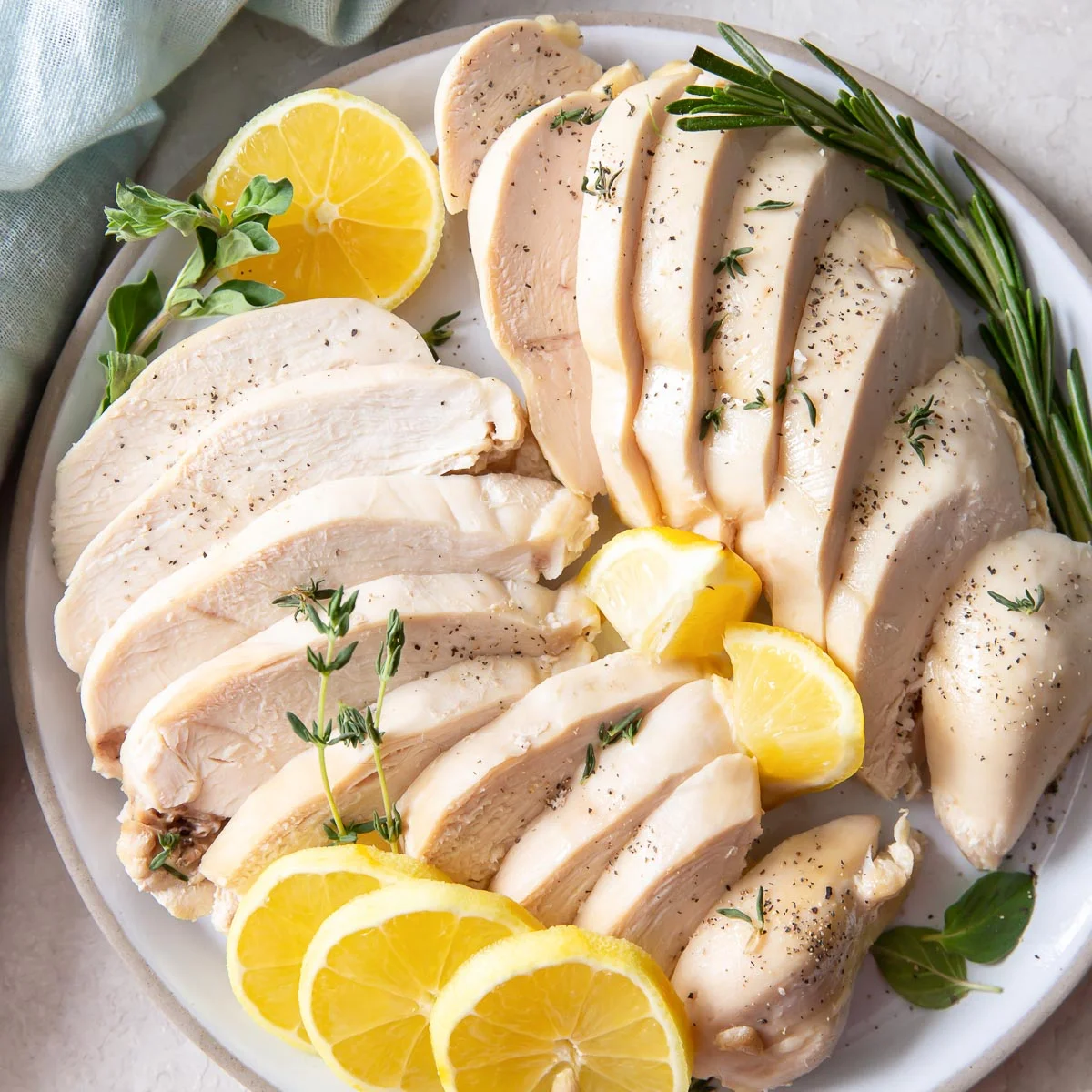
Poached chicken is gently cooked in water with salt and aromatics until tender. Make it ahead for salads, sandwiches, soups or any recipe that calls for cooked chicken.
Ingredients
- 2boneless, skinless chicken breasts
- as neededcold water
- 1 teaspoonsalt
- to tastefresh herb sprigs
- 2–3lemon slices
- 2bay leaves
- 1/2 smallonion, sliced
- 1 teaspoonwhole peppercorns
- 2 clovesgarlic, peeled and smashed
- a few slicesfresh ginger
Instructions
- 1
Arrange the chicken
Set the chicken breasts in a single layer in a lidded pot or pan. Pour in cold water until it comes about 2.5 cm (1 inch) above the chicken.
- 2
Add the aromatics
Stir in the salt and any of the fresh herbs, lemon, bay leaves, onion, peppercorns, garlic or ginger you want to use.
- 3
Bring to a simmer
Put the pot on the hob over medium heat, uncovered, and bring the water to a simmer gradually. Avoid hurrying this stage, as a slow approach helps the chicken stay tender.
- 4
Cook gently
Lower the heat until the water is at a gentle simmer, then cover the pot. Cook for 6–11 minutes, or until the chicken reaches an internal temperature of 74°C (165°F); the time depends on the size of the breasts and how long the water takes to simmer.
- 5
Rest and serve
Lift the chicken out of the water and leave it to rest for 5–10 minutes before slicing or shredding.
What is poached chicken?
Poached chicken is chicken cooked gently in liquid rather than browned or roasted. This straightforward American-style preparation makes tender, plainly seasoned meat that can be used in many other dishes.
The method works because the chicken starts in cold water and comes up to a simmer gradually. Salt and optional aromatics lend flavour to the cooking liquid without making the chicken itself complicated.
Nutrition and macros by portion
The nutrition label shows one serving as written: 73 calories, 12g protein, 2g carbs, 2g fat.
| Portion | Adjustment | kcal | Protein | Carbs | Fat |
|---|---|---|---|---|---|
| Lighter | Serve with extra vegetables | 51 kcal | 8g | 1g | 1g |
| This serving | As written | 73 kcal | 12g | 2g | 2g |
| Hungry | Add another chicken breast | 110 kcal | 18g | 3g | 3g |
The chicken provides most of the protein, while the small amount of carbohydrate comes mainly from the aromatics. The recipe is made with skinless chicken and contains little fat; pair a serving with vegetables and a source of carbohydrate, such as potatoes or rice, for a more complete plate.
Choosing the aromatics
Herbs and lemon: Use these for a fresh, light flavour. Bay leaves, onion and peppercorns bring a more savoury note, while garlic and ginger add extra warmth.
Keep the additions flexible: The recipe allows for any desired aromatics, so choose what suits the dish you plan to make with the chicken. The salt is the only seasoning specified as part of the basic method.
Why start with cold water?
Gradual heating gives the chicken time to warm as the water approaches a simmer. The recipe specifically cautions against rushing this stage, since a slower rise helps the meat remain tender.
Use a pot wide enough to hold the breasts in one layer. Add enough water to cover them by about 2.5 cm (1 inch), rather than leaving parts exposed.
Keep the simmer gentle
Once the water simmers, turn the heat down so it stays at a low simmer and cover the pot. A gentle bubble is the cue to aim for; the method does not call for a vigorous boil.
The stated cooking time is 6–11 minutes after reducing the heat, but breast size and the time needed to reach a simmer both affect the total. Check the centre for 74°C (165°F) rather than relying on the clock alone.
Rest before cutting
Lift the cooked breasts from the water and let them rest for 5–10 minutes before slicing or shredding. This short pause is part of the recipe method and makes the chicken easier to handle.
Slice it for a main dish or shred it for recipes that call for cooked chicken. Keep the cooking liquid separate if you want to use it as a lightly flavoured liquid in another preparation.
Ways to use it
For a simple meal, serve sliced chicken with vegetables and a grain or potatoes. For a make-ahead ingredient, shred or slice it for salads, sandwiches, soups and other recipes that need cooked chicken.
Choose the aromatics with its final use in mind: lemon and herbs suit fresher dishes, while garlic, ginger or peppercorns can work well in more savoury combinations.
Recipe notes & tips
- Arrange the breasts in one layer so they cook evenly.
- Bring the pot to a simmer gradually rather than turning the heat up to rush it.
- Keep the water at a low simmer once it begins bubbling.
- Use the suggested aromatics selectively to suit the dish you are making.
- Check the thickest part of a breast with a food thermometer.
- Allow the chicken to rest for 5–10 minutes before cutting.
Variations
- Lemon and herbs: Use the lemon slices and fresh herb sprigs for a bright, fragrant poaching liquid.
- Garlic and bay: Add the garlic and bay leaves for a savoury flavour.
- Ginger and pepper: Include fresh ginger and peppercorns for a warmer aromatic note.
- Shredded chicken: Pull the rested chicken into pieces for salads, sandwiches or soups.
- Simply seasoned: Use the salt without the optional aromatics when you want a neutral-tasting base.
Common mistakes to avoid
- Crowding the pot: The breasts should sit in a single layer; use a wider pan if needed.
- Too little water: Add enough cold water to come about 2.5 cm (1 inch) above the chicken.
- Rushing the heating: Bring the water to a simmer gradually to help keep the chicken tender.
- Boiling hard: Turn the heat down after the water simmers and maintain a low simmer.
- Guessing doneness by time: Breast size affects cooking time, so check for 74°C (165°F) internally.
- Cutting straight away: Rest the chicken for 5–10 minutes before slicing or shredding.
How to store
Refrigerate leftover chicken in a covered container and use within 3–4 days. Reheat gently until hot, or use it cold in salads and sandwiches.
Frequently asked questions
How do I know when the chicken is cooked?
Check the thickest part of a breast with a food thermometer; it should reach 74°C (165°F). The recipe gives a cooking time of 6–11 minutes after the pot is reduced to a low simmer, but size affects timing.
Can I poach chicken thighs with this method?
The description mentions breasts or thighs, but the ingredient list and cooking time here are for breasts. Thighs may need a different cooking time, so check their internal temperature rather than relying on the breast timing.
Do I need to use all the aromatics?
No. The method calls for salt and any desired aromatics, so you can choose from the listed herbs, lemon, bay leaves, onion, peppercorns, garlic and ginger.
Why does the recipe start with cold water?
The chicken warms as the water heats, and the method recommends bringing the pot to a simmer slowly rather than rushing it.
Can I shred the chicken?
Yes. Let it rest for 5–10 minutes after removing it from the water, then shred it or slice it.
How long does poached chicken keep?
Store it covered in the fridge and use it within 3–4 days. It can be served cold or reheated gently until hot.
Cook it from the original
This recipe comes from kristineskitchenblog.com. Their page has the author’s own photos, notes and tips — the best place to cook it from.
Open the recipe on kristineskitchenblog.com