
Chicken Tenders
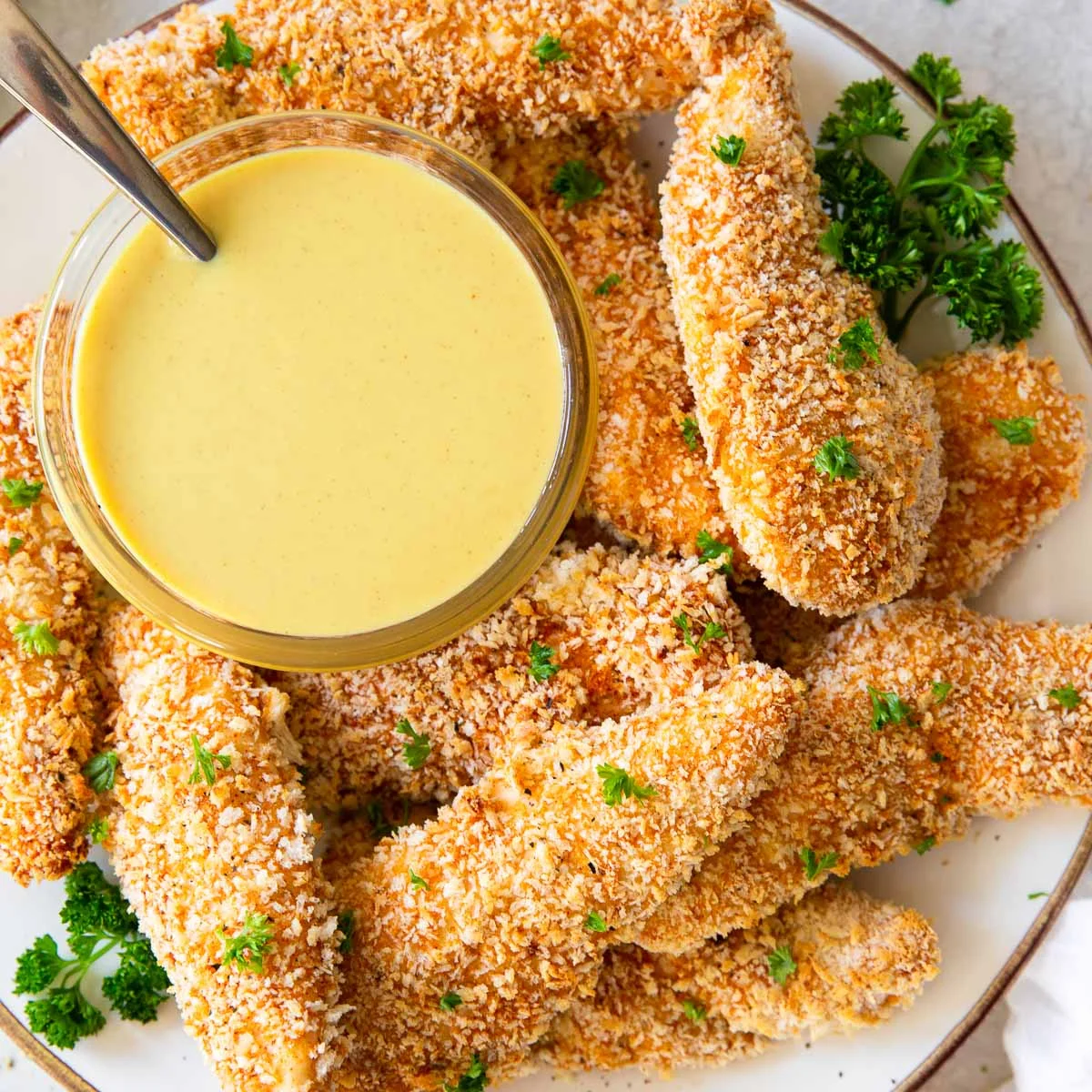
These oven-baked American chicken tenders get a crisp panko coating and savoury seasoning without deep-frying. They are straightforward to prepare and pair easily with your favourite dipping sauces.
Ingredients
- 60 g (½ cup)plain flour or wholemeal flour
- 3 largeeggs
- 45 ml (3 tablespoons)water
- 2 teaspoonspaprika
- 1½ teaspoonsgarlic powder
- ½ teaspoononion powder
- 1 teaspoonsalt
- ¼ teaspoonblack pepper
- 120 g (2 cups)panko breadcrumbs
- 907 g (2 pounds)chicken tenders
Instructions
- 1
Prepare the oven
Heat the oven to 220°C (425°F). Set an oven-safe wire rack over a rimmed baking tray and lightly coat the rack or tray with cooking spray. If you do not have an oven-safe rack, bake the chicken directly on the tray.
- 2
Set up the coating
Arrange three wide, shallow dishes. Put the flour in the first and beat the eggs with the water in the second. Add the paprika, garlic powder, onion powder, salt and pepper to the egg mixture, whisking or stirring with a fork until evenly combined and free of spice clumps. Put the panko in the third dish.
- 3
Coat the chicken
Dip each chicken tender in flour, then the egg mixture, and finally the panko, coating each piece at every stage. Arrange the coated chicken on the prepared rack or baking tray.
- 4
Bake until cooked
Bake for 16–18 minutes, until the chicken is cooked through to at least 74°C (165°F) and lightly browned. If you like, switch on the grill for the final few minutes to crisp the coating further. Serve with dipping sauces if desired.
What are chicken tenders?
Chicken tenders are strips of chicken, often cut from the tenderloin beneath the breast, and commonly served with a crisp coating and dipping sauces in the United States. This version uses a seasoned egg mixture and panko before baking.
Panko gives the coating a light, coarse crunch, while the oven and prepared rack make it possible to cook a batch without deep-frying.
Nutrition and macros by portion
The nutrition label shows one serving as written: 391 calories, 47g protein, 28g carbs, 9g fat.
| Portion | Adjustment | kcal | Protein | Carbs | Fat |
|---|---|---|---|---|---|
| Lighter | Serve with extra vegetables | 274 kcal | 33g | 20g | 6g |
| This serving | As written | 391 kcal | 47g | 28g | 9g |
| Hungry | Add a larger portion | 587 kcal | 71g | 42g | 14g |
The chicken supplies most of the protein, while the flour and panko provide most of the carbohydrates. The egg and chicken contribute fat, with smaller amounts from the flour and crumbs. Add vegetables or salad alongside a serving for a balanced plate.
Why use three coating dishes?
Flour first: a thin layer helps the egg mixture cling to the chicken rather than sliding off.
Seasoned egg: whisk the spices into the eggs thoroughly so the flavour is distributed across the pieces.
Panko last: press the breadcrumbs gently onto the chicken so they adhere, then transfer each tender to the rack or tray.
Getting an even coating
Keep the dishes in coating order and use one hand for the dry ingredients and the other for the egg mixture, if convenient. This helps prevent wet clumps from forming in the flour and panko.
Let excess egg drip back into its dish before moving the chicken into the breadcrumbs. A thick, uneven layer can bake less consistently than a coating that covers the surface evenly.
How to tell when they are done
Check the thickest tender for an internal temperature of at least 74°C (165°F); the method gives a baking time of 16–18 minutes. Piece size and oven performance can affect how quickly they cook.
The coating should look lightly browned. For extra crispness, the recipe allows a few minutes under the grill at the end; watch closely so the panko does not burn.
Choosing a rack or tray
Wire rack: placing it over a rimmed tray lets heat circulate around more of each tender. Coat the rack with cooking spray as directed to help prevent sticking.
Baking tray: the chicken can also go directly onto a greased tray if you do not have an oven-safe rack. The underside may be less exposed to circulating heat, so check that the pieces cook through.
What to serve with them
Serve the tenders with dipping sauces of your choice, as suggested in the recipe. They also fit alongside a simple salad or vegetables for a more rounded plate.
For a heartier meal, add potatoes or another favourite side. Serve soon after baking, when the panko coating is at its crispest.
Recipe notes & tips
- Use three shallow dishes wide enough to dip the chicken without bending it.
- Shake off excess flour and let excess egg drip away before adding the panko.
- Arrange the coated tenders in a single layer on the rack or tray.
- Use a food thermometer to check the thickest piece reaches 74°C (165°F).
- Watch the chicken closely if you use the grill to brown the coating at the end.
Variations
- Wholemeal flour: use the wholemeal option listed for a more robust flour coating.
- Milder seasoning: reduce the paprika or black pepper to suit your preference.
- Spicier coating: add a little extra paprika for a stronger paprika flavour.
- Sauce choice: serve with different dipping sauces to let everyone choose their favourite.
- Tray-baked version: use a greased baking tray if you do not have an oven-safe wire rack.
Common mistakes to avoid
- Skipping the flour: the egg may not cling as well, so coat each tender in flour first.
- Clumpy spices: whisk the seasonings into the eggs until no spice clumps remain.
- Wet breadcrumbs: let excess egg drip off before coating the chicken with panko.
- Crowding the tray: arrange the pieces in a single layer so they bake evenly.
- Guessing doneness: check that the thickest piece reaches at least 74°C (165°F).
- Leaving the grill unattended: watch closely during the final minutes so the coating does not burn.
How to store
Refrigerate leftover chicken tenders in a covered container for up to 3–4 days. Reheat in an oven until hot throughout; the coating may soften during storage and will not be quite as crisp as when freshly baked.
Frequently asked questions
Can I bake these without a wire rack?
Yes. The method allows you to place the chicken directly on a greased rimmed baking tray instead.
How long do chicken tenders take to bake?
Bake them for 16–18 minutes at 220°C (425°F), checking that the thickest piece reaches at least 74°C (165°F).
Can I use wholemeal flour?
Yes. Wholemeal flour is listed as an alternative to plain flour in the ingredients.
How can I make the coating crispier?
The recipe suggests using the grill for the final few minutes of cooking. Keep a close eye on the tenders while they brown.
Can I prepare the coating dishes in advance?
You can measure the flour and panko and mix the seasonings ahead. Beat the eggs with the water and seasonings shortly before coating the chicken.
Cook it from the original
This recipe comes from kristineskitchenblog.com. Their page has the author’s own photos, notes and tips — the best place to cook it from.
Open the recipe on kristineskitchenblog.com