
Tuna bibimbap with spring vegetables
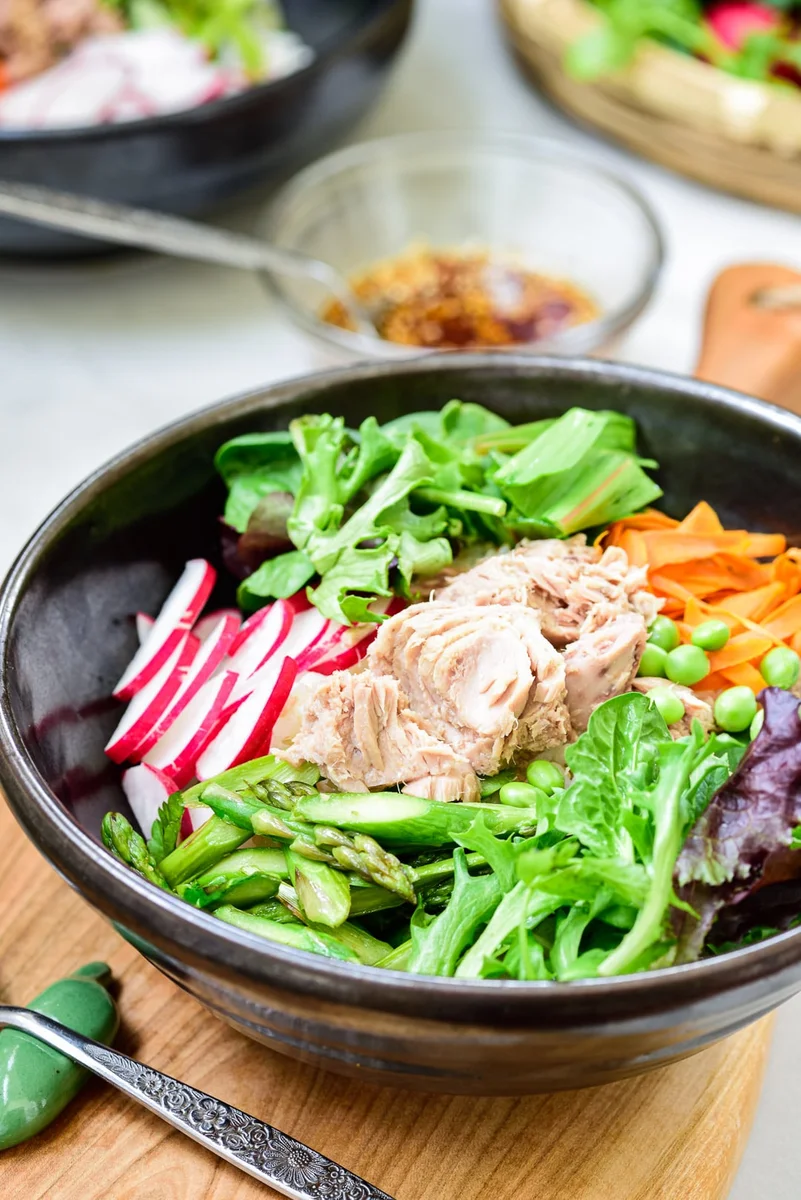
This Korean-inspired bibimbap brings warm rice together with crisp spring vegetables and drained tinned tuna. Arrange the toppings in the bowl and choose one of the listed sauces, or serve more than one for a quick, adaptable meal.
Ingredients
- 2 servingscooked rice
- 3–4asparagus spears
- 1 mediumcarrot
- about 2 teaspoonsvegetable oil
- 2–3lettuce leaves, or a handful of spring mix
- 3–4red radishes
- 60 ml (¼ cup)fresh or frozen green peas
- 1 small can, drainedtuna
- 2 tablespoonssoy sauce (sauce option 1)
- 2 teaspoonsgochugaru (Korean red chilli flakes; sauce option 1)
- 1 teaspoonsugar (sauce option 1)
- 2 teaspoonssesame oil (sauce option 1)
- ½ teaspoonminced garlic (sauce option 1)
- 1 teaspoonsesame seeds (sauce option 1)
- 1 teaspoon, or more to tastelemon juice or vinegar (sauce option 1)
- 2 tablespoonssoy sauce (sauce option 2)
- 1 teaspoonsugar (sauce option 2)
- 2 teaspoonssesame oil (sauce option 2)
- ½ teaspoonminced garlic (sauce option 2)
- ½ teaspoonsesame seeds (sauce option 2)
- 1 teaspoon, or more to tastelemon juice or vinegar (sauce option 2)
- 1 tablespoon, optionalfinely chopped spring onion (sauce option 2)
- 2 tablespoonsgochujang (고추장; sauce option 3)
- 1 teaspoonsugar (sauce option 3)
- 2 teaspoonssesame oil (sauce option 3)
- 2 tablespoonswater (sauce option 3)
- 1 teaspoon, or more to tastelemon juice or vinegar (sauce option 3)
- ½ teaspoonminced garlic (sauce option 3)
Instructions
- 1
Mix the sauce
Combine the ingredients for whichever sauce option or options you have chosen. Mix well and set aside.
- 2
Slice the vegetables
Thinly slice the asparagus, carrot and radishes into bite-sized pieces. If the carrot is thick, halve it lengthways before slicing it thinly on the diagonal; cut the radishes into matchsticks. Roughly chop any large leafy greens.
- 3
Cook the vegetables
Boil the peas in salted water until cooked through, 6–8 minutes, or for less time if using frozen peas. Heat a lightly oiled pan over medium-high heat and sauté the asparagus, then the carrot, separately, for a minute or two each. Briefly sauté the spring onion too, if you like.
- 4
Assemble the bowls
Put one serving of rice in each large bowl. Arrange a small amount of each vegetable and the tuna over the rice, then serve with the sauce.
What is bibimbap?
Bibimbap is a Korean rice dish served with an assortment of toppings, commonly arranged over the rice and mixed together with sauce at the table. The name is often translated as “mixed rice”, describing how the components come together when eaten.
This quick version pairs tinned tuna with spring vegetables rather than relying on a long cooking process. Separate toppings keep their colours and textures distinct until you stir them through the rice.
Nutrition and macros by portion
The nutrition label shows one serving as written: 490 calories, 24g protein, 68g carbs, 13g fat.
| Portion | Adjustment | kcal | Protein | Carbs | Fat |
|---|---|---|---|---|---|
| Lighter | More greens, less rice | 343 kcal | 17g | 48g | 9g |
| This serving | As written | 490 kcal | 24g | 68g | 13g |
| Hungry | Add another rice serving | 735 kcal | 36g | 102g | 20g |
Most of the carbohydrates come from the rice, while the tuna supplies most of the protein. Sesame and vegetable oils contribute fat, and the sauce ingredients can add more; serve with extra leafy vegetables if you would like to balance the bowl with more produce.
Choose a sauce
Gochugaru sauce: this option combines soy sauce with Korean chilli flakes, sesame, garlic and a little sweetness. Choose it for a chilli-forward dressing.
Sesame soy sauce: the second option keeps soy and sesame at the forefront, with optional spring onion. Gochujang sauce: the third combines the fermented Korean chilli paste with water, sesame oil and a little acidity.
The method says to mix the sauce option or options you pick, so these are alternatives rather than ingredients that all need to go into one dressing.
Cut for quick cooking
Even slices: cut the asparagus and carrot thinly so they need only a brief sauté. If the carrot is thick, halving it lengthways makes the diagonal slices easier to keep slim.
Radish matchsticks: these are arranged raw, adding a crisp contrast to the warm rice and cooked vegetables. Roughly chop larger leaves so they are easy to pick up with the other toppings.
Keep the vegetables distinct
Cook separately: sauté the asparagus first and the carrot afterwards, rather than crowding them into the pan together. The short cooking time keeps them from becoming too soft.
Pea check: cook fresh peas for 6–8 minutes, until cooked through; frozen peas generally take less time. Drain them before adding them to the bowl.
Build the bowls
Warm base: divide the cooked rice between two large bowls. If it has cooled, warm it before adding the toppings so the finished dish is pleasant to eat.
Neat toppings: arrange small amounts of each vegetable and the drained tuna over the rice. Serve the sauce alongside, then mix it in to taste.
What to serve with it
The rice, tuna and vegetables make this a complete bowl as written. For a bigger meal, serve it with a simple soup or additional vegetables on the side.
Keep any extra sauce at the table so each person can adjust the flavour. A little lemon juice or vinegar can sharpen the sauce if it tastes too rich or salty.
Recipe notes & tips
- Drain the tuna well so it does not make the rice soggy.
- Slice the vegetables before heating the pan, as the sautéing is brief.
- Use frozen peas straight from the freezer and check them before the full cooking time.
- Mix only the sauce option or options you want to serve.
- Add sauce gradually, tasting as you go, since soy sauce and gochujang can be salty.
- Keep the radishes and leafy greens uncooked for a fresh, crisp contrast.
Variations
- Use another green: replace the asparagus with thinly sliced seasonal green vegetables and sauté them briefly.
- Change the leaves: use lettuce or spring mix, as preferred.
- Adjust the chilli: choose the sesame soy sauce for a milder bowl, or use the gochugaru or gochujang option for chilli heat.
- Add spring onion: use the optional finely chopped spring onion in the sesame soy sauce, or briefly sauté it as the method suggests.
- Swap the acid: use lemon juice or vinegar in the sauce, adjusting the amount to taste.
Common mistakes to avoid
- Thick carrot slices: they may not cook as quickly as the asparagus; halve a thick carrot lengthways and slice it thinly on the diagonal.
- Overcooked asparagus: it can lose its fresh bite; sauté it for only a minute or two.
- Wet tuna: excess liquid can dampen the toppings; drain the tuna before assembling.
- Crowded pan: vegetables may not sauté evenly; cook the asparagus and carrot separately as directed.
- Too much sauce at once: it can overpower the bowl; serve it alongside and add it gradually.
How to store
Store leftover rice, vegetables, tuna and sauce in separate airtight containers in the fridge and use within 2 days. Reheat the rice and cooked vegetables until hot, then add the tuna, fresh leaves and sauce; discard the bowl if it has been left at room temperature for an extended period.
Frequently asked questions
Do I need to make all three sauces?
No. The method says to mix the ingredients for whichever sauce option or options you choose. Each group makes a different dressing.
Can I use frozen peas?
Yes. The recipe allows fresh or frozen peas and notes that frozen peas need less time than the 6–8 minutes given for fresh peas.
Can I use leftover rice?
Yes, provided it has been stored safely. Reheat it until hot before assembling the bowls.
How should I cut the carrot?
Slice it thinly; if it is thick, halve it lengthways first and then cut it diagonally. This helps the pieces cook quickly.
Should I cook the radishes and lettuce?
No cooking is specified for these ingredients. Slice the radishes into matchsticks and roughly chop any large leafy greens before arranging them over the rice.
Can I adjust the sauce flavour?
Yes. The recipe allows extra lemon juice or vinegar to taste. Add it gradually, especially if using soy sauce or gochujang.
Cook it from the original
This recipe comes from koreanbapsang.com. Their page has the author’s own photos, notes and tips — the best place to cook it from.
Open the recipe on koreanbapsang.com