
Tuna Gimbap
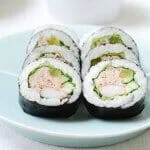
Tuna gimbap is a Korean seaweed rice roll filled here with a creamy tuna mixture, crisp vegetables, pickled radish and imitation crab. It makes a colourful, portable meal, with fresh rice and well-dried fillings helping the rolls hold together neatly.
Ingredients
- 370 g (2 standard measuring cups, not a rice-cooker cup), uncookedshort-grain rice
- 1½ tablespoonssesame oil
- to taste (about ½ teaspoon)salt
- 2 cans (about 140–170 g each; 5–6 ounces), drained welltuna
- 2 tablespoonscelery, finely diced
- 2 tablespoonsmayonnaise
- 1 teaspoonDijon mustard
- 2 teaspoonslemon juice
- start with ¼ teaspoon; pepper to tastesalt and pepper
- 10 leaves; use only the green leafy partromaine lettuce
- 10 leavesperilla
- 3Kirby cucumbers, cut into thick sticks or julienned; discard the seedy part
- 5 stripspre-cut pickled radish (danmuji)
- 10 pieces, about 7.5 cm (3 inches) eachimitation crab sticks
- 5 sheetsgim (dried seaweed)
Instructions
- 1
Cook the rice
Cook the rice with slightly less water than usual. Freshly cooked rice is best for gimbap.
- 2
Drain the tuna
Put the tuna in a strainer and drain it thoroughly, pressing with a spoon to remove more liquid.
- 3
Mix the tuna
Combine the tuna with the celery, mayonnaise, Dijon mustard and lemon juice. Season with salt and pepper to taste.
- 4
Prepare the fillings
Prepare the remaining ingredients and make sure the vegetables are dry. Pat the crab sticks and pickled radish with a paper towel to remove excess moisture.
- 5
Season the rice
Once the other ingredients are ready, take the rice out of the cooker while it is still hot. Add the sesame oil and salt, then fold gently with a rice paddle or large spoon until evenly seasoned. The rice will cool as you mix it and be ready to use.
- 6
Layer the gim
Place a sheet of gim shiny-side down on a chopping board or bamboo mat, with its longer side facing you. Spread about three-quarters of the rice evenly over the sheet, using a rice paddle or preferably your fingers.
- 7
Add the fillings
Place two lettuce leaves and two perilla leaves on the rice near you, then add the tuna and the other prepared ingredients.
- 8
Roll the gimbap
With both hands, lift the bottom edge and roll it over the filling, moving away from you towards the far edge of the rice. Tuck the filling in with your fingers and press firmly, using the bamboo mat if you have one, to close the roll. Continue rolling, applying even pressure with both hands.
- 9
Oil and slice
Rub or brush a little sesame oil over the roll for flavour and shine. Apply a little sesame oil to a sharp knife to help prevent the rice sticking; repeat between cuts as needed, or wipe the knife with a damp towel if rice still clings. Cut the roll into bite-sized pieces about 1.3 cm (½ inch) thick.
What is tuna gimbap?
Gimbap is a Korean dish of seasoned rice and fillings wrapped in dried seaweed, then sliced into rounds. It is often packed for outings or served as an easy meal, with fillings that vary from vegetables to seafood and meat.
This version pairs sesame-seasoned rice with tuna mixed with mayonnaise, mustard and lemon, plus crisp greens, cucumber, pickled radish and imitation crab. The combination gives each slice creamy, crunchy, savoury and tangy elements.
Nutrition and macros by portion
The nutrition label shows one serving as written: 500 calories, 26g protein, 65g carbs, 12g fat.
| Portion | Adjustment | kcal | Protein | Carbs | Fat |
|---|---|---|---|---|---|
| Lighter | Use less mayonnaise | 350 kcal | 18g | 46g | 8g |
| This serving | As written | 500 kcal | 26g | 65g | 12g |
| Hungry | Add another roll | 750 kcal | 39g | 98g | 18g |
The rice supplies most of the carbohydrate, while sesame oil and mayonnaise contribute much of the fat. Tuna and imitation crab provide most of the protein, with smaller amounts from the rice and vegetables. Pair a roll with soup or extra fresh vegetables if you want a more balanced plate.
Getting the rice right
Freshly cooked rice is easier to spread and shape while it is warm. Using slightly less water than usual helps avoid rice that is too wet and difficult to roll.
Sesame oil and salt are folded into the rice after cooking. Use a gentle folding motion so the grains are seasoned without being mashed.
Keep the fillings dry
Tuna: Drain it thoroughly before mixing; excess liquid can make the filling loose and wet the rice.
Vegetables and pickles: Dry the greens and cucumber, and blot the radish and crab sticks. Less surface moisture makes the roll easier to close and slice.
Layer for a tidy roll
Spread the rice in an even layer, leaving the filling area close to you. Keep the fillings together rather than scattering them across the sheet, so each cut has a balanced centre.
Lift the near edge over the filling and tuck it in as you begin rolling. Firm, even pressure helps the layers hold together without crushing the ingredients.
Slicing without sticking
A sharp knife and a light coating of sesame oil help cut cleanly through the seaweed and rice. If rice starts to cling, wipe the blade with a damp towel before continuing.
Use a steady sawing motion rather than pressing straight down hard, which can squash the roll and push out the filling.
Serving ideas
Serve the slices as they are for a portable lunch or light supper. They also work well alongside a simple soup or extra fresh vegetables.
For a fuller plate, add a source of vegetables or a bowl of soup, while keeping the gimbap as the main part of the meal.
Recipe notes & tips
- Use the specified standard measuring cup for the rice, not the smaller cup supplied with some rice cookers.
- Keep a small bowl of water nearby if rice sticks to your fingers while spreading it.
- Arrange the fillings in a compact line so they are easier to tuck in.
- Use the bamboo mat to apply even pressure as you roll, if you have one.
- Oil the knife lightly and wipe it clean if rice begins to build up on the blade.
Variations
- Add carrot: Cut it into thin matchsticks for another crisp vegetable.
- Use brown rice: Cook it until tender before seasoning and rolling.
- Swap the greens: Use another tender leafy green in place of romaine.
- Make it spicier: Stir a little chilli paste into the tuna mixture.
- Use fresh crab: Replace the imitation crab sticks with cooked crab meat.
Common mistakes to avoid
- Wet tuna: Drain and press it well before mixing so the filling does not turn watery.
- Damp fillings: Pat the vegetables, radish and crab dry to help the roll stay closed.
- Overfilled sheet: Use a modest line of filling so you can tuck and roll it securely.
- Uneven rice layer: Spread the rice evenly so the roll has a consistent shape.
- Loose rolling: Tuck the filling in at the start and apply firm, even pressure as you roll.
- Sticky knife: Lightly oil the blade and wipe it with a damp towel when rice clings.
How to store
For the best texture, eat the gimbap soon after making it. If needed, refrigerate it in an airtight container and use within 1 day; let it lose some of its chill before eating, as cold rice firms up. Avoid reheating the sliced rolls, which can soften the seaweed and affect their texture.
Frequently asked questions
Can I make the rice ahead?
Freshly cooked rice is easiest to season and spread for this recipe. Prepare the fillings ahead, then cook and season the rice when you are ready to assemble.
What can I use instead of a bamboo mat?
A clean chopping board works; roll carefully with both hands and press along the roll as you go. The mat is helpful but not essential.
Why is my gimbap difficult to slice?
The knife may be blunt or coated with rice. Use a sharp blade, lightly oil it, and wipe it with a damp towel when needed.
Can I use another kind of cucumber?
Yes. Choose a firm cucumber and remove the watery, seedy centre before cutting it into sticks.
How do I stop the roll from opening?
Tuck the filling in as you make the first turn, then keep firm, even pressure on the roll. Avoid overfilling it, which makes the edge harder to seal.
Cook it from the original
This recipe comes from koreanbapsang.com. Their page has the author’s own photos, notes and tips — the best place to cook it from.
Open the recipe on koreanbapsang.com