
Tofu Bibimbap
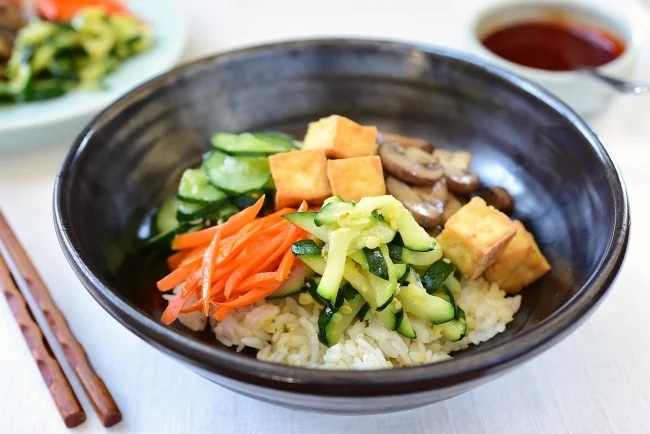
Tofu bibimbap is a Korean-inspired bowl of rice topped with separately prepared vegetables, tofu and a spicy gochujang sauce. Cooking each topping briefly keeps its flavour and texture distinct, making this a colourful, flexible meal.
Ingredients
- 4 servingscooked rice
- 1 mediumcourgette
- 142 gbaby kale (or spinach or watercress)
- 2 mediumcarrots (or 1 orange pepper)
- 10mushroom caps (crimini, white or shiitake)
- 227 gtofu
- 1 teaspoonminced garlic
- to tastesesame oil
- to tastecooking oil
- 2 tablespoonsgochujang
- 2 tablespoons (or 1 tablespoon Korean plum extract, maesilcheong, and 1 tablespoon water)apple cider
- 1/2 teaspoon, plus more to tastesalt
- to tasteblack pepper
Instructions
- 1
Cook the rice
Cook the rice in a rice cooker or according to the packet instructions, using slightly less water than directed. For bibimbap, the rice should be a little drier than usual.
- 2
Cook the courgette
Cut the courgette into matchsticks, sprinkle with 1/2 teaspoon salt and leave for 10–15 minutes. Squeeze out the liquid. Heat a little cooking oil in a pan, add the courgette and 1/2 teaspoon minced garlic, and sauté over a medium-high heat for 2–3 minutes. Stir in 1 teaspoon sesame oil.
- 3
Blanch the greens
Briefly blanch the baby kale in salted boiling water. Drain promptly, cool it in cold water, then drain again and squeeze out the water. Toss with 1/2 teaspoon garlic, 1/2 teaspoon sesame oil, and salt and pepper to taste.
- 4
Sauté the carrots
Cut the carrots into matchsticks. Reheat the pan with a little cooking oil and sauté the carrots over a medium-high heat for 1–2 minutes, until slightly softened. Season with salt and pepper to taste.
- 5
Cook the mushrooms
Remove the mushroom stems and slice the caps into 6 mm-thick pieces. Sauté them in the lightly oiled pan over a medium-high heat for 2–3 minutes.
- 6
Fry the tofu
Cut the tofu into roughly 2 cm cubes and sprinkle lightly with salt. Heat the pan with 1 tablespoon cooking oil and pan-fry the tofu until lightly golden on every side.
- 7
Assemble the bowls
Put a serving of rice in each bowl and arrange a little of each prepared vegetable on top, followed by a few pieces of tofu. Drizzle with a little sesame oil and serve with the gochujang sauce.
What is bibimbap?
Bibimbap is a Korean rice dish served with an assortment of toppings, often arranged over the rice and mixed together at the table. Its name is commonly understood as “mixed rice”.
This version pairs crisp-tender vegetables with pan-fried tofu and a spicy gochujang sauce. Preparing the toppings separately helps each one keep its own flavour and texture.
Nutrition and macros by portion
The nutrition label shows one serving as written: 420 calories, 14g protein, 62g carbs, 12g fat.
| Portion | Adjustment | kcal | Protein | Carbs | Fat |
|---|---|---|---|---|---|
| Lighter | Use less rice and oil | 294 kcal | 10g | 43g | 8g |
| This serving | As written | 420 kcal | 14g | 62g | 12g |
| Hungry | Add another rice serving | 630 kcal | 21g | 93g | 18g |
Most of the carbohydrates come from the rice, while the cooking oil and sesame oil contribute much of the fat. Tofu supplies some protein, with smaller amounts from the vegetables. For a balanced plate, serve the bowl with a generous share of vegetables and tofu alongside the rice.
Why cook the toppings separately?
Courgette: salting it briefly draws out moisture before it goes into the pan, helping it sauté rather than turn watery.
Greens: blanching and cooling the kale quickly softens it while keeping it bright. Squeezing it dry matters, since excess water would dilute its sesame and garlic seasoning.
Carrots and mushrooms: short, separate cooking times let the carrots retain some bite and give the mushrooms room to cook without steaming.
Getting the rice right
Use a little less water than you normally would, as the recipe suggests, so the grains are not overly soft. The rice should still be cooked through, but dry enough to support the toppings without becoming soggy.
If the rice finishes before the vegetables, keep it covered until you are ready to assemble the bowls.
How to tell when everything is ready
Courgette: cook it for 2–3 minutes over a medium-high heat; it should be tender but not collapsed.
Carrots: 1–2 minutes should soften them slightly while leaving some firmness. Mushrooms need 2–3 minutes, and the tofu is ready when all its sides are lightly golden.
Serving and sauce
Arrange a small amount of each topping over the rice rather than mixing them in the pan. Add the sesame oil drizzle and serve the gochujang sauce alongside so everyone can adjust the heat.
The listed apple cider or plum extract and water accompany the gochujang in the sauce ingredients. The method does not give a separate mixing step, so follow the original sauce directions if you need a precise preparation.
Choosing the vegetables
Greens: baby kale is the listed option, with spinach or watercress as alternatives. Whichever you use, blanch briefly and squeeze it dry before seasoning.
Carrots: the recipe also offers one orange pepper as an alternative. Cut it into matchsticks so it can be sautéed briefly like the carrots.
Recipe notes & tips
- Cut the vegetables into similarly sized matchsticks so they cook evenly.
- Squeeze the blanched greens and salted courgette thoroughly before cooking or seasoning.
- Use a hot pan and work in batches if the toppings do not fit comfortably.
- Keep the tofu cubes intact while frying so they can brown on all sides.
- Add the sesame oil in small drizzles, since its flavour is concentrated.
Variations
- Swap the greens: use spinach or watercress instead of baby kale, as suggested.
- Use orange pepper: cut one pepper into matchsticks in place of the carrots.
- Try shiitake: choose shiitake mushroom caps for a different savoury note.
- Use plum extract: replace the apple cider with 1 tablespoon maesilcheong and 1 tablespoon water.
- Adjust the heat: serve the gochujang sauce separately and add it gradually.
Common mistakes to avoid
- Wet courgette: leave it with the salt for 10–15 minutes, then squeeze out the liquid before sautéing.
- Watery greens: drain and squeeze them well after blanching and cooling.
- Overcooked carrots: sauté only until slightly softened, about 1–2 minutes.
- Crowded mushrooms: cook them in a lightly oiled pan without piling them up, so they sauté rather than steam.
- Pale tofu: give the cubes enough contact with the hot pan to brown each side lightly.
How to store
Store the rice, tofu and vegetables separately in airtight containers in the fridge and use within 3 days. Reheat the rice and cooked toppings until piping hot, then assemble with the sauce and sesame oil; the greens are also good served cold.
Frequently asked questions
Can I use spinach instead of baby kale?
Yes. Spinach or watercress are listed alternatives; blanch the greens briefly, cool them, drain and squeeze out the water before seasoning.
Can I use an orange pepper instead of carrots?
Yes. The recipe gives one orange pepper as an alternative. Cut it into matchsticks and sauté briefly until slightly softened.
How spicy is gochujang?
Gochujang brings both heat and savoury depth. Serve the sauce on the side and add it a little at a time to suit your preference.
Can I prepare the toppings ahead?
Yes. Cook the toppings and rice ahead, store them separately in the fridge, then reheat the rice and cooked vegetables before assembling.
What does the recipe mean by apple cider?
It lists 2 tablespoons of apple cider, or 1 tablespoon Korean plum extract with 1 tablespoon water, alongside the gochujang. Check the source recipe for any further sauce instructions, as the method here does not specify a mixing step.
Cook it from the original
This recipe comes from koreanbapsang.com. Their page has the author’s own photos, notes and tips — the best place to cook it from.
Open the recipe on koreanbapsang.com