
Maekjeok (Doenjang Marinated Pork)
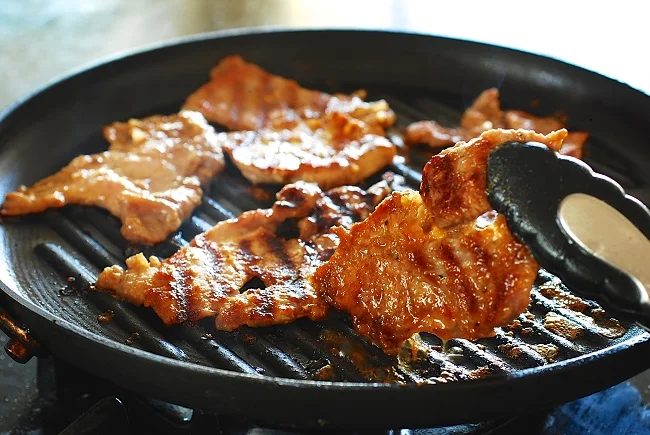
Maekjeok is pork marinated in doenjang, the savoury Korean fermented soybean paste, then cooked quickly until tender with lightly caramelised edges. Serve it with fresh leaves, stir-fried greens and ssamjang for Korean-style wraps.
Ingredients
- 454 g (1 pound)pork shoulder (Boston butt) or loin, thinly sliced about 6 mm (¼ inch) thick
- 1½ tablespoonsdoenjang (Korean fermented soybean paste)
- 1 tablespoonsoy sauce
- 2 tablespoonsrice wine, mirin or another white wine
- 1 tablespoonsugar
- 1 tablespoonhoney, rice syrup (jocheong), oligo dang or maesil cheong (green plum extract)
- 2 tablespoonsgrated onion
- 1 tablespoonminced garlic
- 1 teaspoonfinely grated ginger
- 1 teaspoonvinegar or lemon juice
- 1 tablespoonsesame oil
- to tastepepper
- 113 g (4 ounces)buchu (garlic chives), or a mixture with minari
- If buchu is unavailable: 1 mediumonion, thinly sliced
- to tastesalt
- for stir-fryingoil
- 1 or 2 headsred or green leaf lettuce
- 10 to 15 leaves (optional)perilla leaves (kkaennip)
- optionalcrown daisy (ssukgat)
- 1 tablespoongochujang (Korean red chilli paste)
- 2 tablespoons, or to tastedoenjang (Korean soybean paste)
- 1 teaspoonminced garlic
- 1 teaspoonsugar
- 2 teaspoonssesame oil
- 1 tablespoon, if neededwater or soda, to thin the sauce
Instructions
- 1
Slice the pork
If the pork is not already sliced, cut it into pieces about 6 mm (¼ inch) thick.
- 2
Mix the marinade
Put all the marinade ingredients in a bowl and mix thoroughly.
- 3
Marinate the meat
Add the pork and turn it in the marinade until evenly coated. Leave it to marinate for at least 30 minutes.
- 4
Cook the greens
Cut the optional vegetables into 5–7.5 cm (2–3 inch) lengths. Heat a skillet with 1 tablespoon of oil and stir-fry them briefly until just wilted. Season with salt to taste and transfer to a plate.
- 5
Cook the pork
Heat a grill pan or skillet over medium-high heat and add the pork slices, then immediately reduce the heat to medium. Cook for 1–2 minutes on each side, turning a couple of times to stop the marinade burning, until the pork is cooked through and lightly caramelised.
- 6
Serve with wraps
Arrange the pork on a bed of the stir-fried vegetables, with the wrap vegetables and ssamjang alongside.
What is maekjeok?
Maekjeok is a Korean dish of pork seasoned with doenjang, a fermented soybean paste with a deep, savoury flavour. It is often cooked over a grill or in a pan and served with leafy vegetables for wrapping.
This version pairs the paste with a little sweetness, aromatics and sesame oil. The pork cooks quickly, while the fresh leaves and ssamjang let everyone build each wrap to taste.
Nutrition and macros by portion
The nutrition label shows one serving as written: 430 calories, 30g protein, 22g carbs, 25g fat.
| Portion | Adjustment | kcal | Protein | Carbs | Fat |
|---|---|---|---|---|---|
| Lighter | Use lean pork, less ssamjang | 301 kcal | 21g | 15g | 18g |
| This serving | As written | 430 kcal | 30g | 22g | 25g |
| Hungry | Add extra pork and rice | 645 kcal | 45g | 33g | 38g |
The pork supplies most of the protein and fat, while the sugar and sweetener in the marinade and sauce contribute carbohydrates. The doenjang, soy sauce and added salt account for much of the sodium; serve with plenty of lettuce and other vegetables, and use ssamjang sparingly if you want to moderate salt.
The doenjang marinade
Doenjang: its salty, fermented character is the central flavour, so mix it thoroughly with the other marinade ingredients to avoid concentrated patches.
Sweetness and aromatics: sugar and honey or syrup round out the paste, while onion, garlic and ginger add savoury fragrance. Vinegar or lemon juice brings a little sharpness to the mixture.
Slice and coat the pork
Even slices: pieces about 6 mm (¼ inch) thick cook quickly and more evenly. If slicing a larger piece, aim for a consistent thickness.
Marinating: coat every piece well and allow at least 30 minutes, as stated in the method. Keep the pork refrigerated while it marinates if you are not cooking it straight away.
Control the heat
Hot pan, then medium: start with a medium-high pan, add the pork and promptly reduce the heat to medium. The marinade contains sweet ingredients that can scorch if the cooking surface stays too hot.
Turn the slices a couple of times as they cook. Look for pork cooked through with lightly caramelised patches, rather than waiting for a dark crust that may taste burnt.
Greens and wrap leaves
Buchu: briefly stir-fry the garlic chives or minari until they begin to wilt; they should still have some texture. If neither is available, use the suggested thinly sliced onion instead.
Wraps: set out lettuce and, if using, perilla leaves and crown daisy. Add pork and greens to a leaf, then finish with a little ssamjang.
Make the ssamjang
Stir the gochujang, doenjang, garlic, sugar and sesame oil together until evenly combined. The sauce should be thick enough to sit on a wrap without running.
If it is too thick to mix or spread, loosen it with up to 1 tablespoon of water or soda, as directed in the recipe.
Recipe notes & tips
- Slice the pork evenly so thinner pieces do not finish far ahead of thicker ones.
- Mix the marinade until the doenjang is dispersed before adding the meat.
- Cook the greens separately so they do not crowd the pan with the pork.
- Lower the heat soon after adding the pork to help prevent the sweet marinade from scorching.
- Keep the wrap leaves and ssamjang ready before the pork comes off the heat.
Variations
- Use loin: choose pork loin for a leaner cut, taking care not to overcook it.
- Swap the greens: use the suggested onion if garlic chives or minari are unavailable.
- Adjust the heat: add more gochujang to the ssamjang for a spicier dip.
- Change the sweetener: use honey, rice syrup, oligo dang or maesil cheong as listed.
- Add rice: serve cooked rice alongside the wraps for a more substantial meal.
Common mistakes to avoid
- Uneven slices: pieces cook at different speeds, so aim for a consistent thickness.
- Skipping the marinade time: give the pork at least 30 minutes as directed.
- Keeping the heat too high: the sweet marinade can burn, so reduce the heat to medium after adding the pork.
- Overcooking the greens: stir-fry only until slightly wilted to retain some texture.
- Making the sauce too thick: mix in water or soda a little at a time, up to 1 tablespoon.
How to store
Refrigerate leftover cooked pork and greens in a covered container and use within 3 days. Reheat the pork in a skillet over medium heat until hot throughout; keep the fresh wrap leaves separate until serving.
Frequently asked questions
Can I marinate the pork for longer?
The method calls for at least 30 minutes. If preparing ahead, keep the pork covered in the refrigerator.
How do I know when the pork is done?
The recipe calls for pork cooked through, with lightly caramelised edges, after about 1–2 minutes per side. Timing can vary with the thickness of the slices and the pan.
Can I use pork loin instead of shoulder?
Yes. The recipe lists either Boston butt (pork shoulder) or loin; keep the slices even and watch the loin closely so it does not overcook.
What can I use instead of buchu?
Use minari mixed with the buchu, or replace the buchu with 1 medium thinly sliced onion if it is unavailable.
What should I serve with maekjeok?
Serve it with lettuce, optional perilla leaves and crown daisy, the stir-fried vegetables and ssamjang. Cooked rice can also be served alongside.
Can I make the ssamjang less thick?
Yes. Stir in up to 1 tablespoon of water or soda if needed to thin it.
Cook it from the original
This recipe comes from koreanbapsang.com. Their page has the author’s own photos, notes and tips — the best place to cook it from.
Open the recipe on koreanbapsang.com