
Dak Bulgogi (Korean Chicken BBQ)
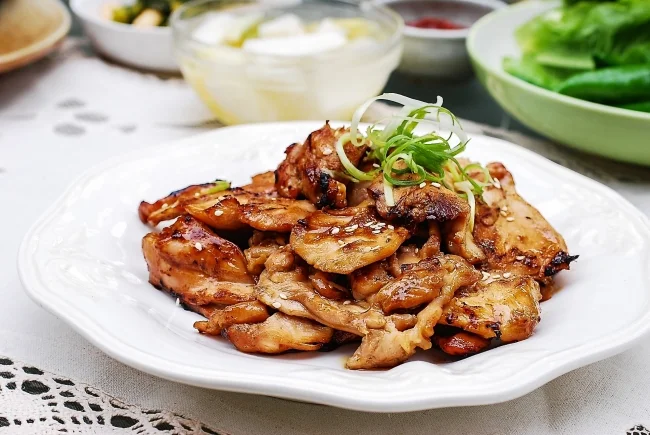
Dak bulgogi is Korean-style chicken barbecue, marinated in a savoury-sweet mix of soy, garlic, ginger and sesame oil. This quick pan-cooked version is handy for a weeknight meal, with small pieces that cook in minutes.
Ingredients
- 454 g (1 pound)boneless chicken thigh and/or breast
- 3 tablespoonssoy sauce
- 1 tablespoonlemon juice
- 1 tablespoonbrown sugar (or regular sugar)
- 1 tablespoon (or 1⅓ more tablespoons brown sugar)honey
- 1 tablespoonrice wine (or mirin or white wine)
- 1 tablespoonminced garlic
- 1 teaspoongrated ginger
- 1 tablespoonsesame oil
- Pinchblack pepper
- ½ teaspoonsesame seeds
Instructions
- 1
Prepare the chicken
Rinse the chicken and trim away excess fat. Cut it into pieces about 5 cm long and 2.5 cm wide. For outdoor grilling, cut larger pieces and leave them to marinate for longer. Double or triple the recipe if needed.
- 2
Mix the marinade
Stir the marinade ingredients together in a bowl until the sugar has dissolved.
- 3
Marinate the chicken
Add the chicken and turn the pieces to coat them. Cover and marinate in the fridge for about 30 minutes.
- 4
Cook the chicken
Heat a frying pan over medium-high heat. Add the chicken, keeping the marinade aside, and cook for about 2 minutes on each side, until cooked through and lightly caramelised. The sugar and honey can burn quickly, so keep watch and add the reserved marinade a tablespoon at a time if the pan becomes dry. Lower the heat slightly if needed.
What is dak bulgogi?
Bulgogi means fire-cooked meat in Korean cooking, and dak bulgogi is its chicken version. It is commonly associated with grilled, marinated meat, but a hot frying pan makes this style practical at home.
This recipe uses small chicken pieces and a short marinade, so it cooks quickly. Soy sauce brings savouriness, while sugar and honey help create a glossy, lightly browned coating.
Nutrition and macros by portion
The nutrition label shows one serving as written: 410 calories, 36g protein, 18g carbs, 21g fat.
| Portion | Adjustment | kcal | Protein | Carbs | Fat |
|---|---|---|---|---|---|
| Lighter | Use breast and less oil | 287 kcal | 25g | 13g | 15g |
| This serving | As written | 410 kcal | 36g | 18g | 21g |
| Hungry | Add rice and vegetables | 615 kcal | 54g | 27g | 32g |
Chicken supplies most of the protein, while the sugar and honey contribute carbohydrates; sesame oil and the chicken contribute most of the fat. Serve it with vegetables and a moderate portion of rice to round out the plate.
Choosing the chicken
Thigh: boneless thigh stays juicy and is forgiving if it cooks a little longer.
Breast: breast is leaner and works well, but cut it evenly and watch the cooking time so it does not dry out.
Getting the marinade right
Dissolve the sugar: stir the marinade until no crystals remain at the bottom of the bowl. This helps the sweet and savoury flavours coat the chicken evenly.
Chill the chicken: the recipe calls for about 30 minutes in the fridge. If using larger pieces for outdoor grilling, allow more time as directed in the method.
Managing the heat
Sweet coating: honey and sugar brown quickly, so keep the chicken moving and check the pan rather than leaving it unattended.
Dry pan: add the reserved marinade a tablespoon at a time if the pan dries out. Reduce the heat slightly if the coating starts to darken too fast.
Checking for doneness
The chicken should be cooked through, with a little caramelisation on the outside; the method gives about 2 minutes per side for the small pieces. Timing can vary with the size of the pieces and the heat of the pan, so check the thickest piece before serving.
Serving ideas
Serve the chicken with rice and vegetables for a straightforward meal. Steamed greens or a crisp salad provide a fresh contrast to the sweet, savoury marinade.
Recipe notes & tips
- Cut the chicken into pieces of similar size so they cook at roughly the same rate.
- Marinate the chicken in the fridge, not on the worktop.
- Let excess marinade drip off as you transfer the chicken to the pan to reduce splashing.
- Keep the reserved marinade beside the pan so you can add it in small amounts as needed.
- Use a wide pan to give the chicken room to brown rather than crowding it.
Variations
- Use mirin: swap it for the rice wine as suggested in the ingredients.
- Try white wine: use it in place of the rice wine for the listed alternative.
- Swap the sweetener: use regular sugar instead of brown sugar.
- Skip the honey: replace it with 1⅓ more tablespoons of brown sugar, as listed.
- Choose your cut: use all thigh or all breast rather than a mixture.
Common mistakes to avoid
- Cutting uneven pieces: smaller pieces may overcook before larger ones are ready, so keep the cuts similar.
- Leaving the pan unattended: the sweet marinade can burn quickly, so watch the chicken closely.
- Adding all the reserved marinade at once: it can make the chicken stew; add it a tablespoon at a time when the pan is dry.
- Using too much heat: if the coating darkens too quickly, lower the heat slightly.
- Crowding the pan: the pieces may not caramelise well, so cook in batches if they do not fit with room around them.
How to store
Refrigerate leftovers in a covered container and eat within 3 days. Reheat in a frying pan over a moderate heat until piping hot, adding a small splash of water if the sauce has thickened.
Frequently asked questions
Can I use chicken breast?
Yes. Cut it into evenly sized pieces and keep a close eye on it, as breast can dry out more quickly than thigh.
Can I marinate the chicken for longer?
The recipe specifies about 30 minutes in the fridge. For larger pieces intended for outdoor grilling, the method says to marinate for longer.
Can I grill the chicken outdoors?
Yes. Cut the chicken into larger pieces and marinate it for longer, as the method suggests. Take care because the sugary marinade can burn over high heat.
How can I tell when it is cooked?
Check the thickest piece to make sure it is cooked through, and look for light caramelisation on the outside. The stated cooking time is about 2 minutes per side for small pieces.
What can I use instead of rice wine?
The recipe lists mirin or white wine as alternatives.
Cook it from the original
This recipe comes from koreanbapsang.com. Their page has the author’s own photos, notes and tips — the best place to cook it from.
Open the recipe on koreanbapsang.com