
Cinnamon Scones
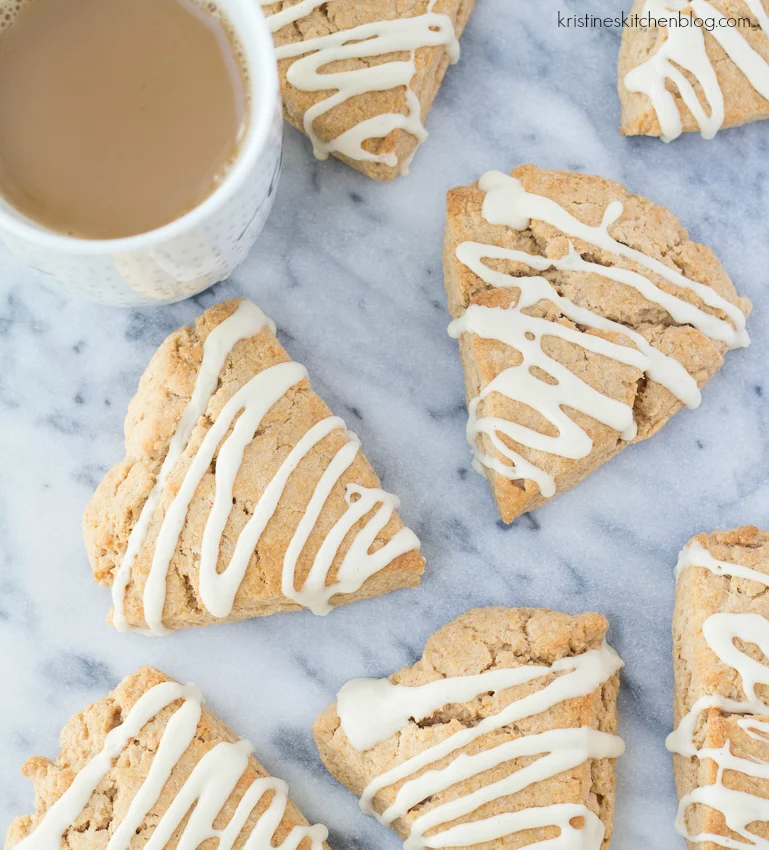
These American-style cinnamon scones are tender, buttery wedges with warm spice and a lightly salted maple glaze. Serve one with coffee or tea for a simple breakfast or treat.
Ingredients
- 180 g (1½ cups)white whole-wheat flour
- 125 g (1 cup)plain flour
- 25 g (2 tbsp)sugar
- 12 g (1 tbsp)baking powder
- 8 g (1 tbsp)ground cinnamon
- 3 g (½ tsp)salt
- 113 g (8 tbsp; 1 stick), cold and cut into small cubesunsalted butter
- 240 ml (1 cup)double cream
- 60 ml (¼ cup)pure maple syrup
- 60 g (½ cup)icing sugar
- 22.5 ml (1½ tbsp)pure maple syrup
- 15 ml (1 tbsp)double cream
- 1 pinchsalt
Instructions
- 1
Prepare the oven
Heat the oven to 220°C (425°F). Line a baking sheet with baking parchment and set it aside.
- 2
Mix the dry ingredients
Put the white whole-wheat flour, plain flour, sugar, baking powder, cinnamon and salt in a food processor and pulse to combine. Add the butter and pulse about 6–8 times, until the largest pieces are about the size of small peas. Tip the mixture into a large bowl.
- 3
Add the liquids
In a measuring jug or bowl, use a fork to mix the double cream with 60 ml (¼ cup) maple syrup. Pour it into the flour mixture and stir with the fork until mostly combined. If a little flour remains at the bottom, quickly and gently knead it into the dough by hand. Fold in cinnamon chips if you like.
- 4
Shape the scones
Divide the dough into two equal rounds and move them to a floured work surface. Press each into a 2.5 cm (1-inch) thick disc, then cut each disc into six equal triangles. Arrange them on the prepared baking sheet.
- 5
Bake until golden
Bake for 10–12 minutes, until the edges are just beginning to turn golden.
- 6
Cool the scones
Leave the scones on the baking sheet to cool before adding the glaze.
- 7
Make the glaze
Whisk the icing sugar, 22.5 ml (1½ tbsp) maple syrup, 15 ml (1 tbsp) double cream and a pinch of salt together. Drizzle the glaze over the cooled scones.
What are cinnamon scones?
Scones are quick-baked, individually portioned pastries popular in the United States as well as Britain, with styles and sweetness varying by recipe. This American version is flavoured with cinnamon and finished with maple glaze.
Whole-wheat flour adds a gently nutty note, while plain flour keeps the crumb tender. Cold butter and a brief mix help the wedges bake up with a soft, lightly crumbly texture.
Nutrition and macros by portion
The nutrition label shows one serving as written: 288 calories, 4g protein, 34g carbs, 16g fat.
| Portion | Adjustment | kcal | Protein | Carbs | Fat |
|---|---|---|---|---|---|
| Lighter | Use a smaller glaze drizzle | 202 kcal | 3g | 24g | 11g |
| This serving | As written | 288 kcal | 4g | 34g | 16g |
| Hungry | Serve two scones | 432 kcal | 6g | 51g | 24g |
The flours and sugar supply most of the carbohydrates, while butter and double cream contribute much of the fat. There is a modest amount of protein from the flour and cream; pair a scone with yoghurt or fruit for a more balanced plate.
Choosing the ingredients
Flour blend: White whole-wheat flour brings more flavour than plain flour alone, while the plain flour balances it for a softer bite. Measure the flours carefully so the dough does not become dry.
Cold butter: Keep the butter chilled and cut it into small cubes before processing. The small pieces spread through the flour and help give the scones their tender texture.
Maple and cinnamon: Cinnamon seasons the dough, and maple syrup sweetens both the dough and glaze. Use pure maple syrup for its distinctive flavour.
Mixing without overworking
Pulse briefly: Stop when the largest butter pieces are about the size of small peas; the mixture should not become a smooth paste. Short pulses give you more control than running the processor continuously.
Bring it together: Stir in the cream and maple mixture only until most of the flour is moistened. If dry flour remains, use a few gentle, quick movements by hand rather than kneading the dough extensively.
Shaping even wedges
Equal rounds: Divide the dough evenly before shaping, then press each portion into a disc about 2.5 cm thick. Keeping the thickness consistent helps the scones bake at a similar rate.
Clean cuts: Cut each disc into six triangles and transfer them to the lined tray. Handle the dough gently so the wedges keep their shape.
Checking doneness
Look for colour: The recipe calls for 10–12 minutes in a 220°C oven, until the edges are barely golden. Start checking at the shorter end of the range, as ovens can vary.
Cool before glazing: Let the scones cool on the baking sheet first. Warm scones can make the glaze run off rather than sit in a drizzle.
Serving and timing
The 35-minute total makes these a practical bake for breakfast or an afternoon tea break. Serve them with coffee or tea, as suggested, or alongside fruit for a fresher contrast.
For a simple spread, add yoghurt or fresh berries. The recipe makes 12 scones, so you can serve some straight away and keep the rest for later.
Recipe notes & tips
- Keep the butter cold until you add it to the flour.
- Use short pulses so the butter does not disappear into the flour.
- Add the cream mixture gradually if the dough seems close to coming together.
- Flour the work surface lightly to make shaping easier without adding excess flour.
- Check the scones at 10 minutes, since they should be only barely golden at the edges.
- Wait until the scones are cool before drizzling on the glaze.
Variations
- Add cinnamon chips: Fold them into the dough at the point suggested in the method.
- Make a stronger spice note: Add a little extra cinnamon to the glaze.
- Use a thicker drizzle: Add icing sugar a little at a time until the glaze is thicker.
- Skip the glaze: Serve the scones plain for a less sweet finish.
- Add chopped pecans: Fold a small handful into the dough for a nutty variation.
Common mistakes to avoid
- Warm butter: It blends too thoroughly into the flour; chill it before cutting it into cubes.
- Overmixing: It can make the scones less tender; stop once the dough is mostly combined.
- Dry dough: Flour left in the bowl can leave dry patches; gently work it in by hand.
- Uneven thickness: Wedges may bake at different rates; press both discs to about 2.5 cm thick.
- Glazing while warm: The glaze can run off; cool the scones on the tray first.
How to store
Once completely cool, store the scones in an airtight container at room temperature for up to 2 days. Reheat briefly in a low oven, and add the glaze after reheating if you are glazing them later.
Frequently asked questions
Can I make the dough without a food processor?
Yes. Whisk the dry ingredients in a bowl, then cut in the cold butter with a pastry cutter or two knives until the largest pieces are pea-sized. Stir in the cream and maple mixture with a fork.
How do I know when the scones are baked?
They should be baked after 10–12 minutes, with edges that are just beginning to turn golden. Avoid waiting for a deep golden colour.
Why does the recipe use two types of flour?
White whole-wheat flour contributes a mild whole-grain flavour, while plain flour helps keep the scones tender. The blend gives the dough more character than plain flour alone.
Can I prepare the scones ahead?
You can shape the wedges ahead and keep them covered in the refrigerator until ready to bake. Bake them before serving and glaze once they have cooled.
Can I freeze these scones?
Freeze the cooled, unglazed scones in a well-sealed container. Thaw and warm them gently, then make and drizzle on the glaze.
Cook it from the original
This recipe comes from kristineskitchenblog.com. Their page has the author’s own photos, notes and tips — the best place to cook it from.
Open the recipe on kristineskitchenblog.com