
Chocolate Chip Sweet Cream Scones
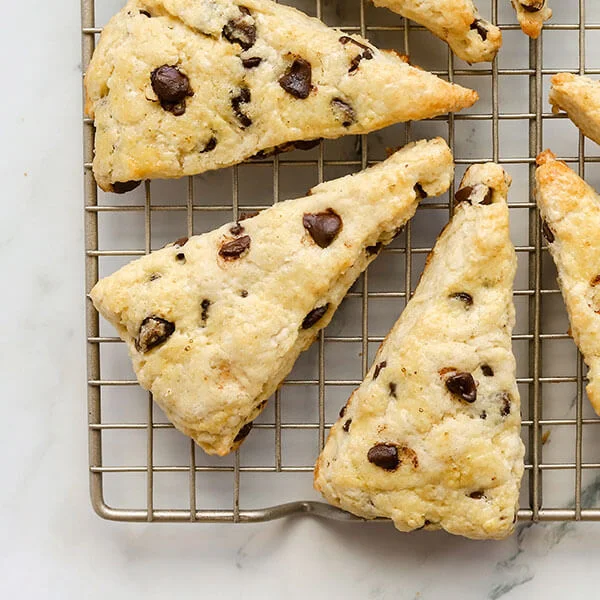
These sweet cream scones are tender, lightly crisp-edged wedges studded with semi-sweet chocolate chips. They come together quickly and make an easy bake for breakfast or an afternoon treat.
Ingredients
- 220 g (1¾ cups)plain flour
- 38 g (3 tablespoons)granulated sugar
- 10 g (2½ teaspoons)baking powder
- 3 g (½ teaspoon)salt
- 76 g (⅓ cup)cold butter, cut into chunks
- 85 g (½ cup)semi-sweet chocolate chips
- 1 largeegg, lightly beaten
- 60–90 ml (4–6 tablespoons)half-and-half
- 1 largeegg, lightly beaten
Instructions
- 1
Heat the oven
Heat the oven to 204°C (400°F).
- 2
Mix the dough
Combine the flour, granulated sugar, baking powder and salt in a bowl. Cut in the butter with a pastry blender or fork until the mixture resembles coarse crumbs. Stir in the chocolate chips, 1 egg and just enough half-and-half for the dough to pull away from the sides of the bowl.
- 3
Shape the scones
Knead the dough lightly 10 times on a lightly floured surface. Roll it into a 23 cm (9-inch) circle and cut it into 12 wedges.
- 4
Bake the wedges
Place the wedges on an ungreased baking tray and brush the tops with the remaining egg. Bake for 10–12 minutes, or until golden brown. Remove them from the tray immediately.
What are sweet cream scones?
Scones are a familiar British bake, traditionally served with tea, and many versions are shaped into rounds or wedges. This variation adds chocolate chips to a simple, tender dough enriched with butter, egg and half-and-half.
The method keeps the dough quick and straightforward: rub or cut cold butter into the dry ingredients, then add just enough liquid to bring it together. Cutting the round into wedges makes individual portions without needing a cutter.
Nutrition and macros by portion
The nutrition label shows one serving as written: 170 calories, 3g protein, 21g carbs, 9g fat.
| Portion | Adjustment | kcal | Protein | Carbs | Fat |
|---|---|---|---|---|---|
| Lighter | Smaller scone portion | 119 kcal | 2g | 15g | 6g |
| This serving | As written | 170 kcal | 3g | 21g | 9g |
| Hungry | Serve two wedges | 255 kcal | 5g | 32g | 14g |
The flour and sugar provide most of the carbohydrates, while butter and chocolate chips contribute much of the fat. The egg and dairy add some protein, but the amount per scone is modest; serve one with yoghurt or fruit for a more balanced snack.
Choosing the ingredients
Cold butter: keeping it chilled helps it remain in small pieces as it is worked into the flour. Those pieces contribute to the crumbly texture of the baked scones.
Chocolate chips: semi-sweet chips add pockets of chocolate without making the dough overly sweet. Fold them in with the egg so they are spread through the mixture.
Half-and-half: begin with the smaller amount and add more only as needed. The dough should come together and leave the sides of the bowl, rather than feel wet or sticky.
Getting the dough right
Butter pieces: use a pastry blender or fork to work the cold butter into the flour mixture until it looks like coarse crumbs. Avoid mixing until the butter disappears completely.
Light kneading: turn the dough over gently 10 times on a lightly floured surface. More handling can make the scones firmer, so stop once the dough is cohesive.
Shaping even wedges
Round shape: roll the dough into a 23 cm circle, keeping its thickness as even as you can. This helps the wedges bake at a similar rate.
Clean cuts: divide the round into 12 wedges and transfer them carefully to the ungreased tray. Brush the tops with the second beaten egg for a golden finish.
Knowing when they are done
Colour: bake at 204°C for 10–12 minutes, checking towards the end of the range. The tops should be golden brown.
Prompt removal: take the wedges off the baking tray straight after baking. Leaving them on the hot tray can continue cooking their bases.
Serving the scones
These are good served warm or at room temperature, with tea or coffee. For a fuller snack, pair one with plain yoghurt or fresh fruit.
The chocolate chips make the scones sweet enough to enjoy on their own, though a little butter can be served alongside if desired.
Recipe notes & tips
- Measure the flour without packing it tightly into the cup.
- Keep the butter cold until you are ready to work it into the dry ingredients.
- Add the half-and-half gradually, stopping as soon as the dough leaves the bowl's sides.
- Use a lightly floured surface so the dough does not stick while you shape it.
- Brush the egg over the tops rather than letting it pool around the sides.
- Remove the scones from the tray as soon as they come out of the oven.
Variations
- Use dark chocolate: swap in dark chocolate chips for a less sweet, more intense flavour.
- Add citrus zest: mix a little finely grated orange zest into the dry ingredients.
- Try dried fruit: replace some of the chocolate chips with raisins or dried cranberries.
- Add chopped nuts: fold in chopped pecans or walnuts alongside the chocolate chips.
- Make smaller scones: cut the circle into more wedges and begin checking them early.
Common mistakes to avoid
- Warm butter: it blends too thoroughly into the flour; chill it before starting.
- Too much liquid: the dough becomes sticky; add the half-and-half a little at a time.
- Over-kneading: the scones can turn firm; stop after 10 light kneads.
- Uneven shaping: wedges may bake at different rates; roll the circle to an even thickness.
- Overbaking: the scones can dry out; check for golden tops from 10 minutes onwards.
- Leaving them on the tray: the bases keep cooking; transfer the wedges off the tray immediately.
How to store
Once cool, store the scones in an airtight container at room temperature for up to 2 days. Warm them briefly in a low oven to refresh before serving.
Frequently asked questions
How much half-and-half should I use?
Use 60–90 ml, adding it gradually. Stop when the dough comes away from the sides of the bowl.
Can I make the dough ahead?
The recipe is designed to be shaped and baked straight away. For the best texture, avoid leaving the mixed dough standing for a long time.
Do I need to grease the baking tray?
No. The method calls for an ungreased baking tray.
Can I use a fork instead of a pastry blender?
Yes. Use a fork to work the cold butter into the flour mixture until it resembles coarse crumbs.
How can I tell when the scones are baked?
Bake them for 10–12 minutes and look for golden-brown tops.
Why brush the tops with egg?
The remaining beaten egg is brushed over the wedges before baking to help give their tops a golden finish.
Cook it from the original
This recipe comes from landolakes.com. Their page has the author’s own photos, notes and tips — the best place to cook it from.
Open the recipe on landolakes.com