
Samgyupsal Gui (Grilled Pork Belly)
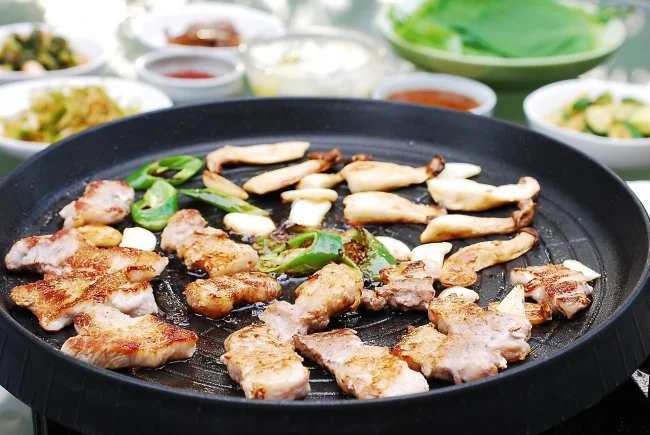
Samgyupsal gui is Korean grilled pork belly served with crisp vegetables, fresh leaves and savoury dipping sauces. Cook the meat at the table or in a pan, then wrap each bite with the accompaniments you like.
Ingredients
- 454 g (1 pound)sliced fresh pork belly (samgyupsal, 삼겹살)
- 8 clovesgarlic, thinly sliced
- 4green chilli peppers, roughly sliced
- 3–4spring onions, thinly sliced (or pa muchim)
- 57–113 g (2–4 ounces)mushroom caps, such as white, crimini or king mushrooms (optional)
- 4chilli peppers (optional)
- 2 headsred or green lettuce
- 16 leavesperilla leaves, kkaennip (깻잎) (optional)
- 15 ml (1 tablespoon)sesame oil
- 2.5 ml (1/2 teaspoon)salt
- to tasteblack pepper
- 30 ml (2 tablespoons)doenjang (된장; Korean soybean paste)
- 15 ml (1 tablespoon)gochujang (고추장; Korean red chilli pepper paste)
- 5 ml (1 teaspoon)minced garlic
- 10 ml (2 teaspoons)sesame oil
- 5 ml (1 teaspoon)sesame seeds
- 15 ml (1 tablespoon)rice wine or mirin (optional; if the sauce is too thick, use 15 ml water to thin it)
Instructions
- 1
Prepare vegetables
Prepare the vegetables. Mix the ingredients for each sauce separately.
- 2
Heat the grill
Heat a grill, flat pan or grill pan. Cut the pork belly strips into shorter, bite-sized pieces, or grill them whole and snip them into pieces with kitchen scissors afterwards.
- 3
Grill and serve
Add the meat to the grill with the garlic, chilli peppers and any other vegetables you are using. Cook over moderate heat until the pork is cooked through, turning it once. Serve straight from the grill or pan as you cook.
What is samgyupsal gui?
Samgyupsal gui is Korean grilled pork belly; its name refers to the three-layered appearance of the meat. It is commonly cooked at the table and eaten in wraps with leaves and sauces.
This version keeps the pork unseasoned, letting its rich flavour pair with fresh vegetables and savoury, spicy dipping sauces. Cooking and serving it in batches means each bite can be eaten hot from the grill.
Nutrition and macros by portion
The nutrition label shows one serving as written: 560 calories, 12g protein, 8g carbs, 55g fat.
| Portion | Adjustment | kcal | Protein | Carbs | Fat |
|---|---|---|---|---|---|
| Lighter | More lettuce, less pork | 392 kcal | 8g | 6g | 39g |
| This serving | As written | 560 kcal | 12g | 8g | 55g |
| Hungry | Add a rice side | 840 kcal | 18g | 12g | 83g |
Pork belly supplies most of the energy and fat, along with some protein; the rice-based sauces and vegetables contribute smaller amounts of carbohydrate. Pair a serving with extra lettuce or other vegetables, and add rice if you want a more filling plate.
Choosing the pork and vegetables
Pork belly: Fresh, sliced belly is the central ingredient, and its fat renders as it grills. Cut long strips into bite-sized pieces before cooking, or use scissors to cut them after grilling.
Vegetables: Garlic and green chillies grill alongside the meat, while mushrooms are an optional addition. Lettuce and perilla leaves are served fresh for wrapping.
Getting the grill ready
Heat: Warm the grill, flat pan or grill pan before adding the ingredients. Moderate heat gives the pork time to cook through without rushing the process.
Batch size: Add only as much as fits comfortably on the cooking surface. Keeping room around the pieces makes it easier to turn them and cook the vegetables alongside.
How to judge doneness
Pork: Turn the pieces once and cook until they are cooked through. The method gives no fixed cooking time, so use the thickness of the slices and the heat of your grill as guides.
Vegetables: Garlic, chillies and any mushrooms should be grilled with the meat. Watch them as they cook and move them if they are ready before the pork.
Making the sauces
Doenjang sauce: Mix the doenjang with the listed sauce ingredients to make a savoury accompaniment. Add the optional rice wine or mirin if using.
Texture: If the sauce feels too thick, stir in a tablespoon of water. Mix the sauces separately so each keeps its own flavour.
Serving the wraps
Leaves: Set out the lettuce and optional perilla leaves alongside the cooked meat. Add pork, grilled vegetables and sauce to a leaf, then fold it into a bite-sized wrap.
Timing: Serve the pork as it comes off the grill or pan. This suits a shared meal where diners can cook and assemble their own wraps.
What to serve alongside
Fresh sides: The lettuce, perilla and spring onions bring a crisp contrast to the rich pork. Set out extra vegetables or a simple rice side if you want a more substantial meal.
Sauces: Offer the mixed sauces in small bowls so everyone can add as much as they like. Keep the grilled chillies separate for diners who prefer less heat.
Recipe notes & tips
- Pat the pork dry before grilling so excess moisture does not slow browning.
- Keep the raw pork and ready-to-eat lettuce on separate plates.
- Slice the garlic and chillies evenly so they cook at a similar pace.
- Use kitchen scissors to cut grilled strips into manageable bites at the table.
- Mix the sauces before heating the grill so they are ready to serve.
Variations
- Add mushrooms: Grill white, crimini or king mushrooms alongside the pork.
- Use perilla: Include kkaennip leaves with the lettuce for a distinct herbal note.
- Make it milder: Leave out the optional whole chillies.
- Add pa muchim: Serve the thinly sliced spring onions as a prepared side.
- Thin the sauce: Stir in a tablespoon of water if the mixture is too thick.
Common mistakes to avoid
- Crowding the grill: The pieces are harder to turn; cook in batches with space around them.
- Overcooking the garlic: It can darken before the pork is done; keep an eye on it and move it as needed.
- Cutting the pork too late: Very long strips can be awkward to handle; shorten them before grilling or use scissors afterwards.
- Serving the pork long after cooking: It loses the just-grilled appeal; bring it to the table as each batch is ready.
- Making the sauce too thick: Stir in water a little at a time until it is easy to dip.
How to store
Refrigerate leftover cooked pork and vegetables in a covered container for up to 3 days, separate from the fresh leaves and sauces. Reheat the pork in a pan until piping hot; store the fresh leaves separately and assemble the wraps just before eating.
Frequently asked questions
Can I cook this without a barbecue?
Yes. Use a flat pan or grill pan, as the method allows either option. Cook over moderate heat and turn the pork once.
Do I need to marinate the pork?
No. This recipe uses fresh, unseasoned pork belly and serves sauces alongside it.
Can I prepare the sauces ahead?
Yes, mix them while preparing the vegetables and keep them covered until serving. Add a little water if a sauce becomes too thick.
What can I use instead of perilla leaves?
The perilla is optional, so serve the pork with lettuce alone if you prefer.
How do I know when the pork is cooked?
Cook it over moderate heat until it is cooked through, turning it once. The exact time depends on the thickness of the slices and the heat of your grill.
Can I cook the pork strips whole?
Yes. Grill the strips whole, then cut them into bite-sized pieces with kitchen scissors.
Cook it from the original
This recipe comes from koreanbapsang.com. Their page has the author’s own photos, notes and tips — the best place to cook it from.
Open the recipe on koreanbapsang.com