
Sweet Coconut Milk for Appam - Thengai paal recipe
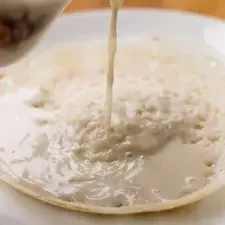
This Tamil-style sweet coconut milk is a warm, gently spiced accompaniment for appam. Two coconut extracts give it body and a fresh coconut flavour, while jaggery adds sweetness.
Ingredients
- 200 gfreshly shredded coconut
- about 100 g (½ cup)jaggery
- a pinchsalt
- 4cardamom pods, powdered
- 240 ml (1 cup), twicewater, for extracting the coconut milk
- 240 ml (1 cup)water, for dissolving the jaggery
Instructions
- 1
Extract coconut milk
Blend the shredded coconut with 240 ml (1 cup) of water, then strain it to collect the first, thick coconut milk. Return the strained coconut to the blender with another 240 ml (1 cup) of water, blend for 1 minute and strain to collect the second, thinner milk. Set both extracts aside.
- 2
Powder cardamom
Peel the cardamom pods and remove the black seeds. Grind the seeds to a powder with a mortar and pestle, and set aside.
- 3
Strain jaggery water
Mix 240 ml (1 cup) of water with the jaggery. Add the cardamom powder and the outer cardamom skins, then heat over a medium flame until the jaggery has completely melted. Remove from the heat and strain out any impurities.
- 4
Warm thin milk
Put the strained jaggery water, a pinch of salt and the second, thin coconut milk in a pan. Warm over a very low flame for 2 minutes, until it is gently boiling, then turn off the heat.
- 5
Add thick milk
Stir in the first, thick coconut milk until combined. Serve with appam.
What is thengai paal?
Thengai paal means coconut milk in Tamil, and this sweet version is served alongside appam. It belongs to Tamil Nadu home cooking, where coconut and jaggery make a simple, fragrant pairing.
This version uses two extracts from the same coconut: a thinner one that is warmed with jaggery and a thicker one stirred in at the end. That final addition keeps the coconut flavour prominent.
Nutrition and macros by portion
The nutrition label shows one serving as written: 365 calories, 3g protein, 43g carbs, 33g fat.
| Portion | Adjustment | kcal | Protein | Carbs | Fat |
|---|---|---|---|---|---|
| Lighter | Use less jaggery | 255 kcal | 2g | 30g | 23g |
| This serving | As written | 365 kcal | 3g | 43g | 33g |
| Hungry | Serve with extra appam | 548 kcal | 5g | 65g | 50g |
Most of the fat comes from the coconut, while the jaggery supplies most of the carbohydrates and sugars; coconut also contributes a little protein. Pair a serving with appam and consider adding a savoury side to round out the plate.
Two coconut extracts
First milk: blend the coconut with water and strain it for the thicker extract. Keep it aside rather than heating it with the jaggery.
Second milk: blend the strained coconut again with fresh water, then strain. This thinner extract goes into the pan first and forms the warm, sweet base.
Jaggery and cardamom
Jaggery water: dissolve the jaggery in water over a medium flame, then strain it to remove any impurities. Straining before it meets the coconut milk gives the finished drink a smoother texture.
Cardamom: use the ground inner seeds for flavour, and add the outer skins to the jaggery water as it heats. Remove the skins when you strain the liquid.
Keep the heat gentle
Warm the jaggery water and thin coconut milk over a very low flame for the stated 2 minutes, stopping when the mixture is just gently boiling. Avoid a vigorous boil.
Turn off the heat before stirring in the thick coconut milk. This follows the recipe’s two-stage method and helps keep the richer extract from being cooked for longer.
Texture and serving
The thin extract makes the base pourable, while the first extract gives the finished milk a fuller texture. Stir well after adding it so the two extracts are evenly combined.
Serve warm with appam, using the sweet coconut milk as an accompaniment. Its jaggery sweetness and cardamom aroma complement the mild, soft appam.
Plan the timing
Allow for the blending and straining as well as the short heating stage; the stated total time is 25 minutes. You can powder the cardamom while the coconut extracts are set aside.
Keep the thick coconut milk ready for the final step, so it can be added as soon as the pan comes off the heat.
Recipe notes & tips
- Strain each coconut extract separately so you can add them at the right stages.
- Use a fine strainer for the jaggery water to catch impurities and cardamom skins.
- Grind the cardamom seeds shortly before cooking for a fresh aroma.
- Keep the flame very low when heating the second coconut extract.
- Stir the thick coconut milk in after turning off the heat.
Variations
- Adjust sweetness: use less jaggery for a less-sweet accompaniment.
- More cardamom: add extra ground cardamom for a stronger aromatic note.
- Smoother texture: strain the coconut extracts through a fine sieve.
- Serve chilled: cool the prepared milk and refrigerate it before serving.
- Use prepared coconut milk: substitute fresh extracts with unsweetened coconut milk, keeping the thin and thick portions separate.
Common mistakes to avoid
- Boiling hard: a vigorous boil can affect the texture; keep the flame very low and stop at a gentle boil.
- Adding thick milk too soon: it should go in after the heat is off, as directed.
- Skipping the second extraction: blend the strained coconut again with fresh water to make the thinner milk.
- Leaving jaggery impurities in: strain the dissolved jaggery before adding it to the pan.
- Grinding the cardamom pods whole: remove the outer skins and grind the inner black seeds.
How to store
Cool leftovers promptly and keep them covered in the refrigerator for up to 2 days. Reheat gently over a low flame, stirring; avoid bringing the mixture to a hard boil.
Frequently asked questions
Can I make the coconut milk ahead?
Yes. Prepare and strain both extracts ahead, keep them covered in the refrigerator, and combine them with the jaggery mixture when ready to serve.
Why are there two coconut extracts?
The first extraction is thicker and the second is thinner. The recipe warms the thinner milk with jaggery, then stirs in the thicker milk off the heat.
Do I need to strain the jaggery water?
Yes. The method strains it to remove impurities, along with the cardamom skins.
Can I use powdered cardamom?
The recipe uses the seeds from four pods, ground to a powder. If using ready-ground cardamom, add it to taste.
How should I serve thengai paal?
Serve it with appam, as directed. It can be served warm or cooled, depending on your preference.
Cook it from the original
This recipe comes from kannammacooks.com. Their page has the author’s own photos, notes and tips — the best place to cook it from.
Open the recipe on kannammacooks.com