
Hearty Soy Sauce Chicken Stew
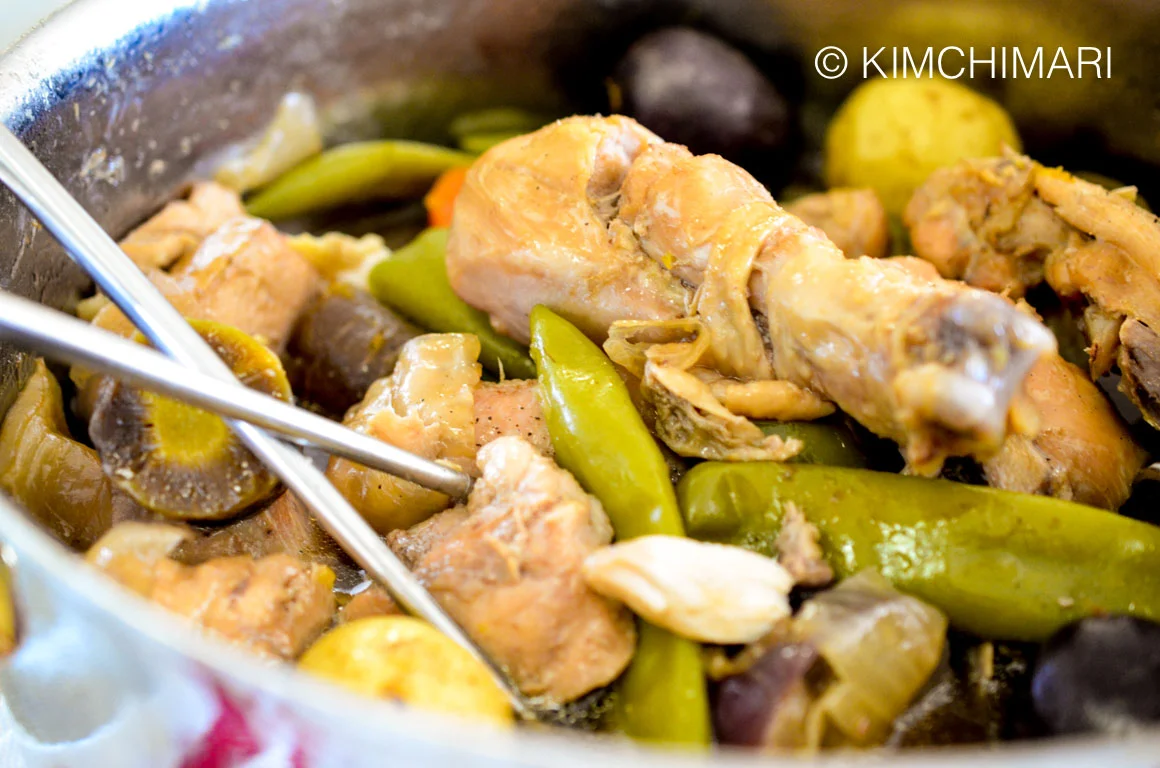
Dak doritang is a Korean chicken stew simmered with soy sauce, vegetables and chilli. Bone-in chicken builds a savoury broth, while potatoes and carrots make it a hearty one-pot meal.
Ingredients
- 900 g (2 lb)bone-in chicken pieces
- 3 mediumcarrots
- 8–9 small, or 2 largecoloured potatoes, or russet potatoes
- 3–6, or 2–3fresh Korean green chilli peppers, or dried red chilli peppers
- 1 largeonion
- 15 ml (1 tbsp)chopped garlic
- 75 ml (5 tbsp)guk kanjang (Korean soup soy sauce)
- 15–30 ml (1–2 tbsp)mirin or white wine
- 15 ml (1 tbsp)jin kanjang (dark soy sauce)
- 950 ml (4 cups)water
- 5 dashes (about ⅛ tsp)black pepper
Instructions
- 1
Prepare the chicken
Trim away excess fat and remove some or all of the skin. If using a whole chicken, cut it into pieces; choose a mix that includes bone-in pieces for a flavourful broth. Score thick pieces such as thighs, drumsticks and breasts so the seasoning can penetrate.
- 2
Season the chicken
Put the chicken in a stew pot. Add 75 ml (5 tbsp) guk kanjang and 15 ml (1 tbsp) jin kanjang, then mix well.
- 3
Start the broth
Pour in 950 ml (4 cups) water, the mirin and 15 ml (1 tbsp) garlic. Bring the mixture to the boil.
- 4
Cook the chicken
Cover the pot and cook over medium-high heat for 15 minutes.
- 5
Prepare the vegetables
Meanwhile, wash and clean the potatoes, carrots, onion and fresh green chillies. Cut the vegetables into large chunks, as they will cook for a while.
- 6
Trim the chillies
Leave small coloured potatoes whole and unpeeled. If using large russet potatoes, peel and cut them; remove the stems from the chillies.
- 7
Simmer the vegetables
Add the potatoes, carrots and onion to the pot. Reduce the heat to medium and cook for 20 minutes.
- 8
Finish with chilli
Add the fresh green chillies and about 5 dashes of black pepper (⅛ tsp). Return the heat to medium-high, cover and cook for a further 10 minutes to infuse the stew with chilli flavour.
What is dak doritang?
Dak doritang, also called dakbokkeumtang, is a Korean chicken stew cooked with vegetables and a boldly seasoned broth. It is a homestyle dish in which the chicken and vegetables simmer together until tender.
This version uses both guk kanjang, a lighter Korean soup soy sauce, and jin kanjang, a darker soy sauce. Bone-in chicken lends depth to the broth, while the later addition of chilli brings its flavour through without simmering it for the full cooking time.
Nutrition and macros by portion
The nutrition label shows one serving as written: 383 calories, 29g protein, 13g carbs, 22g fat.
| Portion | Adjustment | kcal | Protein | Carbs | Fat |
|---|---|---|---|---|---|
| Lighter | Use skinless chicken | 268 kcal | 20g | 9g | 15g |
| This serving | As written | 383 kcal | 29g | 13g | 22g |
| Hungry | Add more potatoes | 575 kcal | 44g | 20g | 33g |
The potatoes, carrots and onion supply most of the carbohydrates, while chicken provides most of the protein. Chicken skin and the dark soy sauce contribute to the fat and sodium, respectively; pairing a portion with extra vegetables and a moderate serving of rice can round out the meal.
Choosing the chicken and soy sauce
Bone-in pieces: Thighs and drumsticks are useful choices because they stay succulent through simmering and contribute flavour to the liquid. If using larger pieces, score the thick parts as directed so the seasoning can reach the meat.
Two soy sauces: Guk kanjang provides the main seasoning, while jin kanjang adds a darker, richer note. The recipe calls for both, so avoid treating them as interchangeable if you have access to Korean soy sauces.
Cut the vegetables for a long simmer
Potatoes: Small coloured potatoes can go in whole and unpeeled, as in the original method. Peel and cut large russet potatoes so they are manageable in the stew.
Carrots and onion: Cut these into substantial pieces rather than small dice. They join the pot after the chicken has started cooking and simmer for 20 minutes.
Chillies: Remove the stems before adding fresh Korean green chillies near the end. Keeping them for the final 10 minutes gives their flavour time to infuse the broth.
Follow the cooking stages
First simmer: Chicken cooks with the soy sauces, water, mirin and garlic for 15 minutes over medium-high heat. Keep the pot covered during this stage.
Vegetable simmer: Once the potatoes, carrots and onion go in, reduce the heat to medium and cook for 20 minutes. This gives the larger vegetable pieces time to soften.
Final simmer: Add the chillies and pepper, then cook covered for another 10 minutes over medium-high heat. The full method takes 50 minutes, not including preparation.
Check the texture before serving
Potatoes and carrots should be tender when pierced, while still holding their shape in the broth. Large chunks help them withstand the two-stage simmer without disappearing into the liquid.
Check that the chicken is cooked through at the thickest part before serving. If a piece needs more time, continue cooking until done rather than relying only on the stated timing.
Serve it as a complete meal
Serve the stew hot, with chicken, vegetables and broth in each bowl. Plain rice is a natural accompaniment for soaking up the savoury liquid.
A simple side of fresh or lightly dressed vegetables can add contrast to the warm, rich stew. Keep any extra seasoning on the table so each person can adjust their bowl.
Recipe notes & tips
- Use a pot large enough to hold the chicken and vegetables without crowding them.
- Cut the carrots and onion into similarly sized large chunks so they cook at a comparable pace.
- Keep the lid on during the stated simmering stages to limit evaporation.
- Use fresh Korean green chillies or the dried red chilli alternative listed in the ingredients.
- Taste the broth before serving, bearing in mind that the two soy sauces already provide seasoning.
Variations
- Use dried chillies: Choose 2–3 dried red chilli peppers instead of the fresh green chillies.
- Choose russet potatoes: Peel and cut 2 large russet potatoes in place of the small coloured potatoes.
- Use white wine: Substitute it for mirin in the listed amount.
- Adjust the heat: Use 3 chillies for a milder result or up to 6 fresh green chillies for more chilli flavour.
- Keep the skin: Leave more of the chicken skin on if you prefer a richer broth.
Common mistakes to avoid
- Using only boneless chicken: Bone-in pieces help build the broth; include some bone-in chicken as directed.
- Cutting vegetables too small: They simmer for a long time and may break down; keep them in large chunks.
- Adding chillies too early: They are intended for the final 10 minutes; add them at that stage to preserve their distinct flavour.
- Leaving thick chicken pieces unscored: Score thighs, drumsticks and breasts so the seasoning can reach further into the meat.
- Skipping the covered simmer: Keep the pot covered for each cooking stage as the method specifies.
How to store
Refrigerate leftovers in a covered container within 2 hours and use within 3–4 days. Reheat gently in a saucepan until steaming hot throughout, adding a splash of water if the broth has thickened.
Frequently asked questions
Can I use boneless chicken?
You can, but the recipe recommends including bone-in pieces for a more flavourful broth. Boneless pieces may cook more quickly, so check that they are done before serving.
Do I need to peel the potatoes?
Small coloured potatoes can be left whole and unpeeled. Peel and cut large russet potatoes before adding them.
Can I make the stew less spicy?
Use the lower end of the fresh chilli range, or choose the listed dried chilli alternative in a smaller quantity. The recipe does not specify a heat level for dried chillies, so adjust to your preference.
What can I use instead of mirin?
The recipe lists white wine as an alternative. Use the same amount, 15–30 ml.
How do I know when the stew is ready?
The chicken should be cooked through and the potatoes and carrots tender when pierced. The stated cooking time is 50 minutes, with preparation time additional.
Cook it from the original
This recipe comes from kimchimari.com. Their page has the author’s own photos, notes and tips — the best place to cook it from.
Open the recipe on kimchimari.com