
Chicken Katsu Curry Burger
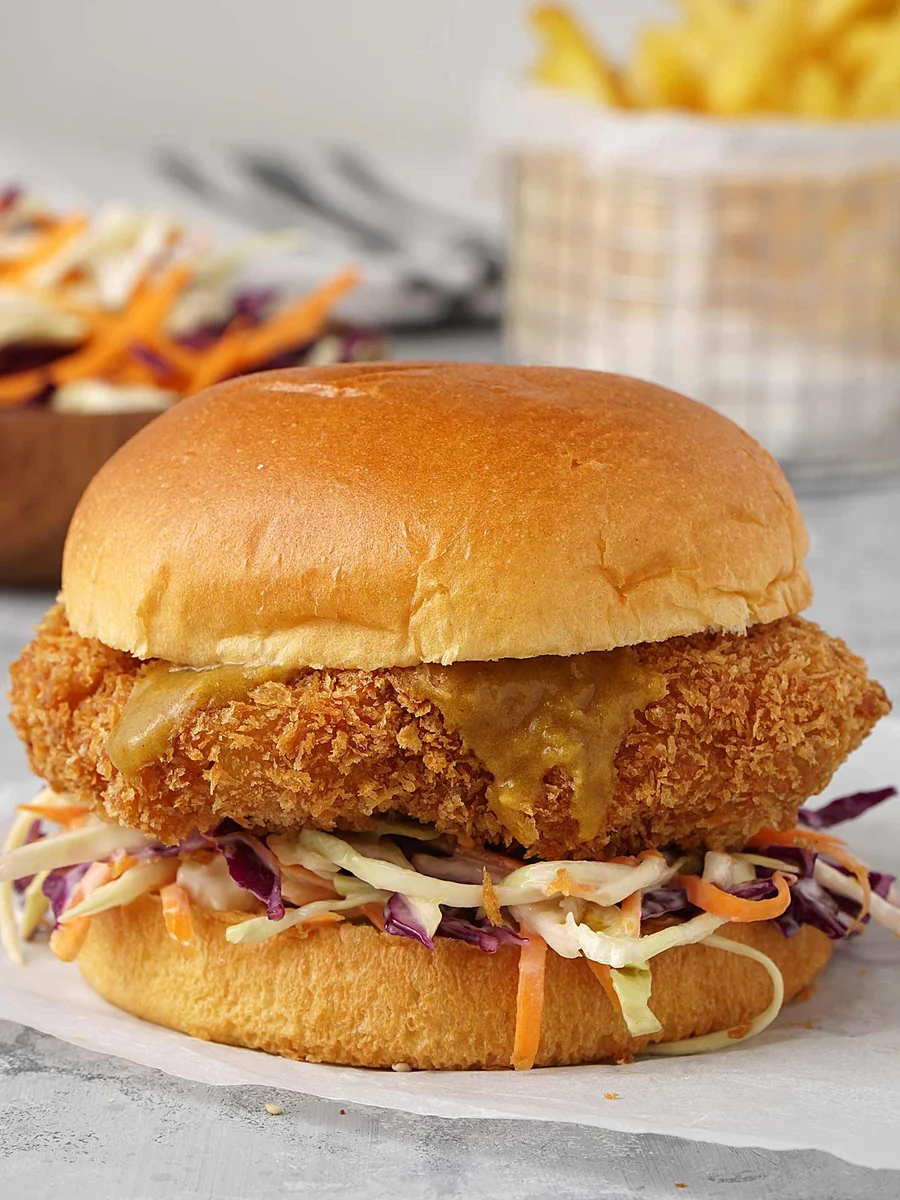
A Japanese-inspired burger layering crisp panko-coated chicken with curry sauce and a creamy shredded cabbage and carrot salad. It brings the flavours of chicken katsu curry into a handheld meal.
Ingredients
- 400 g (14 oz)chicken breast
- ½ tspsalt
- ¼ tspblack pepper
- as neededvegetable oil
- 1 blockJapanese curry roux
- 360 ml (1½ cups)water or chicken stock
- 120 g (2 cups)panko breadcrumbs
- 125 g (1 cup)plain flour
- 30 g (¼ cup)cornflour
- ½ tspbicarbonate of soda
- 2eggs
- 4brioche burger buns or other burger buns
- as neededshredded green and red cabbage
- as neededshredded carrot
- 1–2 tbsp, plus more to tasteJapanese mayonnaise or regular mayonnaise
- to tasteshichimi togarashi
- to taste (optional)melted butter, for brushing the buns
Instructions
- 1
Make the curry
Put the water or stock and curry roux block in a medium saucepan. Stir continuously over medium heat for 4–5 minutes, until the sauce is smooth and medium-thick. Take it off the heat and keep it warm. Adjust the liquid to suit the roux packet instructions; add a little more if the sauce is too thick.
- 2
Flatten the chicken
Cover a chopping board with cling film and place the chicken breast on it. Cut the breast in half, then cut each piece in half lengthways. Cover the resulting cutlets with cling film and flatten them with a meat tenderiser or rolling pin.
- 3
Season the chicken
Season the chicken cutlets with salt and freshly ground black pepper, then set them aside.
- 4
Mix the slaw
Combine the shredded cabbage and carrot with 1–2 tablespoons of mayonnaise and set aside.
- 5
Set up coating
In a large bowl, mix the plain flour, cornflour and bicarbonate of soda. Whisk the eggs in a separate bowl, and place the panko in a wide, shallow dish.
- 6
Coat the chicken
Coat each seasoned cutlet in the flour mixture, dip it in the egg, then repeat the flour and egg dips. Press the chicken into the panko on both sides. Repeat with the remaining cutlets and set them aside.
- 7
Fry until crisp
Heat vegetable oil over medium heat to 149–163°C (300–325°F). Fry the coated chicken for 2–3 minutes on each side, until crisp and golden brown.
- 8
Drain the chicken
Lift the chicken out of the oil and transfer it to a wire rack.
- 9
Finish the slaw
Mix the shredded cabbage and carrot with a generous amount of mayonnaise, then set aside.
- 10
Build the burgers
If you like, brush the brioche buns with melted butter and toast them briefly in the oven. Put cabbage salad on the bottom half of each bun, top with fried chicken, curry sauce and shichimi togarashi, then add the bun tops.
What is a chicken katsu curry burger?
Chicken katsu is a Japanese dish of breaded, fried chicken, often served with curry sauce. This burger takes those familiar elements and layers them in a bun with crunchy cabbage and carrot.
The panko coating gives the chicken its crisp finish, while the curry roux makes a quick, savoury sauce. A creamy slaw adds freshness and crunch between the chicken and bun.
Nutrition and macros by portion
The nutrition label shows one serving as written: 295 calories, 10g protein, 53g carbs, 4g fat.
| Portion | Adjustment | kcal | Protein | Carbs | Fat |
|---|---|---|---|---|---|
| Lighter | Use less mayo | 207 kcal | 7g | 37g | 3g |
| This serving | As written | 295 kcal | 10g | 53g | 4g |
| Hungry | Add extra slaw | 443 kcal | 15g | 80g | 6g |
The bun, flour, panko and roux contribute most of the carbohydrates, while the frying oil, mayonnaise and brioche provide much of the fat. Chicken supplies the main protein. Serve with extra cabbage or another vegetable side to balance the meal.
The curry sauce
Roux block: Japanese curry roux thickens and seasons the sauce in one step. Stir it into water or stock over medium heat until smooth, following the packet guidance if the block size differs.
Consistency: Aim for a sauce thick enough to cling to the chicken without making the bun soggy. Loosen it with a little more liquid if needed.
Preparing the chicken
Even cutlets: Cutting and flattening the chicken helps the pieces cook evenly in the short frying time. Keep the thickness reasonably consistent so thinner edges do not overcook.
Seasoning: Salt and pepper go directly on the chicken before coating. Set up the flour, egg and panko in separate dishes so the crumb stays easy to handle.
A crisp panko coating
Double dip: The flour, egg, flour, egg sequence gives the panko a good surface to adhere to. Press the crumbs gently onto both sides rather than shaking them off.
Frying: Keep the oil at 149–163°C and cook the chicken for 2–3 minutes per side, until the crumb is golden and the chicken is cooked through. A wire rack helps the coating stay crisp after frying.
Cabbage and carrot slaw
Shredded vegetables: Fine shreds are easier to fit into the bun and give each bite a little crunch. The recipe first mixes the vegetables with 1–2 tablespoons of mayonnaise, then calls for a more generous amount before assembling.
Mayonnaise: Add enough to lightly coat the vegetables without making the salad wet. Japanese mayonnaise gives a familiar Japanese-style flavour, while regular mayonnaise also works.
Assembling and serving
Layering: Put the slaw on the bun base, then add the fried chicken, curry sauce and shichimi togarashi before closing the burger. Assemble just before serving to keep the panko crisp.
Buns: Brioche is suggested, but other burger buns work too. Toasting them briefly after brushing with melted butter is optional.
Recipe notes & tips
- Flatten the cutlets to a similar thickness so they cook at the same rate.
- Prepare the coating dishes before handling the chicken to make breading easier.
- Press the panko on gently so it adheres all over the cutlets.
- Use a wire rack to drain the fried chicken rather than stacking the pieces.
- Keep the curry sauce warm while you cook the chicken.
- Add the sauce and slaw shortly before serving to help preserve the crisp coating.
Variations
- Use chicken thighs: Choose boneless thighs and flatten them evenly before coating.
- Add extra heat: Sprinkle on more shichimi togarashi when assembling.
- Change the bun: Use any burger buns in place of brioche.
- Swap the stock: Use water instead of chicken stock to make the curry sauce.
- Toast the buns: Brush with melted butter and briefly toast them before assembling.
Common mistakes to avoid
- Uneven cutlets: Flatten the chicken to a similar thickness so it cooks evenly.
- Loose breadcrumbs: Press panko gently onto both sides after dipping the chicken.
- Oil too hot: Keep it within 149–163°C to help the coating brown without scorching.
- Soggy coating: Drain the chicken on a wire rack and assemble just before serving.
- Thick curry sauce: Stir in a little more water or stock until it reaches a pourable consistency.
- Overdressed slaw: Add mayonnaise gradually so the vegetables stay crisp rather than wet.
How to store
Store leftover chicken, curry sauce and slaw separately in airtight containers in the fridge for up to 2 days. Reheat the chicken in an oven until hot to help restore some crispness; warm the sauce separately and assemble with fresh buns.
Frequently asked questions
Can I use regular mayonnaise?
Yes. The recipe allows regular mayonnaise as an alternative to Japanese mayonnaise.
Can I use chicken stock instead of water?
Yes, either water or chicken stock can be used for the curry sauce. Follow the roux packet guidance for the amount of liquid.
How do I know when the chicken is cooked?
The coating should be crisp and golden after 2–3 minutes on each side. Check that the thickest part of the chicken is cooked through before serving.
Can I make the curry sauce ahead?
Yes. Make it ahead and reheat it gently, stirring until smooth. Add a little water or stock if it has thickened.
Do I have to toast the buns?
No. Brushing the brioche with melted butter and toasting it briefly is optional; the burgers can be assembled with untoasted buns.
Cook it from the original
This recipe comes from khinskitchen.com. Their page has the author’s own photos, notes and tips — the best place to cook it from.
Open the recipe on khinskitchen.com