
Burnt Garlic Fried Rice
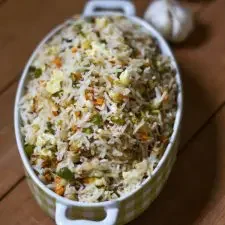
Vegetable fried rice gets its deep, savoury aroma from finely chopped garlic browned separately and folded through at the end. It is a useful way to turn cooked rice and everyday vegetables into a filling meal.
Ingredients
- 500 ml (2 cups)rice
- 750 ml (3 cups)water
- 1 teaspoonsalt
- 45 ml (3 tablespoons)peanut oil
- 2–3celery stalks, finely chopped
- 500 ml (2 cups)finely chopped cabbage
- 250 ml (1 cup; about 2–3 carrots)carrots, finely chopped
- 250 ml (1 cup; about 16–18 beans)beans, finely chopped
- ¼ teaspoonsoy sauce
- 1 teaspoonrice vinegar
- 1 teaspoonsugar
- 1 teaspoonground black pepper
- 1 teaspoonpeanut oil
- 10 clovesgarlic, very finely chopped
- 1 teaspoonoil
- 4eggs
- ¼ teaspoonsalt
Instructions
- 1
Cook the rice
Cook the rice with the water and 1 teaspoon of salt in a rice cooker or pressure cooker, then set it aside.
- 2
Fry the vegetables
Heat the 3 tablespoons of peanut oil in a pan. Add the finely chopped celery and fry for 1 minute, then add the vegetables and sauté over high heat for 10–12 minutes.
- 3
Season the rice
When the vegetables are cooked, stir in the soy sauce, rice vinegar, sugar and freshly ground pepper. Sauté for 1 minute, add the rice and mix well.
- 4
Brown the garlic
Heat the 1 teaspoon of peanut oil in a pan. Add the finely chopped garlic and sauté over medium heat until browned, then stir it into the rice.
- 5
Scramble the eggs
Scramble the eggs in a little oil with ¼ teaspoon of salt, then add them to the rice.
- 6
Finish and serve
Mix everything together and check the seasoning, adding salt if needed. Serve hot.
What is burnt garlic fried rice?
Fried rice is a broad family of Asian rice dishes, with many regional and household variations. This version combines rice, eggs and finely chopped vegetables, then adds garlic browned separately for its defining toasted flavour.
Separate cooking helps the garlic brown without overcooking the vegetables or rice. The result is a savoury, vegetable-filled meal with distinct garlic aroma in every portion.
Nutrition and macros by portion
The nutrition label shows one serving as written: 560 calories, 15g protein, 88g carbs, 16g fat.
| Portion | Adjustment | kcal | Protein | Carbs | Fat |
|---|---|---|---|---|---|
| Lighter | Use less cooking oil | 392 kcal | 11g | 62g | 11g |
| This serving | As written | 560 kcal | 15g | 88g | 16g |
| Hungry | Serve a larger portion | 840 kcal | 23g | 132g | 24g |
Most of the carbohydrates come from the rice, while peanut oil and the other cooking oils supply much of the fat. Eggs contribute protein, with smaller amounts from the rice and vegetables. Balance a serving with extra vegetables or a fresh salad on the side.
Choose and cook the rice
Rice: The recipe specifies Basmati in the method. Cook it in a rice cooker or pressure cooker, as directed, and set it aside before frying the vegetables.
Texture: Fried rice is easier to mix when the cooked grains are not clumped together. Break up any large clumps gently before adding the rice to the pan.
Keep the vegetables moving
Cut: Finely chopping the celery, cabbage, carrots and beans helps them cook evenly and mix through the rice.
Heat: The vegetables cook over high heat for 10–12 minutes. Stir them as they cook so they sauté rather than catch on the bottom of the pan.
Brown the garlic carefully
Small pieces: Very finely chopped garlic browns quickly, so watch the pan closely and stir it over medium heat.
Colour: Take it off the heat once browned, then add it to the rice. Garlic that becomes very dark can taste bitter, so do not leave it unattended.
Balance the seasoning
Savoury notes: Soy sauce and black pepper season the vegetables and rice, while rice vinegar adds a light tang.
Final check: The recipe adds salt to the rice water and eggs, then calls for a seasoning check at the end. Taste before adding any extra salt.
Serve it as a meal
The eggs and rice make this dish substantial enough to serve on its own. For a more varied plate, pair it with a simple cucumber salad or additional lightly cooked vegetables.
Serve the rice hot after combining the ingredients, when the vegetables and eggs are freshly cooked.
Recipe notes & tips
- Chop the vegetables before heating the pan so they are ready to add together.
- Break up any large clumps of cooked rice before mixing it with the vegetables.
- Keep the vegetables moving during their 10–12 minutes over high heat.
- Watch the garlic closely as it browns because finely chopped pieces colour quickly.
- Taste the finished rice before adding more salt.
Variations
- Add spring onions: Stir sliced spring onions through the rice before serving.
- Use another oil: Choose a neutral cooking oil if you do not have peanut oil.
- Change the vegetables: Replace some of the listed vegetables with other finely chopped vegetables.
- Add chilli: Include chopped chilli with the vegetables for a hotter dish.
- Make it meat-free: Leave out the eggs and add extra vegetables instead.
Common mistakes to avoid
- Garlic browning too far: Cook it over medium heat and remove it as soon as it is browned.
- Large vegetable pieces: Chop the vegetables finely so they cook evenly and mix through the rice.
- Vegetables catching: Stir frequently while sautéing over high heat for 10–12 minutes.
- Clumped rice: Gently separate large clumps before adding the rice to the pan.
- Over-seasoning: Taste the finished mixture before adding extra salt.
How to store
Refrigerate leftovers promptly in a covered container and use within 2 days. Reheat until piping hot throughout, adding a small splash of water if the rice seems dry.
Frequently asked questions
Can I use rice cooked ahead of time?
Yes. Cook the rice in advance and set it aside as the recipe directs. Refrigerate it promptly if you are not using it straight away.
What kind of rice does this recipe use?
The method specifies Basmati rice. Cook it with the stated water and salt in a rice cooker or pressure cooker.
How do I know when the garlic is ready?
It should be browned and fragrant. Stir it over medium heat and keep a close eye on it, as finely chopped garlic can darken quickly.
Can I use different vegetables?
You can substitute other vegetables, keeping them finely chopped so they cook evenly. The recipe’s original combination is celery, cabbage, carrots and beans.
How can I make the dish less salty?
Use less salt when cooking the rice or scrambling the eggs, and check the finished seasoning before adding more. The soy sauce also contributes savoury saltiness.
Cook it from the original
This recipe comes from kannammacooks.com. Their page has the author’s own photos, notes and tips — the best place to cook it from.
Open the recipe on kannammacooks.com