
Chicken Rendang
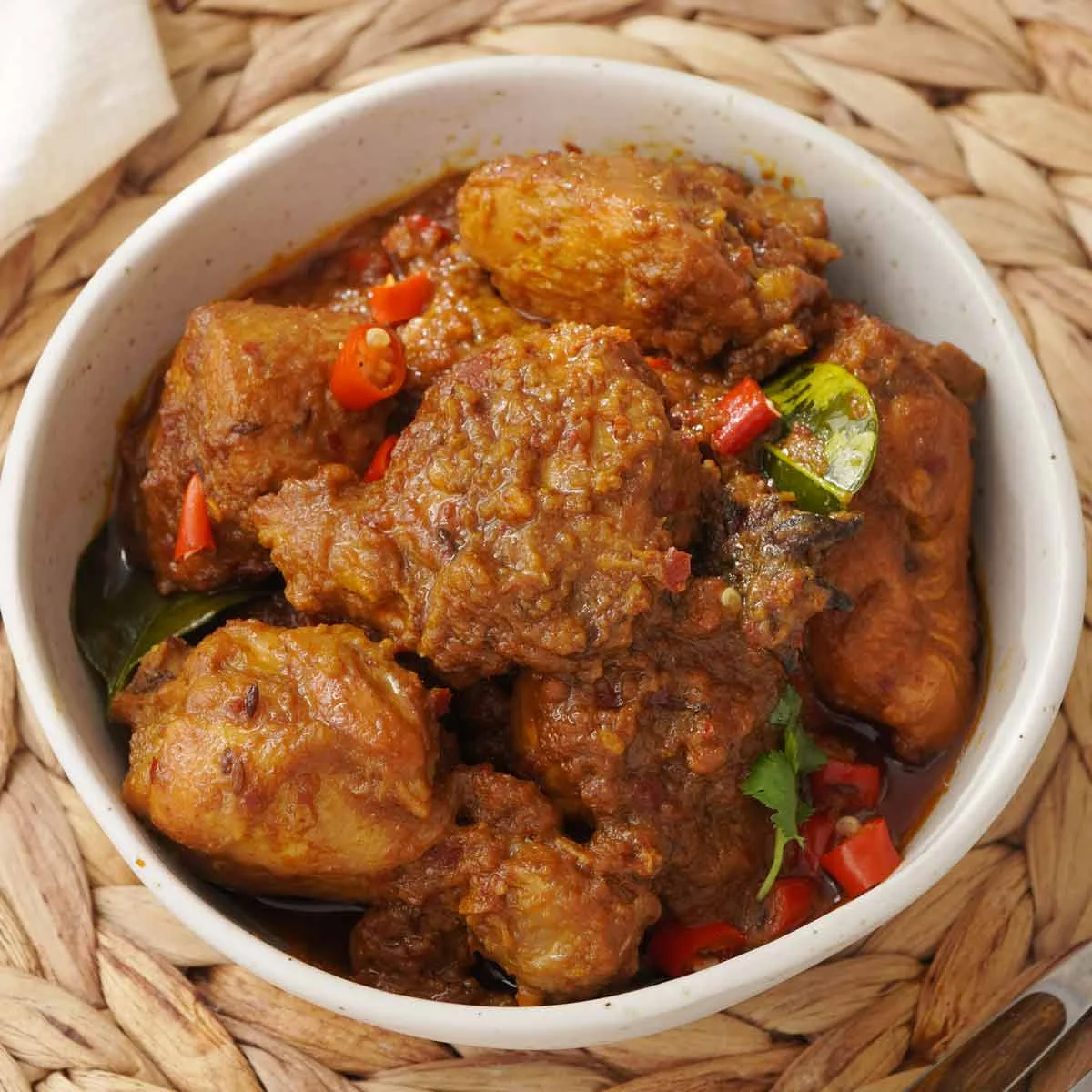
Chicken rendang is a richly spiced curry in which chicken simmers with coconut milk, aromatics and a chilli paste. This version comes together in about 40 minutes and is served with plain rice to soak up the sauce.
Ingredients
- 600 gChicken (skinless, bone-in, cut into medium pieces)
- 200 mlCoconut milk (full-fat, or double cream)
- 250 mlWater (about 1 cup warm; add more if needed)
- 1 tspCumin seeds
- 1 stickCinnamon
- 2–3Star anise
- 5–6Cloves
- 1Lemongrass stalk, bruised and tied into a knot
- 1 tbspTamarind juice (see note)
- 4–5Kaffir lime leaves (or 1 tsp lime zest)
- 1 tbspBrown sugar (or palm sugar or regular white sugar)
- 1 tspSalt, or to taste
- 4 tbspCooking oil (add more if needed)
- 4–5Shallot onions, roughly chopped
- 1 tbspLemongrass, chopped
- 10–12Dried long red chillies, deseeded and soaked in hot water for 10 minutes
- 4–5 clovesGarlic, roughly chopped
- 2 tspGalangal, chopped or sliced
- 2 tspGinger, chopped or sliced
- 1 tspTurmeric powder, or fresh turmeric, sliced
- To tasteCoriander
- To tasteFresh chillies
Instructions
- 1
Make the paste
Put the shallots, chopped lemongrass, soaked dried chillies, garlic, galangal, ginger and turmeric in a food processor. Blend to a smooth paste, adding a splash of water if needed.
- 2
Bloom the spices
Set a pan over medium heat and add the oil. Once hot, add the cumin seeds, cinnamon, cloves and star anise; let them sizzle for a few seconds.
- 3
Fry the paste
Add the curry paste and sauté for 1–2 minutes, until its colour changes and it smells fragrant.
- 4
Add the chicken
Pour in the coconut milk and stir. Add the chicken, salt, sugar and knotted lemongrass stalk, combine well and cook for 2–3 minutes.
- 5
Simmer until tender
Add the water and turn the heat to high for 1–2 minutes. Reduce the heat to low and simmer for 20–25 minutes, or until the chicken is tender.
- 6
Finish the curry
Stir in the tamarind juice and kaffir lime leaves. Taste and add more salt or water if needed.
- 7
Serve with garnish
Transfer to a serving plate and garnish with fresh green chillies or coriander. Serve with plain rice.
What is chicken rendang?
Rendang is a richly spiced dish associated with Indonesian and Malaysian cooking, often made by slowly cooking meat with coconut and a fragrant spice paste. This chicken version uses a shorter simmer, so the pieces become tender while the sauce stays spoonable.
The combination of chillies, lemongrass, galangal, ginger and turmeric gives the curry its aromatic, warming character. Tamarind and lime leaves bring a sharper finish to the coconut-rich sauce.
Nutrition and macros by portion
The nutrition label shows one serving as written: 323 calories, 16g protein, 19g carbs, 21g fat.
| Portion | Adjustment | kcal | Protein | Carbs | Fat |
|---|---|---|---|---|---|
| Lighter | Less oil, more vegetables | 226 kcal | 11g | 13g | 15g |
| This serving | As written | 323 kcal | 16g | 19g | 21g |
| Hungry | Larger rice portion | 485 kcal | 24g | 29g | 32g |
The rice typically supplies most of the meal's carbohydrates, while coconut milk and cooking oil contribute much of the fat. Chicken provides protein, with smaller amounts also coming from the other ingredients. Serve with a generous portion of vegetables alongside the curry and rice to balance the plate.
Build the spice paste
Chilli base: soak the dried chillies for 10 minutes in hot water and remove their seeds as directed. Blend them with the shallots, garlic, lemongrass, galangal, ginger and turmeric until smooth.
Texture: a smooth paste disperses evenly through the sauce. Add only a splash of water if the food processor needs help blending.
Start with whole spices
Whole aromatics: sizzle the cumin, cinnamon, cloves and star anise in hot oil for a few seconds before adding the paste. This brief step perfumes the oil, but the spices should not be left long enough to burn.
Fresh lemongrass: the chopped lemongrass goes into the paste, while the bruised, knotted stalk simmers with the chicken. Bruising helps release its aroma; remove the stalk before serving if you prefer.
Keep the simmer gentle
Heat: bring the mixture briefly to high heat for 1–2 minutes after adding the water, then lower it and simmer for 20–25 minutes. A gentle simmer helps cook the chicken without rapidly reducing the coconut sauce.
Doneness: check that the chicken is tender before finishing the curry. The recipe calls for bone-in pieces, so use the tenderness of the meat rather than the clock alone as your cue.
Balance the finish
Tamarind: stir it in near the end for a tart note that balances the coconut milk and sugar. Taste after adding it, then adjust the salt or loosen the sauce with more water if needed.
Citrus: add the kaffir lime leaves at the same finishing stage. If using the listed alternative, use 1 tsp lime zest instead.
Serve it simply
Plain rice is the suggested accompaniment and catches the spiced sauce without competing with it. Add coriander or fresh green chillies as a garnish, according to your preference.
A simple side of vegetables can round out the plate. Keep the curry and rice separate until serving so you can portion each to suit.
Recipe notes & tips
- Blend the paste until smooth so its aromatics distribute evenly through the curry.
- Have the whole spices measured out before heating the oil, as they sizzle for only a few seconds.
- Use a splash of water in the food processor only if needed to get the paste moving.
- Keep the heat low during the 20–25-minute simmer and check the chicken for tenderness.
- Taste after adding the tamarind before adjusting the salt.
- Add more water at the end if you prefer a looser sauce.
Variations
- Cream alternative: use double cream instead of full-fat coconut milk as listed.
- Sugar choice: swap the brown sugar for palm sugar or regular white sugar.
- Citrus swap: use 1 tsp lime zest in place of the kaffir lime leaves.
- Adjust the heat: use fewer dried chillies for a milder paste.
- Fresh garnish: finish with coriander, fresh green chillies, or both.
Common mistakes to avoid
- Skipping the soaking: soak the dried chillies in hot water for 10 minutes before blending.
- Adding whole chillies to the paste: deseed them first as directed.
- Burning the spices: let them sizzle for only a few seconds before adding the paste.
- Cooking at a hard boil: lower the heat after the brief high-heat stage and simmer gently.
- Leaving out the final taste check: adjust salt or water after stirring in the tamarind.
- Using too much water in the paste: add just a splash if the food processor needs it.
How to store
Refrigerate leftover curry in a covered container and use within 3 days. Reheat it gently in a pan until piping hot, adding a little water if the sauce has thickened; avoid repeatedly reheating the whole batch.
Frequently asked questions
Can I use chicken without bones?
The recipe specifies skinless, bone-in chicken cut into medium pieces. Boneless chicken can cook more quickly, so check it for tenderness earlier than the stated 20–25-minute simmer.
Can I make the curry less spicy?
Yes. Use fewer dried chillies in the paste, while keeping the other ingredients the same.
What can I use instead of kaffir lime leaves?
The recipe lists 1 tsp lime zest as an alternative. Stir it in at the finishing stage.
Can I replace the coconut milk?
Yes, double cream is given as an alternative. It will make the sauce creamy, though the flavour will differ from the coconut-milk version.
How do I know when the chicken is done?
After the 20–25-minute low simmer, check that the chicken is tender. If it needs more time, continue simmering gently until it reaches that texture.
What should I serve with chicken rendang?
Serve it with plain rice, as suggested in the recipe. Coriander or fresh green chillies make a suitable garnish.
Cook it from the original
This recipe comes from khinskitchen.com. Their page has the author’s own photos, notes and tips — the best place to cook it from.
Open the recipe on khinskitchen.com