
Pondicherry Egg Curry - Muthaiy curry
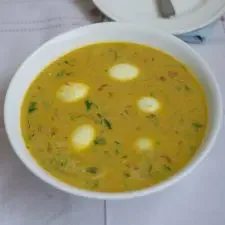
Pondicherry egg curry is a South Indian coconut-based curry with boiled eggs, warm spices and a gently tangy finish. It makes a generous, aromatic meal served with rice, with optional potatoes to make the curry more substantial.
Ingredients
- 1 teaspooncoriander seeds
- 4green chillies
- 1 tablespoonpoppy seeds (khus khus)
- 3 teaspoonsfennel seeds
- 1/2–3/4 of a large coconutcoconut
- 2 tablespoonsoil
- 2cloves
- 2 stickscinnamon
- 3onions, finely sliced
- 1 inchginger
- 6 clovesgarlic
- 2 largetomatoes, finely chopped
- 1 teaspoonturmeric
- 1 1/2 teaspoonssalt
- 3potatoes, cubed (optional)
- 5–6hard-boiled eggs
- Juice of 1lemon
- 3–4 sprigscoriander leaves, chopped
Instructions
- 1
Prepare coconut milk
Extract the thick and thin coconut milk from the coconut and set both aside.
- 2
Fry whole spices
Heat the oil in a pan. Add the cloves, cinnamon and onions, then fry until the onions are lightly golden.
- 3
Cook ginger garlic
Crush the ginger and garlic, add them to the pan and fry until golden brown.
- 4
Grind the spices
Grind the coriander seeds, green chillies, poppy seeds and fennel seeds into a paste, adding up to 3/4 cup water as you grind.
- 5
Fry the paste
Add the ground paste and turmeric to the pan. Fry until the spices are cooked and browned.
- 6
Soften tomatoes
Add the tomatoes and salt, then fry until the tomatoes are soft.
- 7
Simmer the potatoes
Add the second and third coconut milk and the potatoes. Simmer over a low heat for 10–15 minutes, until the potatoes are tender when pierced with a fork.
- 8
Finish the curry
Turn off the heat and remove the pan from the hob. Stir in the thick coconut milk, hard-boiled eggs, lemon juice and coriander leaves.
- 9
Serve hot
Serve the curry hot with rice.
What is Pondicherry egg curry?
Muthaiy curry is an egg curry associated with Pondicherry, on India’s south-eastern coast, where Tamil and French influences meet. This version builds its flavour from ground seeds, aromatics and coconut milk rather than relying on a long list of dried spices.
The method layers those flavours in stages: browned onion and aromatics first, then a freshly ground spice paste and tomato. Coconut milk softens the spices, while lemon and coriander bring freshness at the end.
Nutrition and macros by portion
The nutrition label shows one serving as written: 460 calories, 11g protein, 32g carbs, 35g fat.
| Portion | Adjustment | kcal | Protein | Carbs | Fat |
|---|---|---|---|---|---|
| Lighter | Leave out the potatoes | 322 kcal | 8g | 22g | 25g |
| This serving | As written | 460 kcal | 11g | 32g | 35g |
| Hungry | Add the optional potatoes | 690 kcal | 17g | 48g | 53g |
The eggs provide most of the protein, while potatoes, onions and tomatoes contribute much of the carbohydrate. Coconut and oil make up most of the fat; serve a moderate portion of rice alongside vegetables or salad to balance the plate.
Make the coconut milk in stages
Thin milk: Extract the thinner coconut milk as well as the thick milk, keeping them separate. The thinner milk goes into the simmer so the potatoes can cook in the curry base.
Thick milk: Stir this in off the heat with the eggs and finishing ingredients. That timing helps preserve its creamy character without boiling it.
Build flavour in the pan
Whole spices: Let the cloves and cinnamon flavour the oil, then cook the onions until lightly golden. Take care not to let the onions or spices scorch.
Ground paste: Fry the coriander, chilli, poppy seed and fennel paste until cooked and browned, as directed. This step mellows the raw spice flavours before the tomatoes and coconut milk are added.
Check the potatoes for doneness
Potato size: Cut the potatoes into evenly sized cubes so they soften at a similar pace. The recipe gives a 10–15 minute simmer, but the fork test is the clearest cue.
Optional addition: The potatoes can be left out. Without them, the curry will be less substantial, so take care not to over-simmer the liquid while waiting for them to cook.
Add the eggs and finish gently
Eggs: Use hard-boiled eggs and add them after removing the pan from the heat, as the method specifies. This warms them in the sauce without further vigorous cooking.
Fresh finish: Lemon juice and chopped coriander go in at the same stage. Taste the sauce before serving and adjust only if needed, bearing in mind that the recipe already includes salt and lemon.
Serve it with rice
Rice is the suggested accompaniment and soaks up the coconut-rich sauce. Spoon the eggs, potatoes and curry over freshly cooked rice for a complete meal.
For a lighter side alongside the curry, serve a simply dressed salad or steamed vegetables. Add those separately rather than changing the curry’s cooking method.
Recipe notes & tips
- Keep the thick and thin coconut milk separate so they can be added at the stages given.
- Grind the spice paste with up to 3/4 cup water, adding only enough to help it blend.
- Fry the paste until it is browned and cooked through before adding the tomatoes.
- Cut the potatoes into similar-sized cubes to help them cook evenly.
- Pierce a potato cube with a fork to check that it is tender before finishing the curry.
- Add the thick coconut milk only after taking the pan off the heat.
Variations
- Skip the potatoes: Leave them out for a curry centred on the eggs and coconut sauce.
- Adjust the chilli: Use fewer green chillies for a milder curry.
- Add more eggs: Use the upper end of the recipe’s range for a more egg-forward serving.
- Serve with flatbread: Offer flatbread alongside or instead of the suggested rice.
- Make it vegetarian: Replace the eggs with cooked vegetables, keeping in mind this changes the recipe’s defining ingredient.
Common mistakes to avoid
- Scorching the onions: Fry over a steady heat and stop when they are lightly golden.
- Under-frying the paste: Cook it until browned, so the spices do not taste raw.
- Uneven potato cubes: Cut them to a similar size and check tenderness with a fork.
- Boiling the thick coconut milk: Add it after removing the pan from the heat.
- Adding the eggs too early: Stir them in at the end, as directed, so they warm gently.
How to store
Refrigerate leftovers in a covered container and use within 2 days. Reheat gently in a pan until hot throughout; avoid a vigorous boil after the thick coconut milk has been added.
Frequently asked questions
Can I leave out the potatoes?
Yes. They are marked optional in the recipe, so you can make the curry without them.
How do I know when the potatoes are cooked?
After simmering for 10–15 minutes, pierce a cube with a fork. It should be tender.
When should I add the hard-boiled eggs?
Add them after turning off the heat and removing the pan from the hob, along with the thick coconut milk and finishing ingredients.
Can I use shop-bought coconut milk?
The recipe calls for thick and thin coconut milk extracted from a coconut. If substituting, keep the two additions in mind and avoid boiling the thick portion at the end.
What should I serve with this curry?
The recipe recommends rice. A simple salad or steamed vegetables can also accompany it.
Cook it from the original
This recipe comes from kannammacooks.com. Their page has the author’s own photos, notes and tips — the best place to cook it from.
Open the recipe on kannammacooks.com