
Chicken Omelette
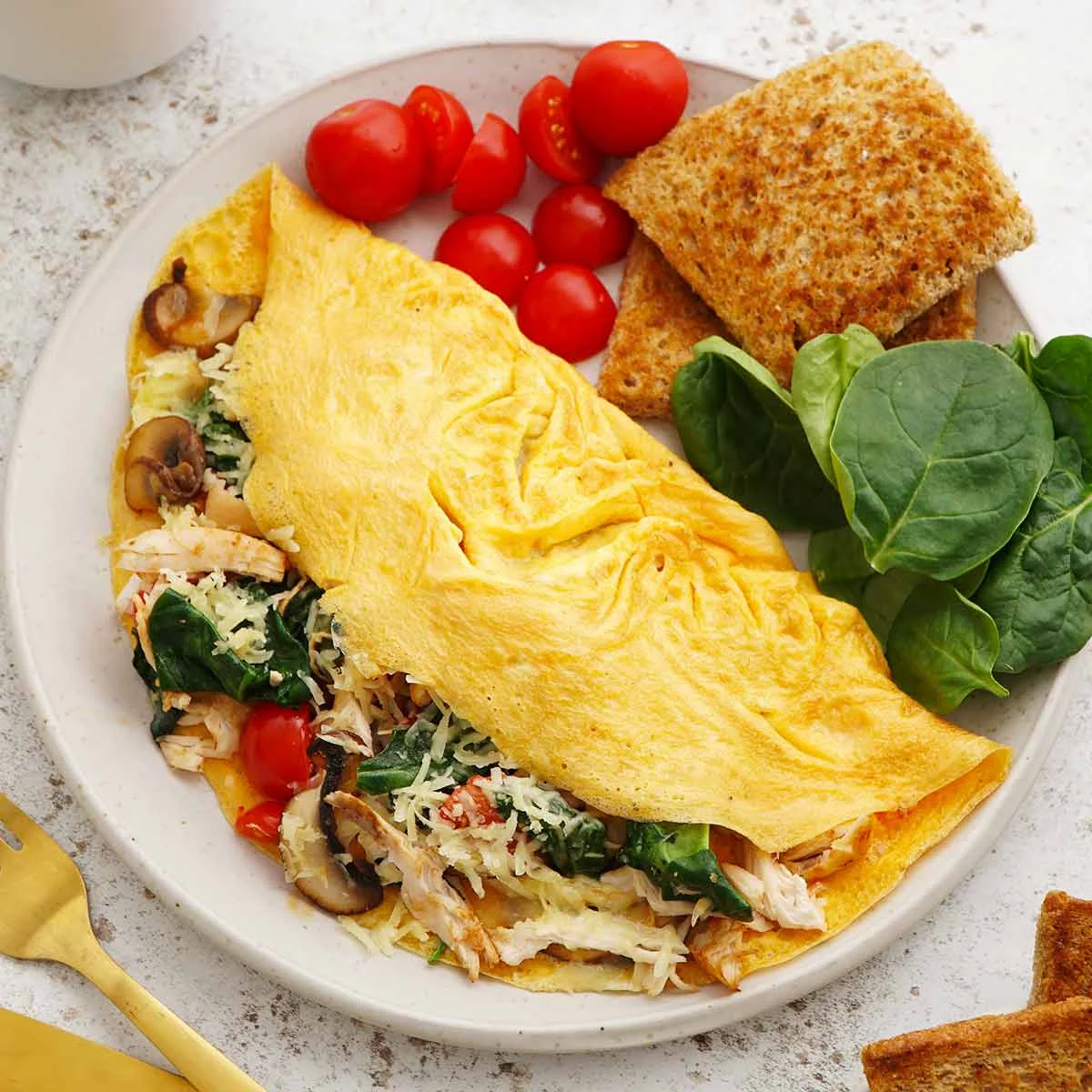
This chicken omelette combines eggs with cooked chicken, sautéed vegetables and melted cheese. It makes a filling breakfast or quick brunch, especially when you have leftover chicken to use.
Ingredients
- 4 largeeggs (use more or fewer depending on their size)
- 100 gcooked chicken, shredded or diced
- 2–3mushrooms, thinly sliced (such as portobello, white, button, shiitake or oyster)
- 3–4cherry tomatoes, cut into wedges or diced (or use salad or vine tomatoes)
- 1 handfulspinach
- 20 ggrated cheese (cheddar, feta, mozzarella or Parmesan)
- 1–2 tbspunsalted butter (or olive oil or another cooking oil)
- to tastesalt and black pepper
Instructions
- 1
Beat and season
Beat the eggs in a small bowl and season with salt and pepper to taste. Prepare the chicken and vegetables.
- 2
Cook mushrooms
Heat a pan over medium heat, add the butter and sauté the mushrooms for 2–3 minutes.
- 3
Add vegetables
Add the tomatoes, then the spinach, and season with salt and pepper to taste.
- 4
Stir in chicken
Add the cooked shredded chicken. Remove the chicken and vegetables from the pan and set them aside.
- 5
Cook the eggs
Wipe the pan clean with a paper towel and add more butter. Pour in the beaten eggs and let them set for a few seconds, then use a spoon or spatula to draw the edges towards the middle so uncooked egg can flow into the gaps.
- 6
Fill the omelette
When the egg is almost set, place the cooked chicken and vegetables over half of it. Sprinkle the grated cheese over the filling.
- 7
Fold and serve
Fold the omelette over the filling and cook for another minute, or until the cheese has melted. Serve straight away with salad, toppings or toasted bread, as you like.
What is a chicken omelette?
An omelette is a dish of beaten eggs cooked in a pan, either folded around a filling or served open. This American-style version turns it into a substantial breakfast or brunch by adding cooked chicken, vegetables and cheese.
The method is straightforward: cook the filling first, then use the same pan for the eggs. That keeps the filling warm and makes it easier to fold everything together at the end.
Nutrition and macros by portion
The nutrition label shows one serving as written: 178 calories, 19g protein, 1g carbs, 11g fat.
| Portion | Adjustment | kcal | Protein | Carbs | Fat |
|---|---|---|---|---|---|
| Lighter | Use less butter and cheese | 125 kcal | 13g | 1g | 8g |
| This serving | As written | 178 kcal | 19g | 1g | 11g |
| Hungry | Add toast on the side | 267 kcal | 29g | 2g | 17g |
The eggs and chicken provide most of the protein, while the eggs, cheese and butter contribute much of the fat. Tomatoes and spinach add a small amount of carbohydrate; serve with salad or vegetables for a lighter plate, or add toast for more carbohydrates.
Make the filling first
Mushrooms: Slicing them thinly helps them cook in the short sautéing time and gives them room to soften in the pan.
Tomatoes and spinach: Add these after the mushrooms, as directed, so the spinach wilts while the tomatoes warm through. Season the vegetables before taking them out of the pan.
Choose cooked chicken
Leftovers: The recipe uses cooked chicken, so shredded or diced pieces can go straight into the pan. Shredded chicken spreads easily through the filling, while diced pieces give you more distinct bites.
Keep it warm: Stir the chicken in after the vegetables, then set the whole filling aside while you cook the eggs. The final minute in the pan brings the filling back up to serving temperature.
Get the egg texture right
Medium heat: A moderately heated pan gives the eggs time to set without rushing the outside. Once the edges start to firm, draw them towards the centre and let the loose egg run into the cleared space.
Nearly set: Add the filling while the top of the egg is almost set but still able to hold the cheese. Fold gently and cook for a further minute, until the cheese melts.
Butter and pan choice
Butter: It adds richness and helps the egg release from the pan; the recipe allows 1–2 tablespoons across cooking the filling and eggs. Olive oil or another cooking oil can be used instead.
Clean the pan: Wiping it out after cooking the filling clears away bits that could catch while the eggs set. Add the remaining butter before pouring in the egg.
Serve it straight away
Timing: The filling cooks in a few minutes, and the egg needs only a short time to set, making this best cooked just before serving. Have the cheese and serving sides ready before you start the eggs.
On the side: Salad or toasted bread are suggested accompaniments. You can also serve the omelette on its own for a simple, self-contained meal.
Recipe notes & tips
- Slice the mushrooms thinly so they soften during the brief cooking time.
- Have the filling ingredients prepared before you begin cooking the eggs.
- Use a spatula to lift and draw the egg edges inward as they set.
- Add the filling when the egg is nearly set so it can fold without breaking.
- Serve immediately, while the cheese is melted and the omelette is warm.
Variations
- Change the cheese: Use feta, mozzarella or Parmesan in place of cheddar.
- Swap the mushrooms: Choose portobello, button, shiitake or oyster mushrooms.
- Use different tomatoes: Replace the cherry tomatoes with diced salad or vine tomatoes.
- Choose the cooking fat: Cook with olive oil or another cooking oil instead of butter.
- Add a side: Serve with salad or toasted bread for a different meal.
Common mistakes to avoid
- Crowding the pan with filling: Cook the mushrooms for their stated 2–3 minutes, then add the other vegetables in sequence.
- Adding the filling too early: Wait until the egg is almost set so it can support the filling when folded.
- Leaving loose egg at the edges: Draw the set edges towards the middle so uncooked egg fills the gaps.
- Overcooking the omelette: After folding, cook for about 1 minute and take it off once the cheese has melted.
- Skipping the pan wipe: Wipe away the cooked filling before adding more butter and the beaten eggs.
How to store
This omelette is best eaten as soon as it is cooked. If you have leftovers, refrigerate them in a covered container and reheat gently in a pan until hot throughout; the eggs may become firmer.
Frequently asked questions
Can I use leftover roast chicken?
Yes. Use 100 g of cooked chicken, shredded or diced, as listed. Add it after the vegetables have been seasoned.
Can I use a different cheese?
Yes. The recipe suggests feta, mozzarella or Parmesan as alternatives to cheddar. Grate or crumble the cheese as appropriate and sprinkle it over the filling.
How do I know when the eggs are ready to fill?
The eggs should be mostly set but not fully firm. This makes it easier to add the filling and fold the omelette.
Why do I pull the edges towards the middle?
This lets uncooked egg flow into the open areas of the pan so it can set. Keep doing this as needed while the omelette cooks.
Can I replace the butter?
Yes. The ingredient list allows olive oil or another cooking oil instead. Use it for sautéing the vegetables and cooking the eggs.
What can I serve with it?
Serve it immediately with salad, toppings or toasted bread, as suggested in the method.
Cook it from the original
This recipe comes from khinskitchen.com. Their page has the author’s own photos, notes and tips — the best place to cook it from.
Open the recipe on khinskitchen.com