
Samba Godhumai Rava / Broken Wheat Dosai
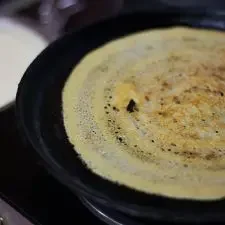
Samba godhumai rava dosai combines cracked emmer wheat with regular dosa batter, onion, ginger and curry leaves for a savoury South Indian pan-cooked dosa. Soaking and grinding the wheat makes it easier to spread into thin rounds and cook until browned.
Ingredients
- 500 ml (2 cups)regular dosa batter
- 250 ml (1 cup)broken wheat (samba godhumai)
- 500 ml (2 cups)water
- 1 mediumonion, chopped
- 2.5 cm (1 inch)piece of ginger
- 2 sprigscurry leaves
- 2 teaspoonscumin seeds
- 2dried red chillies
- 1 teaspoonsalt
- for cookingoil
Instructions
- 1
Soak the ingredients
Combine the broken wheat, water, onion, ginger, curry leaves, cumin seeds, dried red chillies and salt. Leave to soak for 20 minutes; soaking for up to 30 minutes is fine.
- 2
Grind the mixture
Grind the soaked mixture to a smooth paste, using its soaking water. Add extra water only if it is really necessary.
- 3
Mix in batter
Add the regular dosa batter and mix thoroughly. If the mixture is too thick, add a little water so it has the consistency of regular dosa batter.
- 4
Heat the pan
Heat a dosa pan or skillet until hot, then reduce the heat to medium.
- 5
Spread the dosa
Pour a ladleful of batter onto the pan and use the back of the ladle to spread it into a round.
- 6
Cook the first side
Sprinkle ⅛ teaspoon of oil over the pan. Cook for 30 seconds, until the edges are brown and small brown spots begin to appear.
- 7
Flip and finish
Carefully flip the dosa with a thin metal spatula and cook for up to 30 seconds more, until browned. Transfer it to a plate and repeat with the remaining batter. Serve warm with chutney.
What is samba godhumai rava dosai?
Dosai is a South Indian savoury pancake, commonly made from a fermented rice-and-lentil batter and cooked on a hot flat pan. Samba godhumai means emmer wheat, and this version brings cracked wheat into the batter for a grain-forward variation.
Here, the wheat is soaked and ground with aromatics before being mixed with regular dosa batter. That combination gives the wheat a smoother texture while keeping the familiar dosa batter as the base.
Nutrition and macros by portion
The nutrition label shows one serving as written: 58 calories, 2g protein, 9g carbs, 2g fat.
| Portion | Adjustment | kcal | Protein | Carbs | Fat |
|---|---|---|---|---|---|
| Lighter | Use less cooking oil | 41 kcal | 1g | 7g | 1g |
| This serving | As written | 58 kcal | 2g | 9g | 2g |
| Hungry | Serve a larger portion | 87 kcal | 3g | 14g | 2g |
The broken wheat and dosa batter provide most of the carbohydrates, while the batter and cooking oil contribute much of the fat; the batter also supplies some protein. Serve a dosai with sambar or another protein-rich side and chutney to round out the plate.
Choosing the wheat and batter
Wheat: Use cracked emmer wheat, also sold as samba godhumai rava. The recipe soaks one volume of wheat in twice that volume of water.
Dosa batter: The existing batter supplies the dosa base and helps the ground wheat mixture spread and cook. The recipe notes that older batter works best; adjust with a little water only if the combined mixture is too thick.
Why the soaking matters
Soaking: Give the wheat and aromatics 20 minutes in the measured water, or leave them for up to 30 minutes. This softens the cracked grain before grinding.
Grinding: Use the soaking water to make a smooth paste. Adding too much extra water can make it harder to get a batter that spreads like regular dosa batter.
Getting a good spread
Batter consistency: Aim for the consistency of regular dosa batter after mixing in the 500 ml of dosa batter. If it seems too thick, loosen it with just a little water.
Shaping: Pour a ladleful onto the hot pan and spread it in a round with the back of the ladle. Work gently so the dosa stays an even thickness.
Cooking until browned
Heat: Start with a hot pan, then cook at medium heat. This gives the dosa time to brown without needing the heat kept high throughout.
Doneness: Cook the first side for about 30 seconds, looking for brown edges and small brown spots. After flipping, cook for up to 30 seconds more, until the second side is browned.
Aromatics in the batter
Onion and ginger: These are ground along with the wheat rather than added after the batter is mixed. That distributes their flavour through the dosai.
Curry leaves, cumin and dried chillies: They add savoury, aromatic notes to the wheat mixture. The chillies are included whole in the soaking mixture, so the result depends on their heat and the grinding.
Serving the dosai
Serve the dosai warm with chutney, as suggested in the recipe. Make each one as it is needed, or keep cooked dosai on a plate while you finish the remaining batter.
For a more complete plate, pair it with a protein-rich side such as sambar, alongside the chutney. The dosa itself is based on wheat and dosa batter, so the accompanying sides can add variety.
Recipe notes & tips
- Measure the water at twice the volume of the broken wheat for soaking.
- Let the wheat soak for the full 20 minutes before grinding.
- Use the soaking water to grind the mixture and avoid adding extra unless needed.
- Bring the pan to temperature before pouring the first ladleful.
- Keep the heat at medium while each dosa cooks.
- Watch for browned edges and small spots before flipping.
Variations
- Adjust the heat: Use fewer dried red chillies for a milder dosa.
- Add herbs: Include extra curry leaves for a more pronounced herbal aroma.
- Change the chutney: Serve with a different chutney to vary the accompaniment.
- Use the batter promptly: Make the dosai with freshly mixed batter for an easy serving option.
- Cook smaller rounds: Use less batter per dosa for smaller portions.
Common mistakes to avoid
- Skipping the soak: The cracked wheat may not grind smoothly; soak it for at least 20 minutes.
- Adding too much water: The batter can become difficult to spread; add extra water only a little at a time.
- Grinding without the soaking water: The mixture may be too dry to blend; use the measured soaking water.
- Cooking over high heat: The outside may brown too quickly; keep the flame at medium after heating the pan.
- Flipping too soon: The dosa may not hold together; wait for brown edges and small spots to appear.
- Using a thick spatula: It can make flipping awkward; use a thin metal spatula as directed.
How to store
Keep leftover cooked dosai in a covered container in the refrigerator for up to 3 days. Reheat in a lightly oiled pan over medium heat until warmed through and crisped to your liking.
Frequently asked questions
Can I soak the wheat for longer than 20 minutes?
Yes. The recipe says soaking for up to 30 minutes is fine.
Should I add more water while grinding?
Use the water from soaking first; the recipe says it should be sufficient. Add extra only if the mixture genuinely needs it.
How thick should the batter be?
After adding the regular dosa batter, it should have the consistency of regular dosa batter. Add a little water if it is too thick.
What heat should I use to cook the dosai?
Heat the pan until hot, then cook over a medium flame.
How do I know when to flip it?
Look for brown edges and small brown spots after about 30 seconds. Then flip carefully and cook the other side for up to 30 seconds more.
What should I serve with samba godhumai rava dosai?
Serve it warm with chutney. Sambar can also make a suitable side for a more substantial meal.
Cook it from the original
This recipe comes from kannammacooks.com. Their page has the author’s own photos, notes and tips — the best place to cook it from.
Open the recipe on kannammacooks.com