
Ammas Kongunad egg pepper kuruma - South Indian egg curry
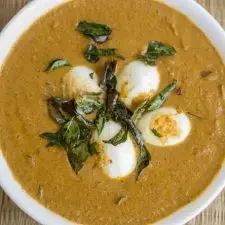
This Kongunad-style South Indian egg curry pairs hard-boiled eggs with a bold pepper, curry leaf and coconut gravy. Make it when you want a warming, aromatic curry to serve with rice, idli or dosa.
Ingredients
- 2 tablespoonsIndian sesame oil
- 1½ tablespoonsblack pepper
- 1-inch (2.5 cm) piececassia cinnamon
- 1 tablespooncoriander seeds
- 2 sprigscurry leaves
- 300 g (2 cups)chopped onions
- 180 g (1 cup)chopped tomatoes
- 1 teaspoonsalt
- ½-inch (1.25 cm) piecetamarind
- 1 tablespoonwhite poppy seeds
- 40 g (½ cup)freshly shredded coconut
- 240 ml (1 cup)water, for grinding
- 1 teaspoonIndian sesame oil
- 1 sprigcurry leaves
- 38 g (¼ cup)chopped onions
- ½ teaspoonturmeric powder
- 120 ml (½ cup)water
- ½ teaspoonIndian sesame oil
- 5hard-boiled eggs
- 1 sprigcurry leaves
Instructions
- 1
Cook the spice base
Heat 2 tablespoons of Indian sesame oil in a pan. Add the black pepper, cassia cinnamon, coriander seeds and 2 sprigs of curry leaves. Stir in 300 g of onions and sauté until soft, then add the tomatoes, salt and tamarind. Cook over a medium heat until the tomatoes are soft and mushy. Add the poppy seeds and coconut and sauté for a couple of minutes. Let the mixture cool slightly, add about 240 ml of water and grind to a fine paste.
- 2
Simmer the gravy
Heat 1 teaspoon of Indian sesame oil in a pan. Add 1 sprig of curry leaves and 38 g of chopped onions, then sauté until the onions are soft. Stir in the turmeric for a few seconds and add 120 ml of water, followed by the ground paste. Rinse the grinding jar or bowl with 60 ml (¼ cup) of water and add that to the pan. Simmer for a couple of minutes.
- 3
Fry the eggs
Boil and peel the eggs if you have not already done so. Make a few shallow incisions in each egg so the masala can flavour it. Heat ½ teaspoon of Indian sesame oil in a pan, preferably non-stick, add the eggs and sauté for a minute. Add 1 sprig of curry leaves and continue sautéing until the eggs are golden.
- 4
Finish the curry
Add the eggs to the simmering gravy and cook for a couple more minutes. Avoid simmering for too long. Serve hot with rice, idli or dosa.
What is Kongunad egg pepper kuruma?
Kuruma is a South Indian curry, and this version is presented as a Kongunad-style egg dish. Its defining character comes from black pepper, curry leaves and a freshly ground mixture of cooked onion, tomato, coconut and spices.
The method builds flavour in stages: first the ingredients for the paste are sautéed, then simmered with the eggs only briefly. That keeps the gravy aromatic and the eggs from becoming overcooked.
Nutrition and macros by portion
The nutrition label shows one serving as written: 283 calories, 10g protein, 10g carbs, 25g fat.
| Portion | Adjustment | kcal | Protein | Carbs | Fat |
|---|---|---|---|---|---|
| Lighter | Use less sesame oil | 198 kcal | 7g | 7g | 18g |
| This serving | As written | 283 kcal | 10g | 10g | 25g |
| Hungry | Serve with extra rice | 425 kcal | 14g | 15g | 38g |
Eggs provide most of the protein, while the onions, tomatoes and coconut contribute carbohydrates; sesame oil and coconut account for much of the fat. Balance a serving with rice or idli and a side of vegetables, adjusting the starch portion to suit your plate.
Build a fragrant spice paste
Whole spices: black pepper, cassia cinnamon and coriander seeds go into the oil first, so their flavours infuse the base as the onions soften.
Ground finish: poppy seeds and fresh coconut are sautéed before the mixture is blended. Let it cool a little before grinding, and add the water gradually enough to achieve a fine paste.
Balance the gravy
Tamarind: the small piece brings a tangy counterpoint to the pepper and coconut. Keep it in the first sautéed mixture so it is ground into the gravy.
Water: the recipe uses water to grind the paste and to loosen the pan gravy. Rinsing the grinding jar with the stated quarter cup helps bring the remaining paste into the curry.
Get the eggs golden
Incisions: make a few shallow cuts in the peeled eggs before frying. They give the masala more places to cling without breaking the eggs apart.
Colour: sauté until the outside is golden, turning the eggs as needed. A non-stick pan makes this easier, but use gentle movements to keep them intact.
Keep the final simmer short
Once the eggs go into the gravy, simmer for only a couple of minutes. The curry is already cooked by this point; a short finish lets the eggs take on some of the flavour without toughening them.
The finished sauce should coat the eggs and remain spoonable. If it thickens more than you like, loosen it with a small splash of water while warming.
Serve it with
Rice: hot rice is the suggested pairing and works well for catching the peppery gravy.
Idli or dosa: both are also good alongside the curry. Serve the kuruma warm so the sauce stays easy to spoon.
Recipe notes & tips
- Use Indian sesame oil for the flavour specified in the recipe, or substitute peanut or vegetable oil as suggested in the method.
- Sauté the onions until soft before adding the tomatoes so the base blends smoothly.
- Let the cooked spice mixture cool slightly before grinding it.
- Grind the paste until fine for a more even gravy.
- Make shallow cuts in the eggs so the curry can cling to them.
- Keep the final simmer to a couple of minutes after adding the eggs.
Variations
- Adjust the pepper: use less black pepper for a gentler curry while keeping the rest of the method unchanged.
- Choose another oil: use peanut or vegetable oil in place of Indian sesame oil.
- Change the serving: pair the kuruma with rice, idli or dosa.
- Make the gravy looser: add a little water while simmering if you prefer a thinner sauce.
- Use freshly shredded coconut: shred it just before cooking for the fresh coconut specified in the recipe.
Common mistakes to avoid
- Adding the eggs too soon: finish the gravy first, then add the fried eggs for only a couple of minutes.
- Grinding while very hot: let the mixture cool slightly before blending.
- Leaving the onions firm: sauté them until soft so they blend into the paste properly.
- Skipping the jar rinse: add the quarter cup of rinse water to recover the paste left behind.
- Cutting too deeply into the eggs: make shallow incisions so they remain whole while frying.
- Cooking the tomatoes briefly: wait until they are soft and mushy before adding the poppy seeds and coconut.
How to store
Cool leftovers promptly, refrigerate in a covered container and use within 2 days. Reheat gently in a pan until hot throughout; add a splash of water if the gravy has thickened. Avoid prolonged reheating, which can make the eggs firm.
Frequently asked questions
Can I use vegetable oil instead of sesame oil?
Yes. The recipe notes that peanut or vegetable oil can be used instead of Indian sesame oil.
Can I prepare the eggs ahead?
Yes, boil and peel them in advance, then refrigerate until ready to fry. Bring them out while you prepare the gravy so they are not very cold when added.
How can I tell when the eggs are fried enough?
Look for a golden colour on the outside. Turn them gently so they colour without breaking.
How long should the eggs simmer in the curry?
Simmer them in the gravy for a couple of minutes, as directed. A longer cook is not needed once the sauce is ready.
What should I serve with egg pepper kuruma?
Serve it hot with rice, idli or dosa. Rice is especially handy for spooning up the gravy.
Can I make the gravy ahead?
You can prepare the ground gravy ahead and refrigerate it, then reheat it and add the freshly fried eggs for the short final simmer.
Cook it from the original
This recipe comes from kannammacooks.com. Their page has the author’s own photos, notes and tips — the best place to cook it from.
Open the recipe on kannammacooks.com