
Alamelu's Chettinad meen kozhambu/ fish curry
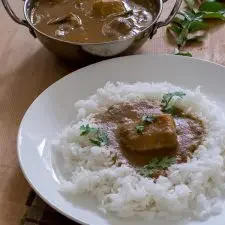
This Chettinad meen kozhambu is a tamarind-bright fish curry built on a freshly ground paste of shallots, garlic, tomatoes and coconut. Make it when you want a deeply spiced South Indian curry to serve with rice.
Ingredients
- 60 ml (4 tablespoons)Indian sesame oil
- 7.5 ml (½ tablespoon)cumin seeds
- 15 ml (1 tablespoon)fennel seeds
- 15 ml (1 tablespoon)black pepper
- 300 g (2 cups)shallots
- 10 clovesgarlic
- 2ripe tomatoes, chopped
- 40 g (½ cup)shredded coconut
- 30 ml (2 tablespoons)Indian sesame oil
- 2.5 ml (½ teaspoon)cumin seeds
- 2.5 ml (½ teaspoon)fennel seeds
- 2.5 ml (½ teaspoon)fenugreek seeds
- 2 sprigscurry leaves
- 1 heaped tablespooncoriander powder
- 30 ml (2 tablespoons)red chilli powder
- 2green chillies
- 1 lime-sized piecetamarind
- 240 ml (1 cup)water, for soaking the tamarind
- 10 ml (2 teaspoons)coarse salt
- 2 sprigscoriander leaves
- 500 gfish steaks
Instructions
- 1
Toast the spices
Heat 60 ml sesame oil in a heavy pan. Add the cumin seeds, black pepper and fennel seeds, and let them splutter. The sesame oil may foam slightly; that is fine.
- 2
Add the aromatics
Stir in the shallots and garlic.
- 3
Soften the shallots
Fry for 5–8 minutes, until the shallots are tender and starting to change colour.
- 4
Grind the paste
Add the chopped tomatoes and fry for a couple of minutes. Stir in the shredded coconut, then take the pan off the heat and let the mixture cool briefly. Grind it to a very smooth paste, adding up to 360 ml (1½ cups) water as you blend. Set the paste aside.
- 5
Fry the paste
Heat 30 ml sesame oil in a pan until shimmering. Add the fenugreek seeds, cumin seeds, fennel seeds and curry leaves, and let them splutter. Turn the heat to low, add the Chettinad masala paste and coarse salt, then fry for 3–4 minutes over medium heat, until the raw smell has gone.
- 6
Season the curry
Add the coriander powder and red chilli powder. Stir in the tamarind pulp, green chillies and about 360 ml (1½ cups) water. Keep the curry fairly thin at this point.
- 7
Simmer the sauce
Cook over low heat for about 20 minutes, until the curry thickens. Taste and add more salt if needed.
- 8
Cook the fish
Add the fish pieces and cook for 5 minutes more.
- 9
Finish with coriander
Switch off the heat and garnish with the coriander leaves.
What is Chettinad meen kozhambu?
Meen kozhambu is a South Indian fish curry, and this version takes its cues from Chettinad cooking in Tamil Nadu. Tamarind gives the sauce its tang, while chilli and toasted spices bring warmth and depth.
The freshly ground shallot, garlic, tomato and coconut paste makes this version especially full-bodied. It is cooked separately from the fish, so the sauce can develop before the steaks go in.
Nutrition and macros by portion
The nutrition label shows one serving as written: 250 calories, 17g protein, 14g carbs, 15g fat.
| Portion | Adjustment | kcal | Protein | Carbs | Fat |
|---|---|---|---|---|---|
| Lighter | Less oil, more greens | 175 kcal | 12g | 10g | 11g |
| This serving | As written | 250 kcal | 17g | 14g | 15g |
| Hungry | Larger fish portion | 375 kcal | 26g | 21g | 23g |
The rice you serve alongside supplies most of the meal's carbohydrates, while the sesame oil and coconut contribute much of the curry's fat. Fish provides its protein, with the exact amount depending on the type of fish used. Pair a serving with plenty of vegetables and a measured portion of rice for a balanced plate.
The spice base
First tempering: cumin, fennel and black pepper are heated in sesame oil to release their aroma before the shallots and garlic are added. Let the seeds splutter, but avoid letting them scorch.
Curry tempering: fenugreek, cumin, fennel and curry leaves form a second layer of flavour. Fenugreek can turn bitter if it gets too dark, so have the paste ready to add after the leaves and seeds splutter.
A smooth, rich paste
Shallots and garlic: fry them until tender and just beginning to colour; the stated 5–8 minutes is a useful guide. This softens them for blending and builds the base of the curry.
Tomato and coconut: briefly fry the tomatoes, then add the coconut off the heat. Blend with up to 360 ml water until completely smooth; a fine paste gives the finished sauce an even texture.
Balancing tamarind and chilli
Tamarind: soak the lime-sized piece in the measured cup of water, then use the pulp in the curry. The recipe calls for tamarind pulp, so strain out any seeds or fibres after extracting it.
Chilli: red chilli powder supplies the main heat, with green chillies added whole or split. Keep the initial sauce thin, as it will reduce during its 20-minute simmer.
When the curry is ready
Sauce: after about 20 minutes over low heat, it should have thickened from its initially thin consistency. Stir as needed to prevent the paste settling and catching on the bottom.
Fish: add the steaks only once the sauce has simmered, then cook for 5 minutes. Fish is ready when it is opaque and flakes readily; avoid prolonged cooking, which can make it break apart.
Serving the curry
Serve the curry hot with steamed rice, which soaks up the tangy sauce. Keep any sides simple so they do not compete with the strong tamarind, sesame and spice flavours.
A mild vegetable side or plain greens can round out the meal. Spoon the sauce over the rice and portion the fish carefully so each serving gets a piece.
Recipe notes & tips
- Measure the water for soaking the tamarind, then use the extracted pulp rather than adding the soaking liquid blindly.
- Blend the shallot mixture until very smooth for a cohesive sauce.
- Keep the curry thin when adding the tamarind and water, as it thickens during the simmer.
- Taste for salt after the sauce has reduced, before adding the fish.
- Have the masala paste ready before tempering the fenugreek so it does not overbrown.
- Add the fish only for the final 5 minutes of cooking.
Variations
- Adjust the heat: use less red chilli powder for a milder curry.
- Choose another fish: use a firm fish steak that can hold together in the sauce.
- Add more greens: serve with a larger side of plain cooked vegetables.
- Make it saucier: add a little water if the curry thickens more than you prefer.
- Serve with rice: accompany the curry with steamed rice to take up the tamarind sauce.
Common mistakes to avoid
- Scorching the spices: keep the heat controlled and add the paste as soon as the seeds splutter.
- Leaving the paste coarse: blend it thoroughly for a smooth, even curry.
- Starting with a thick sauce: add the stated water and let the curry reduce during the simmer.
- Overcooking the fish: limit its cooking time to 5 minutes and check for opacity and flaking.
- Skipping the seasoning check: taste the simmered sauce and adjust the salt before adding fish.
How to store
Refrigerate leftovers in a covered container and use within 2 days. Reheat gently in a pan until hot throughout, taking care not to stir roughly or break up the fish.
Frequently asked questions
What fish works best for this curry?
Use firm fish steaks that can withstand simmering in the sauce. The recipe specifies 500 g of fish but does not name a particular variety.
How do I prepare the tamarind?
Soak the lime-sized piece in the measured 240 ml water, then work it to release the pulp. Strain out seeds and fibres before adding the pulp to the curry.
Can I make the masala paste ahead?
Yes. Make and refrigerate the paste in a covered container, then continue from the second tempering when you are ready to cook.
How can I tell when the fish is cooked?
After the 5-minute cooking period, check that the fish is opaque and flakes easily. If the steaks are particularly thick, check the centre before serving.
Why does the curry start out thin?
The recipe adds water before simmering so the sauce can reduce and thicken over about 20 minutes. Keep it at a low heat as it cooks.
What should I serve with meen kozhambu?
Steamed rice is a natural match for the tangy sauce. Plain vegetables or greens make a simple side.
Cook it from the original
This recipe comes from kannammacooks.com. Their page has the author’s own photos, notes and tips — the best place to cook it from.
Open the recipe on kannammacooks.com