
How to Bake Eggs
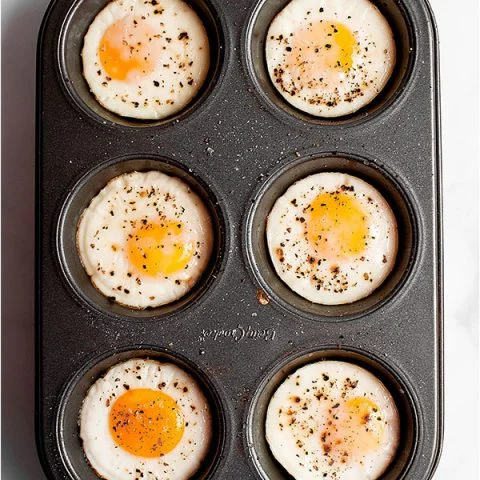
These muffin-tin baked eggs are a simple American-style breakfast you can make in batches for easy breakfasts through the week. Season them simply, then bake until the whites are set and the yolks are as firm as you like.
Ingredients
- 12eggs
- as neededoil or butter, for greasing the pan
- to tastesalt
- to tastepepper
Instructions
- 1
Preheat the oven
Heat the oven to 177°C (350°F).
- 2
Grease the tin
Lightly grease a non-stick muffin tin with oil, butter or spray oil.
- 3
Add the eggs
Crack one egg into each opening in the muffin tin.
- 4
Season the eggs
Season each egg with salt and pepper to taste.
- 5
Bake until set
Bake for 14–17 minutes, until the whites no longer jiggle and the yolks are cooked to your preferred doneness. The eggs shown in the original recipe were baked for 14 minutes.
What are baked eggs?
Baked eggs are whole eggs cooked in the oven rather than on the hob. This muffin-tin version is a straightforward American breakfast-prep idea: each egg bakes in its own compartment, making it easy to portion.
The recipe keeps the seasoning minimal, so the egg flavour comes through and the eggs can be paired with different breakfasts.
Nutrition and macros by portion
The nutrition label shows one serving as written: 80 calories, 6g protein, 1g carbs, 6g fat.
| Portion | Adjustment | kcal | Protein | Carbs | Fat |
|---|---|---|---|---|---|
| Lighter | Use less greasing fat | 56 kcal | 4g | 0g | 4g |
| This serving | As written | 80 kcal | 6g | 1g | 6g |
| Hungry | Add toast and another egg | 120 kcal | 9g | 1g | 8g |
The eggs provide most of the protein and fat, while the carbohydrate content is very small. To make a more balanced breakfast plate, serve an egg with wholemeal toast and a portion of fruit or vegetables.
Why use a muffin tin?
Individual portions: A muffin tin holds each egg separately, which makes the batch easy to divide and serve.
Non-stick surface: Greasing the tin helps the cooked eggs release more cleanly. Use oil, butter or spray oil, including around the sides of each opening.
Getting the doneness right
Whites: Check that the whites no longer wobble when you gently move the tin. If they still jiggle, return the eggs to the oven briefly and check again.
Yolks: The yolks continue to cook as the eggs bake, so use the 14-minute mark as a check if you prefer them less firm. Bake towards 17 minutes for a firmer result.
Timing and checking
The stated baking time is 14–17 minutes at 177°C (350°F). Oven performance and how you like your yolks can affect where the eggs fall within that range.
Check the eggs rather than relying only on the clock: the whites should be set, and the yolks should match your preference.
Seasoning and serving
Salt and pepper: Add both to taste before baking. A light hand keeps the eggs versatile, while a little extra seasoning can suit a more savoury plate.
Serve the eggs on toast or alongside breakfast potatoes and vegetables. They also work as a protein-rich addition to a breakfast plate with fruit.
Releasing the eggs
Let the eggs rest briefly after baking, then loosen the edges gently with a small spatula or spoon. Taking care around the sides helps avoid breaking the whites.
Greasing well before adding the eggs is the most useful step for easier removal, especially if the tin is not in perfect non-stick condition.
Recipe notes & tips
- Grease the sides and base of each muffin-tin opening before adding the eggs.
- Crack the eggs into the tin carefully to keep the yolks intact.
- Start checking at 14 minutes if you prefer softer yolks.
- Use a non-stick tin and loosen the eggs gently before lifting them out.
- Season each egg individually so the flavour is distributed evenly.
Variations
- Add herbs: Sprinkle chopped chives or parsley over the eggs before baking.
- Add cheese: Scatter a little grated cheese on top before the tin goes into the oven.
- Add vegetables: Put finely chopped, cooked vegetables into the openings before adding the eggs.
- Add spice: Season with a pinch of chilli flakes or smoked paprika.
- Make them dairy-free: Grease the tin with oil rather than butter.
Common mistakes to avoid
- Skipping the grease: The eggs can stick to the tin; coat each opening lightly before filling.
- Overbaking: The yolks may become firmer than intended; begin checking at 14 minutes.
- Assuming the yolks set with the whites: Check both cues and continue baking if the whites still jiggle.
- Using too much seasoning: Salt and pepper can overwhelm the eggs; start lightly and adjust next time.
- Removing them too soon: The eggs can tear; loosen around the edges carefully before lifting.
How to store
Cool the eggs promptly, then store them in an airtight container in the fridge for up to 3–4 days. Reheat until steaming hot, or enjoy them cold if preferred.
Frequently asked questions
How long should I bake eggs in a muffin tin?
Bake at 177°C (350°F) for 14–17 minutes. Check that the whites no longer jiggle and use the yolks to judge your preferred doneness.
How can I stop baked eggs sticking?
Lightly grease each opening, including the sides, with oil, butter or spray oil. A non-stick tin also helps.
Can I make these eggs ahead?
Yes. Bake the batch, cool the eggs promptly and refrigerate them in an airtight container for up to 3–4 days.
Can I freeze baked eggs?
Freezing can change the texture of cooked eggs, particularly the whites. For the best texture, make a smaller batch and keep it refrigerated.
How do I know when the eggs are done?
The whites should be set and should not jiggle when the tin is moved gently. The yolks can be baked to your preferred level of firmness.
Can I add other ingredients to the muffin tin?
Yes, you can add small amounts of cooked vegetables, herbs or cheese. Keep additions modest so there is room for the egg in each opening.
Cook it from the original
This recipe comes from keytomylime.com. Their page has the author’s own photos, notes and tips — the best place to cook it from.
Open the recipe on keytomylime.com