
Roast Leg of Lamb
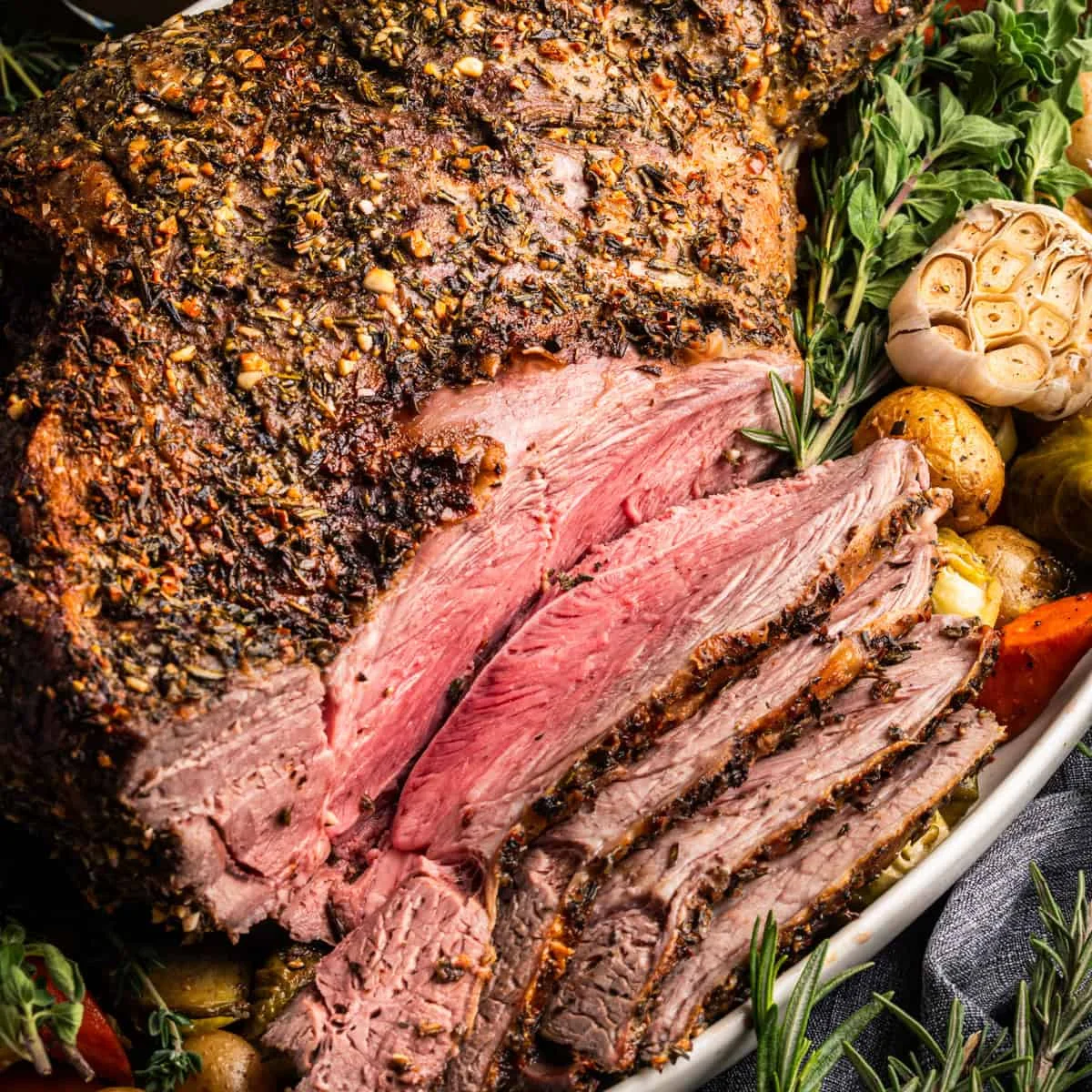
A bone-in leg of lamb gets a savoury crust from Dijon mustard, garlic and fresh herbs, then roasts above potatoes, carrots and Brussels sprouts. Finish the meal with a straightforward gravy made from the roasting juices.
Ingredients
- 680 g (1½ lb)baby potatoes, halved if large
- 454 g (1 lb)carrots, peeled and cut into thick chunks about 2.5 cm (1 inch) long
- 454 g (1 lb)Brussels sprouts, trimmed and halved
- 5 headsgarlic, tops cut off
- 45 ml (3 tbsp)olive oil
- to tastesalt and pepper
- 2.5 ml (½ tsp), plus more for the vegetablessalt
- 2.5 ml (½ tsp), plus more for the vegetablesblack pepper
- 10 clovesgarlic, minced
- 30 ml (2 tbsp)Dijon mustard
- 30 ml (2 tbsp)fresh rosemary leaves, minced
- 30 ml (2 tbsp)fresh thyme leaves, minced
- 15 ml (1 tbsp)oregano leaves, minced
- 30 ml (2 tbsp)olive oil
- 2.72 kg (6 lb)bone-in leg of lamb, trimmed and patted dry
- about 24 g (3 tbsp)plain flour
- 590 ml (2½ cups)beef broth
- 57 g (4 tbsp)unsalted butter, at room temperature
- from 1 bulbgarlic, roasted previously
- to tastesalt and pepper
Instructions
- 1
Bring lamb to room temperature
Take the lamb out of the fridge at least 1 hour before cooking so it can come to room temperature.
- 2
Heat the oven
Preheat the oven to 230°C (450°F) with a rack positioned in the middle.
- 3
Prepare the vegetables
In the bottom of a roasting pan fitted with a rack, toss the potatoes, carrots, Brussels sprouts and halved garlic heads with 45 ml (3 tbsp) olive oil, salt and pepper.
- 4
Arrange the vegetables
Spread the vegetables in one layer. Set the garlic halves cut-side up in the corners of the pan, then set the pan aside.
- 5
Season the lamb
Season the lamb generously all over with salt and pepper.
- 6
Mix the herb paste
In a small bowl, combine the minced garlic, Dijon mustard, rosemary, thyme, oregano, 30 ml (2 tbsp) olive oil, salt and pepper.
- 7
Coat the lamb
Cut diagonal slits across both sides of the lamb. Rub the herb paste over the meat, pressing it into the surface.
- 8
Set up the roast
Place the lamb fat-side up on the roasting rack above the vegetables, so its juices fall into the pan as it cooks.
- 9
Roast the lamb
Roast at 230°C (450°F) for 20 minutes. Reduce the oven to 175°C (350°F) and roast for about 60–75 minutes, depending on the size of the lamb, until the centre reaches 54°C (130°F) for medium-rare or 57°C (135°F) for medium.
- 10
Check the temperature
Expect the temperature to rise by another 7–10 degrees as the lamb rests. Check it with a digital thermometer.
- 11
Brown the crust
If the lamb has not browned, broil it for 1–3 minutes, watching it closely.
- 12
Rest the lamb
Move the lamb to a cutting board, tent it with foil and leave it to rest for 15–20 minutes.
- 13
Remove the vegetables
Take the vegetables out of the roasting pan. Set the empty pan over two burners on medium heat.
- 14
Cook the flour
Sprinkle the flour into the pan and whisk it with the roasting juices to make a paste. Cook until it browns slightly, taking care not to burn it.
- 15
Mash the roasted garlic
Squeeze the cloves from 1 head of roasted garlic into the pan and mash them with a fork, potato masher or the back of a flat spatula. Whisk the garlic into the paste.
- 16
Simmer the gravy
Pour in the beef broth and simmer until the gravy just begins to thicken. If it becomes too thick, whisk in a little more broth at a time.
- 17
Finish the gravy
Take the pan off the heat and whisk in the butter for a smooth, rich finish.
- 18
Strain the gravy
Pour the gravy through a fine-mesh strainer into a measuring jug or serving dish.
- 19
Slice and serve
Slice the lamb against the grain into pieces about 1.3 cm (½ inch) thick. Serve with the roasted vegetables and drizzle with gravy if desired.
What is roast leg of lamb?
Roast leg of lamb is a classic centrepiece for a celebratory meal or a Sunday roast. This American-style version pairs a bone-in joint with a punchy mustard, garlic and herb coating.
Roasting the lamb above a tray of vegetables lets its juices season them as they cook. The same pan then becomes the base for a simple gravy.
Nutrition and macros by portion
The nutrition label shows one serving as written: 569 calories, 51g protein, 36g carbs, 25g fat.
| Portion | Adjustment | kcal | Protein | Carbs | Fat |
|---|---|---|---|---|---|
| Lighter | More vegetables, less lamb | 398 kcal | 36g | 25g | 18g |
| This serving | As written | 569 kcal | 51g | 36g | 25g |
| Hungry | Larger lamb portion | 854 kcal | 77g | 54g | 38g |
The potatoes and carrots provide much of the carbohydrate, while the lamb is the main source of protein and contributes much of the fat. The olive oil, butter and gravy add further fat. Serve a slice of lamb with plenty of the vegetables, and add gravy to taste.
Why use a bone-in joint?
Bone-in lamb makes an impressive roast and gives you a clear centre to check with a thermometer. Ask your butcher to trim it if needed, then pat the surface dry before seasoning.
Let the joint sit at room temperature for at least an hour before cooking, as directed. This helps it start roasting more evenly.
Build the herb crust
Mustard and oil help the minced garlic and herbs cling to the meat. Rosemary, thyme and oregano give the paste a fragrant, savoury flavour.
Diagonal slits: make cuts on both sides and press the paste into them as well as over the outside. Keep the cuts shallow and spread out so the surface is well coated.
Make the vegetables roast evenly
Cut the carrots into thick chunks and halve larger baby potatoes so the pieces cook at a similar pace. Halved Brussels sprouts and garlic roast alongside them.
One layer: spread the vegetables across the pan rather than piling them up. Keep the garlic cut-side up in the corners, as instructed, and place the lamb on the rack above.
Use temperature as your guide
The recipe starts with a hot 230°C (450°F) oven for 20 minutes, then continues at 175°C (350°F) for about 60–75 minutes. The precise time depends on the size of the joint.
For medium-rare, look for 54°C (130°F) at the centre; for medium, aim for 57°C (135°F). The temperature rises another 7–10 degrees during the 15–20-minute rest, so check with a digital thermometer.
Turn the pan juices into gravy
Once the vegetables are removed, the roasting juices are ready to form the base of the gravy. Stir the flour into them until it forms a paste, then let it brown slightly without scorching.
Mash in the roasted garlic before adding the broth, and simmer only until the gravy starts to thicken. Whisk in the butter off the heat, then strain for a smooth pour.
Carve and serve
After resting, carve the lamb across the grain into slices about 1.3 cm (½ inch) thick. Cutting against the grain makes the slices easier to eat.
Serve with the roasted potatoes, carrots, Brussels sprouts and garlic. Spoon the gravy over the lamb or pass it at the table.
Recipe notes & tips
- Trim the joint and pat it dry before applying the seasoning and herb paste.
- Use a digital thermometer to check the centre of the lamb rather than relying on cooking time alone.
- Arrange the vegetables in one layer so they have room to roast.
- Keep a close eye on the lamb if you use the broiler to brown its crust.
- Rest the lamb for 15–20 minutes before carving to allow for the expected temperature rise.
- Add any extra broth to the gravy gradually so you can control its consistency.
Variations
- Adjust the herbs: Keep the same quantities of paste ingredients but use a different mix of fresh herbs.
- Choose your doneness: Use the stated thermometer targets for medium-rare or medium.
- Make a smoother gravy: Strain the finished gravy through the fine-mesh strainer as directed.
- Serve without gravy: Offer the carved lamb and vegetables on their own if you prefer.
- Change the vegetables: Use different roasting vegetables in place of some of the listed vegetables, keeping them in pieces that roast well.
Common mistakes to avoid
- Skipping the warm-up: Let the lamb stand at room temperature for at least 1 hour before cooking.
- Crowding the vegetables: Spread them into one layer so they roast rather than steam.
- Guessing doneness: Check the centre with a digital thermometer and use the recipe's temperature targets.
- Burning the flour: Brown the paste only slightly and keep it moving with the whisk.
- Adding broth all at once: If the gravy is too thick, whisk in more broth a little at a time.
- Carving too soon: Rest the lamb for 15–20 minutes before slicing.
How to store
Refrigerate leftover lamb, vegetables and gravy in covered containers within 2 hours of cooking and use within 3–4 days. Reheat until piping hot; warm the gravy gently and add a little broth if it has thickened.
Frequently asked questions
How long should I roast the lamb?
After the first 20 minutes at 230°C (450°F), roast it for about 60–75 minutes at 175°C (350°F). Use the internal temperature, not the clock alone, to judge doneness.
What temperature should the lamb reach?
The recipe gives 54°C (130°F) for medium-rare and 57°C (135°F) for medium. The temperature is expected to rise by another 7–10 degrees as the lamb rests.
Do I need to bring the lamb to room temperature?
Yes. The method calls for leaving it out for at least 1 hour before cooking.
Can I make the gravy without a roasting rack?
The recipe uses a roasting pan fitted with a rack to hold the lamb above the vegetables. The lamb’s juices drip into the pan, providing the base for the gravy.
Why rest the lamb before slicing?
Resting for 15–20 minutes gives the temperature time to rise as described in the method and lets you carve the joint before serving.
Can I leave out the gravy?
Yes. The recipe says to serve the roasted vegetables with the sliced lamb and drizzle with gravy if using.
Cook it from the original
This recipe comes from juliasalbum.com. Their page has the author’s own photos, notes and tips — the best place to cook it from.
Open the recipe on juliasalbum.com