
Stuffed Pork Tenderloin
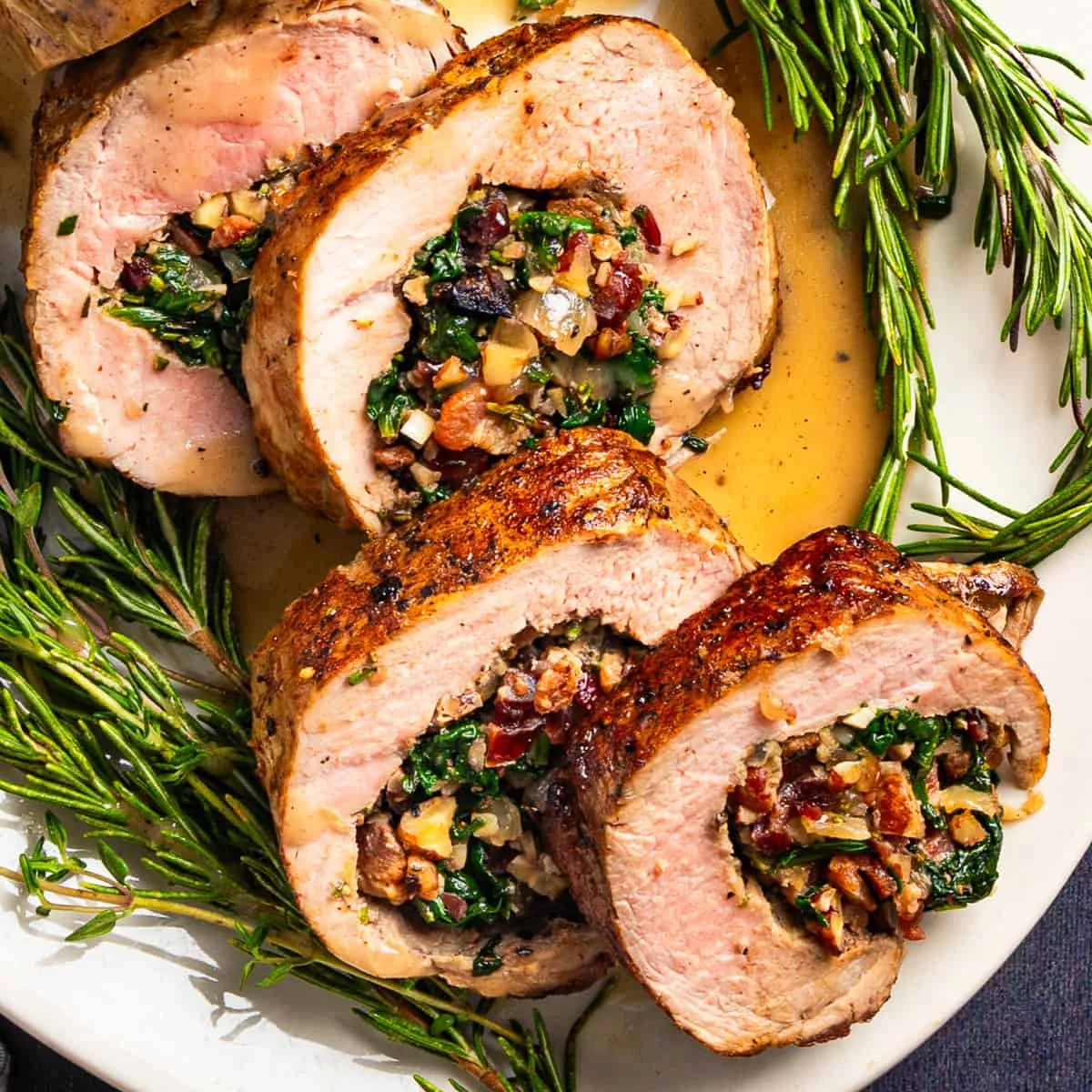
This stuffed pork tenderloin wraps bacon, spinach, herbs, cranberries and pecans inside juicy pork, then gets seared and roasted. It makes an attractive centrepiece for a weeknight meal or a dinner with guests.
Ingredients
- 680 g (up to 907 g)pork tenderloin, silver skin removed
- to tastesalt and black pepper
- 4 slicesthick-cut bacon, finely diced
- 1 smallonion, finely chopped
- 3 clovesgarlic, minced
- 15 ml (or 5 ml dried)fresh rosemary, minced
- 15 ml (or 5 ml dried)fresh thyme leaves, minced
- about 285 gfresh spinach, roughly chopped
- 75 gdried cranberries, roughly chopped
- about 55 gpecans, toasted and finely chopped
- 15 mlDijon mustard (optional)
- 15–30 mlolive oil
- about 16 gplain flour (or gluten-free flour)
- 355 ml, hot, plus more if neededchicken stock
- 57 gunsalted butter, cut into small cubes (or olive oil or vegan butter)
Instructions
- 1
Prepare the pork
Heat the oven to 190°C. Lay the tenderloin on a chopping board and, using a very sharp or boning knife, cut lengthways through the middle, stopping about 1 cm from the opposite edge. Open it out like a book. Cover with cling film and pound to an even thickness of about 1 cm. Season both sides with salt and pepper.
- 2
Mix the filling
Put the cranberries and pecans in a medium bowl and set aside. Cook the bacon in a frying pan over a medium heat until crisp. Lift it out with a slotted spoon, leaving the fat in the pan, and add the bacon to the bowl. Cook the onion in the bacon fat for 3–4 minutes, until softened. Add the garlic, rosemary and thyme and cook for 1 minute. Stir in the spinach and cook for about 2 minutes, until just wilted. Transfer it to the bowl, mix everything together, season with salt and pepper to taste, and leave to cool slightly.
- 3
Fill the tenderloin
If using it, spread the Dijon mustard over the inside of the flattened pork with the back of a spoon. Arrange the filling in an even line down the middle. Bring the cut edges together, overlapping them slightly, to form a tube around the filling; do not roll the pork into a spiral. Secure the seam with toothpicks laid flat against the pork, or tie it with kitchen string in about four evenly spaced places.
- 4
Sear and roast
Heat 15–30 ml olive oil in an ovenproof frying pan over a high heat. Sear the top and sides of the tenderloin until browned. Turn it seam-side down, remove any large pieces of escaped filling, then put the pan straight into the preheated oven. Roast for 18–20 minutes, or until the thickest part reaches 63°C.
- 5
Rest and slice
Transfer the pork to a chopping board and leave it to rest for 10 minutes. Slice into rounds about 2 cm thick.
- 6
Make the sauce
For the optional sauce, set the empty pan with its drippings over a medium heat. Sprinkle in the flour and whisk for 1 minute to make a paste. Gradually whisk in the hot stock, scraping up the browned bits, and simmer for 3–5 minutes until slightly thickened. Take the pan off the heat, whisk in the butter until glossy, then season with salt and pepper. Spoon the sauce over the sliced pork.
What is stuffed pork tenderloin?
Pork tenderloin is a lean, tender cut that cooks quickly and is often served as a roast. This American-style version is butterflied and filled before cooking, so each slice shows a colourful centre.
The filling pairs savoury bacon and wilted spinach with sweet cranberries, nutty pecans and fresh herbs. Searing the pork before roasting adds colour, while resting helps keep the slices juicy.
Nutrition and macros by portion
The nutrition label shows one serving as written: 659 calories, 43g protein, 22g carbs, 45g fat.
| Portion | Adjustment | kcal | Protein | Carbs | Fat |
|---|---|---|---|---|---|
| Lighter | Less bacon and butter | 461 kcal | 30g | 15g | 31g |
| This serving | As written | 659 kcal | 43g | 22g | 45g |
| Hungry | Serve with mashed potatoes | 989 kcal | 65g | 33g | 68g |
The pork and bacon provide much of the protein and fat, with butter adding more fat if you make the pan sauce. Cranberries, onion and flour contribute carbohydrates. Pair a portion with green vegetables or salad for a balanced plate, and add potatoes if you want a more substantial meal.
Choosing and preparing the pork
Silver skin: Remove the tough, shiny membrane before butterflying, as it will not soften during cooking. Ask a butcher to do this if you prefer.
Even thickness: Open the tenderloin like a book and pound it gently to about 1 cm thick. A more even sheet makes it easier to enclose the filling and cook the pork evenly.
Building the filling
Bacon fat: Crisping the bacon first leaves seasoned drippings for softening the onion. The bacon goes back into the filling with the cranberries and pecans.
Spinach: Cook it only until wilted, then let the mixture cool slightly before assembling. This keeps the filling manageable and avoids putting very hot ingredients directly against the raw pork.
Wrapping and securing
A tube, not a spiral: Place the filling in a line down the centre, then bring the pork edges together around it. Overlap them slightly so the seam can be secured.
Toothpicks or string: Fasten the seam firmly enough to hold the roll together, but keep toothpicks flat against the meat so the tenderloin can sit securely in the pan.
Searing and checking doneness
Sear: Use a hot ovenproof pan and brown the outside before transferring it to the oven. Turn the tenderloin seam-side down for roasting.
Temperature: Check the thickest part with a thermometer and take the pork out when it reaches 63°C. The method gives a roasting estimate of 18–20 minutes, but the thermometer is the more useful doneness cue.
Resting and serving
Rest: Leave the roast for 10 minutes before slicing it into rounds about 2 cm thick. This also gives you time to finish the optional pan sauce.
On the plate: Serve with roasted garlic mashed potatoes, lemon-parmesan green beans or an apple-spinach salad. A spoonful of the pan sauce works well over the slices.
Recipe notes & tips
- Use a sharp knife and make the lengthways cut gradually so you do not slice all the way through.
- Pound the pork gently and evenly to avoid tearing the meat.
- Let the filling cool slightly before placing it on the tenderloin.
- Remove any loose filling from the pan before roasting so it does not scorch.
- Use a thermometer to check the thickest part rather than relying on the cooking time alone.
- Rest the pork for the full 10 minutes before slicing.
Variations
- Dried herbs: Use 5 ml each of dried rosemary and thyme in place of the fresh herbs.
- Gluten-free sauce: Use gluten-free flour to thicken the pan sauce.
- Dairy-free sauce: Replace the butter with olive oil or vegan butter.
- Skip the mustard: Leave it out for a milder filling; it is optional in the recipe.
- No pan sauce: Serve the sliced pork without the flour, stock and butter sauce.
Common mistakes to avoid
- Cutting all the way through: Stop about 1 cm from the far edge so the tenderloin opens as one piece.
- Overfilling: Keep the mixture in an even line down the centre so the pork edges can meet.
- Rolling into a spiral: Bring the edges together around the filling instead of winding the meat around itself.
- Skipping the thermometer: Check the thickest part reaches 63°C, as cooking time can vary.
- Slicing straight away: Rest the roast for 10 minutes first to help keep it juicy.
How to store
Refrigerate leftover pork in a covered container within 2 hours and use within 3 days. Reheat gently in a covered dish in the oven or microwave until piping hot; store the sauce separately if possible.
Frequently asked questions
Can I use dried herbs instead of fresh?
Yes. Use 5 ml dried rosemary and 5 ml dried thyme in place of the fresh herbs.
How do I know when the pork is cooked?
Check the thickest part with a meat thermometer and remove it from the oven at 63°C. The recipe estimates 18–20 minutes of roasting, but thickness affects the timing.
Can I make the pan sauce gluten-free?
Yes. Use gluten-free flour in place of the plain flour, as suggested in the ingredient list.
Can I make the sauce dairy-free?
Yes. Whisk in olive oil or vegan butter instead of the unsalted butter.
Do I have to use Dijon mustard?
No. It is optional and can simply be left out.
Why should the pork rest before slicing?
Resting for 10 minutes gives the roast time to settle after cooking and makes it easier to slice into neat rounds.
Cook it from the original
This recipe comes from juliasalbum.com. Their page has the author’s own photos, notes and tips — the best place to cook it from.
Open the recipe on juliasalbum.com