
Pork Chops with Apples and Bacon
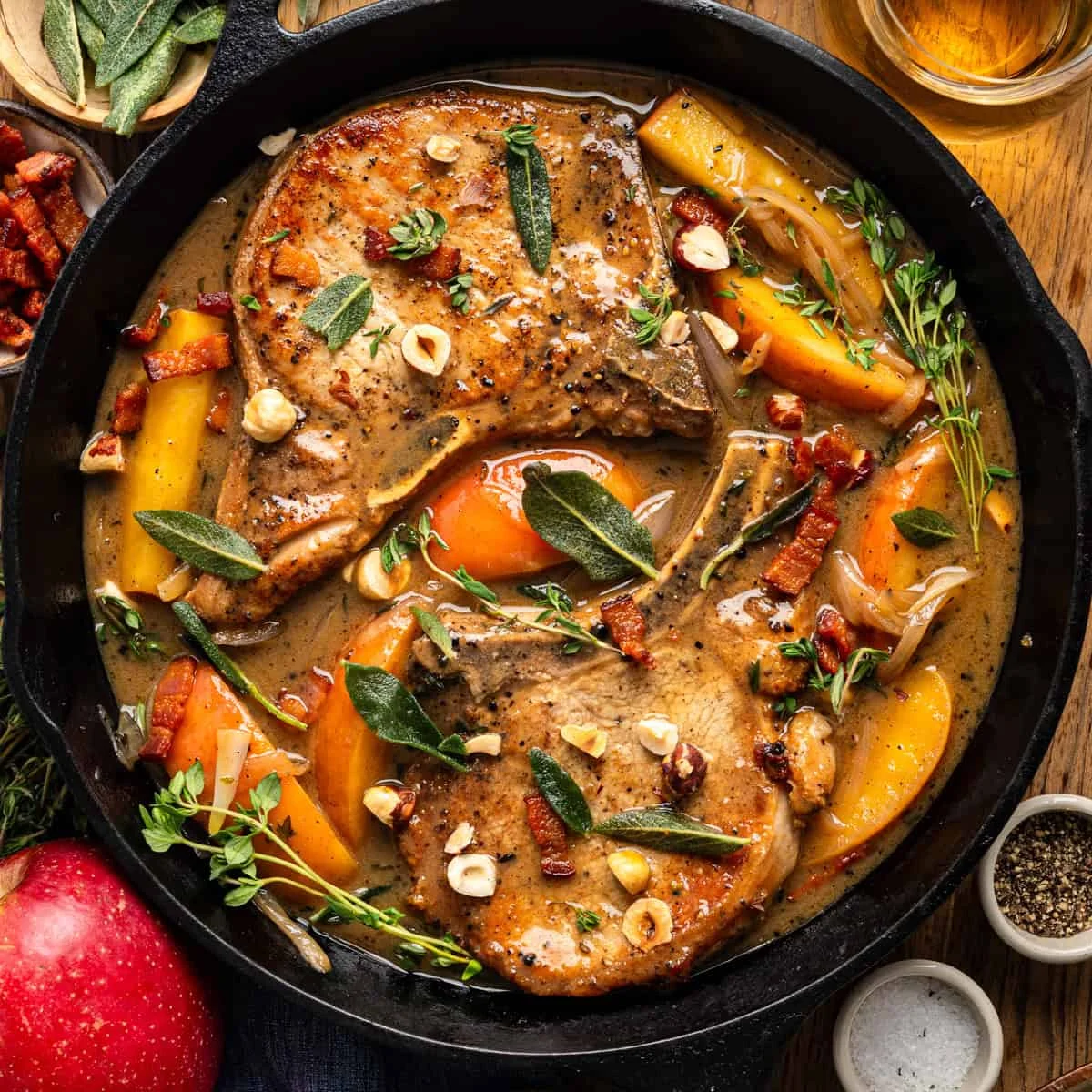
Pork chops are seared, then gently simmered with apples in a tangy-sweet cider and Dijon sauce, finished with crisp bacon and sage. It is a comforting one-pan dinner that comes together in about 30 minutes.
Ingredients
- 2 large, thick-cut bone-in chops (1.3–1.9 cm thick, about 284–340 g each; boneless chops also work)pork chops
- to tastekosher salt and freshly ground black pepper
- 5 slices, choppedthick-cut bacon
- 10 leavesfresh sage
- 15 ml, if neededolive oil
- 1 large, or 3 small; cored and cut into 8 piecessweet or tart apple, skin on
- 1 large, slicedshallot
- 15 ml, roughly choppedfresh thyme leaves
- 15 ml, optionalplain flour
- 60 mldry white wine, such as Sauvignon Blanc or Chardonnay
- 300 mlapple cider (not cider vinegar) or fresh apple juice
- 15 mlDijon mustard
- to tastetoasted hazelnuts
- to tastethyme leaves
Instructions
- 1
Season the pork
Pat the pork chops dry with paper towels and season generously on all sides with salt and pepper. Set them aside.
- 2
Cook the bacon
Put the chopped bacon in a large cold frying pan, then set it over a medium heat. Cook for 6–8 minutes, stirring occasionally, until golden and crisp. Lift it out with a slotted spoon and drain on a paper-towel-lined plate, leaving the fat in the pan.
- 3
Crisp the sage
Fry the sage leaves in the bacon fat for about 30 seconds, until crisp. They are ready when darkened and the crackling sound from the oil has stopped. Remove them and set aside with the bacon.
- 4
Sear the chops
Add the olive oil if the pan looks dry. Turn the heat to high and heat until the fat starts to smoke, then sear the pork for 1–2 minutes per side until golden. The chops do not need to be cooked through yet. Remove and set aside.
- 5
Soften the apples
Lower the heat to medium and sauté the apple pieces for about 1–2 minutes, just until slightly softened.
- 6
Cook the shallot
Add the sliced shallot and thyme. Cook for about 3 minutes, until the shallot has just softened.
- 7
Add the flour
If using the flour, sprinkle it over the apple and shallot mixture and stir to coat.
- 8
Deglaze the pan
Raise the heat to medium-high, add the white wine and scrape up the browned bits from the bottom of the pan. Let the wine reduce for about 1 minute.
- 9
Make the sauce
Stir in the apple cider and Dijon mustard until well combined.
- 10
Simmer the chops
Bring the sauce to a boil, then lower the heat to medium-low. Nestle the pork chops into the pan, cover loosely and simmer gently for about 5 minutes, depending on thickness, until cooked through to an internal temperature of 63°C (145°F) and the sauce begins to thicken.
- 11
Finish and serve
Taste the sauce and adjust the seasoning as needed. Serve the chops with the apples and sauce spooned over them, topped with the crisp bacon, toasted hazelnuts, sage and extra thyme.
What are pork chops with apples?
This American-style pairing brings savoury pork together with sweet-tart apples, a combination often served in autumn. Here, the chops cook in the same pan as bacon, sage and a cider-based sauce, so the browned flavours become part of the finished dish.
The method works by searing the pork first, then returning it to the pan to finish gently in the sauce. Apples, Dijon and wine give the sauce a balance of fruit, tang and savoury depth.
Nutrition and macros by portion
The nutrition label shows one serving as written: 453 calories, 24g protein, 20g carbs, 29g fat.
| Portion | Adjustment | kcal | Protein | Carbs | Fat |
|---|---|---|---|---|---|
| Lighter | Use less bacon | 317 kcal | 17g | 14g | 20g |
| This serving | As written | 453 kcal | 24g | 20g | 29g |
| Hungry | Add mashed potatoes | 680 kcal | 36g | 30g | 44g |
The pork contributes protein, while the apple and cider provide much of the carbohydrate; bacon and olive oil are the main sources of fat. Serve with green vegetables or a fresh salad alongside a moderate portion of mashed potatoes or rice to balance the plate.
Choose the chops and apples
Pork chops: Bone-in, thick-cut chops are specified, but boneless chops can also be used. Since thickness affects cooking time, use the stated internal temperature as the doneness check.
Apples: A large sweet or tart apple gives the sauce fruitiness while holding its shape in pieces. Keep the skin on, as directed, and core the apple before cutting it.
Build flavour in the pan
Bacon fat: Starting the bacon in a cold pan lets it render as the pan heats. Leave the drippings behind to fry the sage and sear the chops; add olive oil only if the pan looks dry.
Browned bits: After the pork and apples have cooked, wine loosens the browned residue on the pan. Scrape the base as it reduces so those savoury bits blend into the sauce.
Get the sauce texture right
Flour: The flour is optional and helps thicken the sauce. Stir it through the apple and shallot mixture before adding the wine so it coats the ingredients.
Cider and mustard: Stir these together into the pan after the wine has reduced. Simmer gently with the chops until the sauce starts to thicken; it will remain looser if you leave out the flour.
Check the pork for doneness
Searing: The brief high-heat sear browns the outside but does not cook the chops through. They finish in the covered pan with the sauce.
Temperature: Check the thickest part of a chop with a food thermometer and cook to 63°C (145°F). The recipe’s approximate 5-minute simmer can vary with chop thickness, so use the temperature rather than the clock alone.
Serve with something to catch the sauce
Potatoes and grains: Roasted garlic mashed potatoes or wild rice make a hearty base for the cider sauce. Roasted root vegetables are another fitting option.
Something fresh: Braised cabbage suits the warm, savoury flavours, while a shaved fennel and rocket salad brings a crisp contrast. Add the bacon, sage, hazelnuts and extra thyme just before serving.
Recipe notes & tips
- Dry the chops well before seasoning so they can brown in the pan.
- Keep the bacon drippings for searing unless the pan looks dry.
- Watch the sage closely; it needs only about 30 seconds to crisp.
- Scrape the bottom of the pan when adding the wine to release the browned bits.
- Use a thermometer to check the pork, as chop thickness changes the simmering time.
- Add the crispy bacon and sage at the end to preserve their texture.
Variations
- Use boneless chops: Sear and simmer them in the same way, checking the internal temperature as they cook.
- Choose different apples: Use three small red apples or a mix of red and green apples in place of one large apple.
- Skip the flour: Leave it out for a thinner pan sauce.
- Swap the cider: Use fresh apple juice if you do not have apple cider.
- Change the side: Serve with wild rice, roasted root vegetables, braised cabbage or a shaved fennel and rocket salad.
Common mistakes to avoid
- Crowded pan: Sear the chops with room around them so they can brown rather than steam.
- Burnt sage: Remove the leaves as soon as they darken and the oil stops crackling.
- Skipping the scrape: Scrape up the browned bits as the wine goes in so they become part of the sauce.
- Overcooked pork: Check the thickest part with a thermometer instead of relying only on the approximate simmering time.
- Adding bacon too early: Return it as a garnish at serving time to keep it crisp.
How to store
Refrigerate leftovers in an airtight container for up to 3 days. Reheat gently in a covered pan over low heat with a splash of water or cider, until hot throughout; add any reserved crisp bacon and sage at the end.
Frequently asked questions
Can I use boneless pork chops?
Yes. The recipe allows boneless chops, but their cooking time may differ, so check the thickest part with a thermometer and cook to 63°C (145°F).
Is apple cider the same as cider vinegar?
No. Use apple cider or fresh apple juice, not cider vinegar.
Do I have to add the flour?
No, it is optional. Leaving it out makes a thinner sauce.
How do I know when the pork is done?
Check the thickest part of a chop with a food thermometer. The target in this recipe is 63°C (145°F); the suggested simmering time is about 5 minutes but depends on thickness.
What can I serve with these chops?
Try roasted garlic mashed potatoes, wild rice, roasted root vegetables or braised cabbage. A shaved fennel and rocket salad is a fresher option.
Can I make the sauce without wine?
The recipe specifies dry white wine for deglazing and reducing. No substitute is provided in the method.
Cook it from the original
This recipe comes from juliasalbum.com. Their page has the author’s own photos, notes and tips — the best place to cook it from.
Open the recipe on juliasalbum.com