
Apple Cider Braised Pork Shoulder
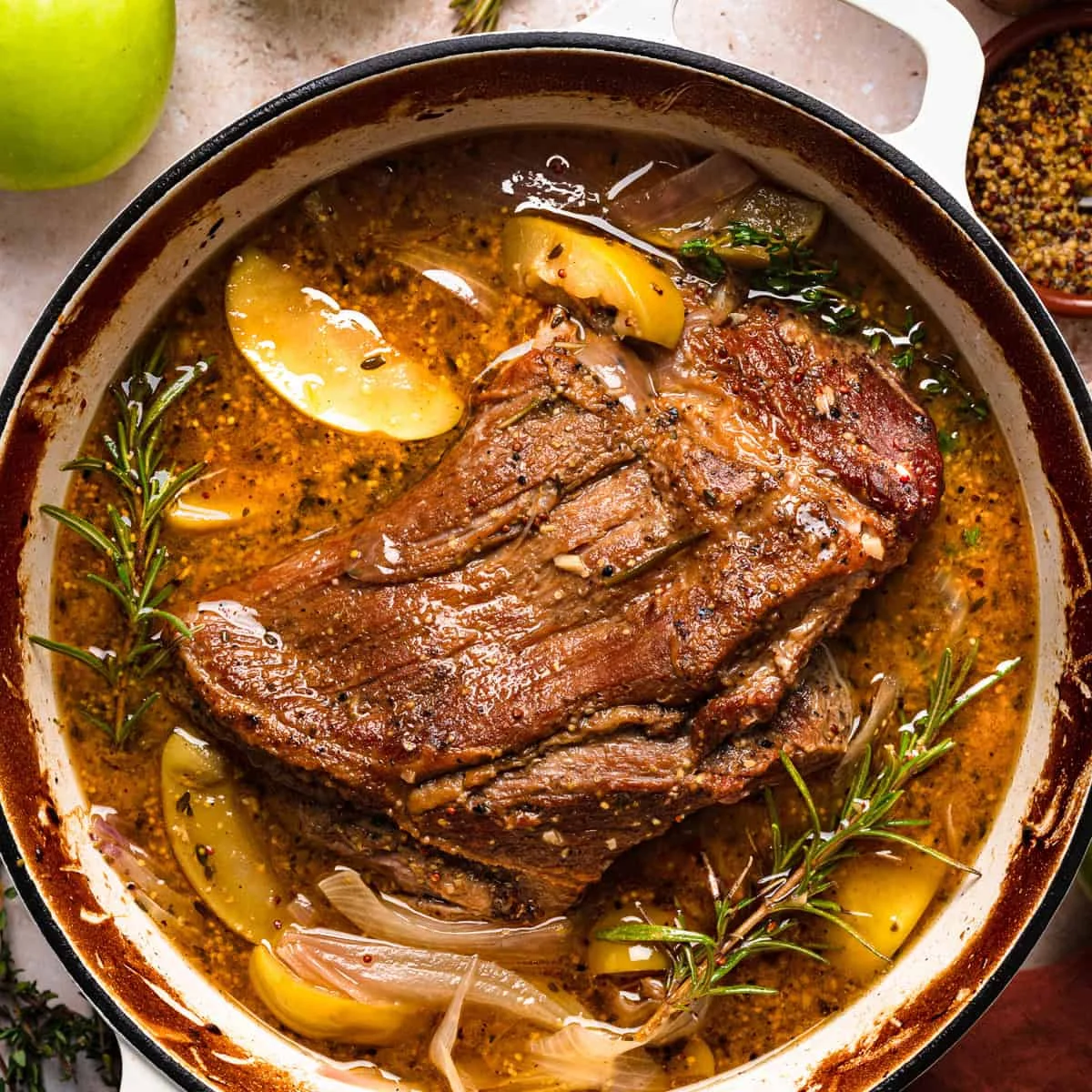
Pork shoulder is browned, then slowly braised in apple cider, stock and herbs until tender, with apples and red onion added near the end. It makes a warming one-pot meal, especially served with mashed potatoes to catch the savoury-sweet sauce.
Ingredients
- 1.59 kg (3.5 lb)pork shoulder, excess fat trimmed and patted dry
- to tastesalt and pepper
- 30 ml (2 tablespoons)neutral cooking oil, such as light olive, rapeseed or avocado oil
- 8 clovesgarlic, minced
- 3 sprigsthyme
- 1 sprigrosemary
- 30 ml (2 tablespoons)apple cider vinegar
- 590 ml (2½ cups)unfiltered apple cider, not apple cider vinegar
- 590 ml (2½ cups)chicken stock
- 30 ml (2 tablespoons)wholegrain mustard or Dijon mustard
- 1 largered onion, thickly sliced
- 2Granny Smith apples, firm, cored and cut into quarters or eighths
- to tastemashed potatoes or another starchy side
- to tastethyme leaves
Instructions
- 1
Heat the oven
Set a shelf in the middle of the oven and preheat it to 163°C (325°F).
- 2
Season the pork
Warm the neutral oil in a large Dutch oven over medium-high heat. Season the dried pork pieces generously with salt and pepper.
- 3
Brown the pork
Add the pork and brown it on every side, about 5 minutes per side. Transfer it to a plate or tray.
- 4
Cook the herbs
Put the garlic, thyme and rosemary in the pot and cook for about 1 minute, until fragrant.
- 5
Add the liquids
Pour in the apple cider vinegar, apple cider and chicken stock, then stir in the wholegrain mustard. Scrape the browned bits from the bottom of the pot.
- 6
Braise the pork
Return the pork to the pot and cover it. Cook in the oven for 2–2½ hours, until fork-tender, turning the pork pieces about halfway through.
- 7
Add apples and onion
Add the red onion and apple slices, cover the pot and return it to the oven for 20–30 minutes, until the apples are tender. Taste the braising liquid and adjust the salt and pepper if needed; remove the herbs before serving.
- 8
Thicken the sauce
This step is optional: take the pork, apples and onions out of the Dutch oven, then boil the liquid on the hob over high heat for about 15 minutes, stirring constantly, if you would like a thicker sauce.
- 9
Serve the pork
Serve the pork in large chunks or shred it. Spoon over the sauce and serve with the apples, onions and mashed potatoes or another starchy side; garnish with thyme leaves if desired.
What is apple cider braised pork shoulder?
Braising is a slow, covered cooking method that combines browning with gentle cooking in liquid. This American-style version pairs pork shoulder with apple cider, herbs and stock, then finishes the pot with tart apples and red onion.
Browning builds savoury flavour, while the long oven cook gives the shoulder time to become tender. The cider brings a sweet-tart note that works well with the pork and mustard.
Nutrition and macros by portion
The nutrition label shows one serving as written: 308 calories, 26g protein, 20g carbs, 13g fat.
| Portion | Adjustment | kcal | Protein | Carbs | Fat |
|---|---|---|---|---|---|
| Lighter | More vegetables, less potato | 216 kcal | 18g | 14g | 9g |
| This serving | As written | 308 kcal | 26g | 20g | 13g |
| Hungry | Larger pork portion | 462 kcal | 39g | 30g | 20g |
The pork supplies most of the protein and fat, while the cider, apples and a mashed-potato side contribute carbohydrates. Serve with a generous portion of vegetables alongside and choose how much potato to add to suit your plate.
Choose the right cider
Apple cider: use unfiltered apple cider, not apple cider vinegar. The recipe already includes vinegar for a sharper edge, so swapping the cider for more vinegar would change the balance.
Mustard: wholegrain mustard gives the liquid a gently textured finish; Dijon is an alternative if that is what you have.
Brown before braising
Dry pork: patting the shoulder dry helps it brown rather than steam as it hits the hot pot. Season it well before browning.
Batch size: leave enough room around the pork for the surfaces to colour. If the pieces crowd the pot, brown them in batches and return them all before adding the braising liquid.
Watch for tenderness
Fork test: start checking after 2 hours. The pork is ready when a fork goes in easily and the meat yields rather than resisting; cook it for longer if needed, within the stated 2–2½-hour range.
Apple texture: the apples go in later so they have time to soften without spending the full braising time in the oven. Check them after 20 minutes and continue up to 30 minutes if they need it.
Make the sauce to suit
Braising liquid: taste it after cooking and adjust the seasoning with salt and pepper. Remove the thyme and rosemary sprigs before serving.
Thicker finish: reducing the liquid is optional. Stir it frequently over high heat for about 15 minutes, keeping an eye on it as it reduces.
Plan the cooking time
The pork needs 2–2½ hours in the oven, followed by another 20–30 minutes with the apples and onion. Allow for the initial browning and preparation as well when planning the meal.
Use the fork-tender cue rather than relying on the clock alone, since the pieces may vary in size.
Serve with something starchy
Mashed potatoes: they make a classic accompaniment and are useful for soaking up the cider-based sauce. Spoon the apples and onion alongside the pork.
Other sides: serve with another starchy side if preferred. Thyme leaves make a simple finishing garnish.
Recipe notes & tips
- Pat the pork dry before seasoning to help it brown in the pot.
- Turn the pork pieces halfway through the covered oven braise so they cook evenly in the liquid.
- Add the apples and onion only for the final 20–30 minutes to keep them from overcooking.
- Check tenderness with a fork and allow extra oven time if the pork still feels firm.
- Taste and season the braising liquid after cooking, before serving.
- Stir the sauce constantly if reducing it over high heat.
Variations
- Use Dijon: swap it for the wholegrain mustard if you prefer a smoother sauce.
- Choose another apple: use a firm, tart cooking apple in place of Granny Smith.
- Shred the pork: pull the tender meat apart and serve it with the sauce.
- Keep it chunky: serve the shoulder in large pieces instead of shredding it.
- Skip the reduction: serve the braising liquid as it is for a looser sauce.
Common mistakes to avoid
- Using cider vinegar as the cider: use unfiltered apple cider for the braising liquid and keep the vinegar to its measured amount.
- Crowding the pot: the pork may steam rather than brown, so work in batches if needed.
- Skipping the browning: take the time to colour the pork on all sides before braising.
- Adding the apples too early: put them in only for the final 20–30 minutes so they do not spend the full cook in the oven.
- Stopping before the pork is tender: continue cooking if a fork still meets resistance.
- Leaving the sauce unattended while reducing: stir constantly over high heat for the stated 15 minutes.
How to store
Refrigerate leftovers in an airtight container with the sauce, apples and onion for up to 3 days. Reheat gently in a covered pan over low heat, or in the microwave, until piping hot; add a splash of stock or water if the sauce has thickened too much.
Frequently asked questions
Can I use apple cider vinegar instead of apple cider?
No. The recipe uses both unfiltered apple cider and a smaller amount of apple cider vinegar; they are separate ingredients and are not interchangeable here.
How do I know when the pork shoulder is done?
It should be fork-tender, with the fork entering easily and the meat yielding. If it is still firm after 2 hours, continue cooking and check again.
Can I shred the pork before serving?
Yes. The method allows you to serve it in large chunks or shred it once it is tender.
Do I have to reduce the sauce?
No, reducing it is optional. Serve the braising liquid as it is for a thinner sauce, or reduce it on the hob for about 15 minutes, stirring constantly.
What should I serve with the pork?
Mashed potatoes are suggested, but any starchy side will work. Serve the apples, onion and sauce with the pork.
Can I use Dijon mustard?
Yes. Dijon is listed as an alternative to wholegrain mustard and gives the sauce a smoother texture.
Cook it from the original
This recipe comes from juliasalbum.com. Their page has the author’s own photos, notes and tips — the best place to cook it from.
Open the recipe on juliasalbum.com