
Risotto Milanese
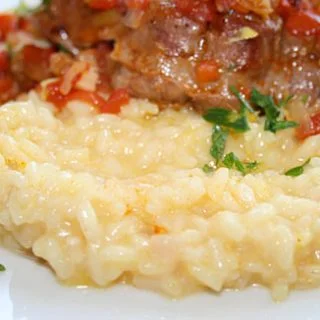
Risotto Milanese is a creamy northern Italian rice dish flavoured with saffron, traditionally served alongside osso buco. This version builds its texture by gradually stirring hot stock into Arborio rice, then finishing with butter and Parmesan.
Ingredients
- 1.42 litres (6 cups)chicken stock, heated
- 85 g (6 tablespoons; reserve 28 g/2 tablespoons for finishing)unsalted butter
- 75 g (½ cup), finely choppedonion
- 400 g (2 cups)Arborio rice
- 120 ml (½ cup)dry white wine
- 1 teaspoonsaffron threads, soaked in a little stock
- 50 g (½ cup)grated Parmesan cheese
Instructions
- 1
Melt the butter
Heat 4 tablespoons (about 57 g) of the butter in a heavy saucepan.
- 2
Cook the onion
Add the onion and cook until translucent. Stir in the rice until the grains are coated in butter.
- 3
Add the wine
Pour in the white wine and stir continuously over medium heat until it has been absorbed.
- 4
Add the first stock
Begin adding the hot stock in ½-cup (120 ml) portions, stirring as each addition is absorbed.
- 5
Cook the rice
Continue adding ladlefuls of hot stock and stirring continuously for about 20–25 minutes, until the rice is cooked but still slightly firm to the bite.
- 6
Stir in saffron
About 5 minutes before the rice is done, add the saffron and its soaking stock.
- 7
Finish the risotto
Take the pan off the heat and stir in the reserved 2 tablespoons (about 28 g) of butter and the Parmesan.
- 8
Serve with cheese
Serve the risotto, with extra Parmesan offered if desired.
What is Risotto Milanese?
Risotto Milanese is a saffron-scented rice dish from Milan, in the Lombardy region of northern Italy. It is traditionally served with osso buco, a braised veal dish.
The saffron gives the rice its distinctive aroma and golden colour. Here, gradual additions of stock and a buttery, cheesy finish make a rich, creamy risotto.
Nutrition and macros by portion
The nutrition label shows one serving as written: 620 calories, 13g protein, 85g carbs, 24g fat.
| Portion | Adjustment | kcal | Protein | Carbs | Fat |
|---|---|---|---|---|---|
| Lighter | Use less finishing butter | 434 kcal | 9g | 59g | 17g |
| This serving | As written | 620 kcal | 13g | 85g | 24g |
| Hungry | Serve a larger portion | 930 kcal | 20g | 128g | 36g |
Most of each serving’s carbohydrates come from the Arborio rice, while butter and Parmesan contribute much of the fat. The rice and cheese provide some protein, with chicken stock adding a variable amount depending on the brand. Pair a portion with vegetables or salad for a more balanced plate.
The key ingredients
Arborio rice: its plump grains release starch as they cook, helping give the risotto its creamy consistency while retaining a little bite.
Saffron: soaking the threads in a little warm stock helps distribute their colour and flavour through the rice.
Stock and wine: heated chicken stock keeps the cooking liquid from cooling the pan, while dry white wine adds a bright note before the stock goes in.
Build the texture gradually
Small additions: add the hot stock bit by bit, stirring as the rice absorbs it. Wait until the liquid has mostly disappeared before adding more.
Steady stirring: keep the rice moving so it cooks evenly and releases starch. The process takes about 20–25 minutes after the stock additions begin.
Know when it is done
Taste the rice near the end of cooking. It should be tender but still slightly firm at the centre, rather than soft or chalky.
The risotto should be creamy and loose enough to settle gently on the plate. If the rice is still too firm, continue cooking with another small addition of hot stock.
Finish off the heat
Saffron timing: add it about 5 minutes before the rice is ready, as directed, so its flavour has time to spread through the risotto.
Butter and Parmesan: stir these in after taking the pan off the heat. This final step brings the sauce together and adds savoury richness.
What to serve with it
For a traditional pairing, serve Risotto Milanese with osso buco. The saffron rice also works as a side for other braised meat dishes.
For a simpler meal, serve it with a green salad or a side of cooked vegetables to contrast with its creamy texture.
Recipe notes & tips
- Keep the chicken stock hot in a separate pan while the risotto cooks.
- Chop the onion finely so it softens evenly among the rice.
- Stir regularly and scrape across the base of the saucepan to prevent sticking.
- Taste the rice before stopping; the cooking time can vary slightly.
- Offer extra Parmesan at the table rather than stirring in more than the recipe specifies.
Variations
- Vegetable stock: use it instead of chicken stock for a meat-free version.
- Extra saffron: add a few more threads for a more pronounced saffron aroma.
- Fresh herbs: scatter finely chopped parsley over the finished risotto.
- Osso buco pairing: serve alongside braised veal for the traditional combination.
Common mistakes to avoid
- Cold stock: it can interrupt the cooking; keep the stock hot before adding it.
- Adding stock all at once: the rice may cook unevenly; add it in portions as directed.
- Rushing the stirring: the rice needs regular movement; stir continuously during the wine stage and stock cooking.
- Overcooking the rice: it can lose its bite; start tasting before the 20–25-minute cooking period ends.
- Adding the finishing butter over heat: it may not blend as smoothly; remove the pan from the heat first.
How to store
Refrigerate leftovers in an airtight container for up to 3 days. Reheat gently in a saucepan with a splash of water or stock, stirring until hot; the rice will be softer than when freshly made.
Frequently asked questions
Can I use another type of rice?
Arborio is specified because it releases starch and helps create the creamy texture. Other risotto rice varieties may work, but cooking time and liquid absorption can differ.
Do I need to keep stirring the whole time?
Stir continuously while the wine is being absorbed and during the stock additions, as the method directs. This helps the rice cook evenly and develop its texture.
When should I add the saffron?
Add the saffron about 5 minutes before the rice is done. Include the little bit of stock in which the threads were soaked.
How do I know when the risotto is ready?
Taste a grain: it should be cooked through but retain a slight firmness at the centre. The risotto should also look creamy rather than dry.
Can I make Risotto Milanese ahead?
It is best served straight after cooking, when its texture is at its creamiest. Leftovers can be refrigerated and reheated, though they will be thicker and softer.
Cook it from the original
This recipe comes from italianfoodforever.com. Their page has the author’s own photos, notes and tips — the best place to cook it from.
Open the recipe on italianfoodforever.com