
Spinach Ricotta Ravioli
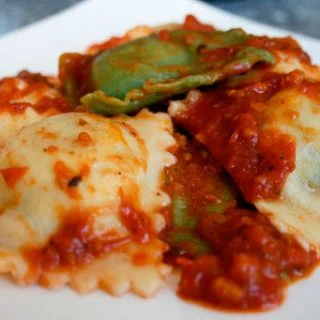
These homemade ravioli pair tender pasta with a spinach, ricotta and Parmesan filling, served in a quick tomato and basil sauce. Making the pasta from scratch takes a little time, but the filled parcels make an inviting meal to share.
Ingredients
- 1/2 tablespoonolive oil
- 1shallot, finely chopped
- 8 ounces (227 g)fresh baby spinach leaves
- to tastesalt and pepper
- 1 cup (about 240 g)ricotta cheese
- 4 tablespoonsgrated Parmesan
- 1egg
- 2 cups (about 250 g)all-purpose flour
- 3eggs
- 1/2 teaspoonsalt
- 2 tablespoonsolive oil
- 2 tablespoonsolive oil
- 2 clovesgarlic, minced
- 1/2 teaspooncrushed red pepper flakes
- 1 can (28 ounces; about 794 g)crushed tomatoes
- to tastesalt and pepper
- 1/4 cup (about 10 g)chopped fresh basil
- to servegrated Parmesan cheese
Instructions
- 1
Make the flour well
On a flat work surface, combine the flour and salt, shape them into a mound and make a well in the centre.
- 2
Add eggs and oil
Put the eggs and 1 tablespoon of olive oil into the well and beat lightly with a fork.
- 3
Form the dough
Gradually draw flour in from the inside edge of the well, working in a circular motion until all the flour is incorporated and the mixture forms a ball.
- 4
Rest the dough
Wrap the dough ball in cling film and leave it to rest for 30 minutes.
- 5
Prepare the filling
While the pasta dough rests, make the filling.
- 6
Drain the spinach
Steam the spinach, then drain it thoroughly, pressing out all excess liquid. Chop it finely.
- 7
Heat the pan
Set a large pan over medium heat, add the olive oil and heat until hot but not smoking.
- 8
Cook the shallot
Add the shallot and cook for about 1 minute, stirring so it does not brown.
- 9
Mix the filling
Stir the cooked shallot into the spinach with the ricotta, Parmesan and egg.
- 10
Season the filling
Taste the filling and add more salt and pepper as needed.
- 11
Divide the dough
Cut the dough ball in half. Cover the half you are not using so it does not dry out.
- 12
Roll the first sheet
Dust the work surface and dough lightly with flour. Press the dough into a rectangle and pass it through a pasta machine 2 or 3 times on its widest setting.
- 13
Guide the pasta
As the sheet comes through the rollers, pull and stretch it gently with the palm of your hand.
- 14
Roll it thinner
Narrow the machine setting and pass the dough through again 2 or 3 times.
- 15
Thin the sheet
Keep narrowing the setting until the machine reaches its second-narrowest setting; the pasta should be almost paper-thin.
- 16
Moisten the pasta
Dust the work surface and pasta sheet with flour. Lay out the long sheet and brush its top with a little water to help seal the ravioli.
- 17
Add the filling
Place 1 tablespoon of filling along one half of the sheet, spacing the mounds about 2 inches (5 cm) apart. Fold the other half over them like a blanket.
- 18
Seal the ravioli
Gently press around each mound to push out air pockets. Cut the parcels into squares with a sharp knife and crimp all four edges with the tines of a fork to seal. A fluted pastry wheel can also make a decorative edge.
- 19
Dust and dry
Dust the ravioli and a baking tray with cornmeal to prevent sticking. Lay the ravioli on the tray to dry slightly while you assemble the rest.
- 20
Chill if needed
If you will not cook the ravioli within an hour or two, refrigerate them until needed.
- 21
Start the sauce
To make the sauce, heat the two tablespoons of oil in a heavy-based pot and cook the garlic for just 1 minute.
- 22
Simmer the tomatoes
Add the tomatoes, salt, pepper and pepper flakes. Cook over medium-low heat for 10 minutes.
- 23
Add the basil
Stir in the chopped basil.
- 24
Finish the sauce
Cook the sauce over low heat for a further 10 minutes.
- 25
Keep it warm
Keep the sauce warm while you cook the pasta.
- 26
Boil the ravioli
Cook the ravioli in plenty of boiling salted water until tender.
- 27
Check for doneness
The ravioli will float to the surface when ready. Take care not to overcrowd the pot.
- 28
Drain the pasta
Drain the ravioli and return them to the pot.
- 29
Coat with sauce
Pour half of the sauce into the pot and stir carefully until the ravioli are lightly coated.
- 30
Plate and finish
Serve the ravioli with a spoonful of extra sauce and a sprinkling of grated cheese.
- 31
Serve hot
Serve while hot.
What are spinach ricotta ravioli?
Ravioli are filled pasta parcels associated with Italian cooking, traditionally made by enclosing a savoury filling between sheets of pasta. This version fills homemade egg pasta with spinach, ricotta and Parmesan, then serves it with tomato and basil sauce.
The combination works because drained spinach brings a savoury, leafy flavour while ricotta makes the filling soft and creamy. The tomato sauce adds acidity and herbs to balance the richness.
Nutrition and macros by portion
The nutrition label shows one serving as written: 460 calories, 22g protein, 66g carbs, 15g fat.
| Portion | Adjustment | kcal | Protein | Carbs | Fat |
|---|---|---|---|---|---|
| Lighter | Less pasta, more spinach | 322 kcal | 15g | 46g | 11g |
| This serving | As written | 460 kcal | 22g | 66g | 15g |
| Hungry | Larger ravioli portion | 690 kcal | 33g | 99g | 23g |
The flour and pasta provide most of the carbohydrates, while olive oil and ricotta contribute much of the fat. Eggs, ricotta and Parmesan provide protein, with spinach adding some as well. Serve with a generous side of vegetables or salad to balance the plate.
The spinach filling
Drain well: Pressing out excess water after steaming is important; wet spinach can loosen the filling and make the pasta harder to seal.
Cool before mixing: Let the cooked shallot lose some heat before combining it with the ricotta and egg, so the filling stays cohesive. Season to taste before filling the pasta.
Rolling the pasta
Start wide: Passing the dough through the widest setting several times helps it become an even sheet before you make it thinner.
Keep it covered: Work with one half at a time and cover the unused dough. A dry surface is less pliable and can be harder to seal around the filling.
Filling and sealing
Space the mounds: Leave about 2 inches (5 cm) between spoonfuls so there is room to cut and seal each parcel.
Press out air: Work gently around each mound before cutting. Air pockets can leave the ravioli more likely to split during cooking, so crimp all four edges firmly.
Cooking to tender
Use a roomy pot of boiling salted water and cook in batches if necessary. The ravioli float when ready, but check that the pasta is tender rather than relying on floating alone.
Handle the cooked parcels gently when draining and coating them with sauce; stirring carefully helps keep their seams intact.
Serving ideas
Serve the ravioli hot with extra tomato sauce and grated Parmesan, as directed. A simple green salad or cooked vegetables can round out the plate without competing with the filled pasta.
The sauce is made in two stages: simmer the tomatoes with garlic and pepper flakes, then add basil and cook it a little longer for a fresh herbal note.
Recipe notes & tips
- Press the steamed spinach firmly to remove as much liquid as possible before chopping.
- Keep the unused pasta dough covered while rolling and shaping the first half.
- Dust the tray and ravioli with cornmeal to help prevent sticking.
- Use a little water on the pasta sheet to help the folded edges adhere.
- Cook the ravioli in batches if needed so the pot is not crowded.
- Stir the cooked ravioli gently when coating them with sauce.
Variations
- Add nutmeg: Grate a small pinch into the ricotta and spinach filling.
- Use a fluted wheel: Cut the parcels with a pastry wheel for decorative edges.
- Make it milder: Leave out the crushed red pepper flakes in the tomato sauce.
- Add extra herbs: Stir chopped parsley into the filling alongside the basil sauce.
- Serve with greens: Pair the ravioli with a simple dressed salad or steamed vegetables.
Common mistakes to avoid
- Wet spinach: Excess moisture can loosen the filling; press the spinach dry before chopping.
- Dry dough: Dough left uncovered can become difficult to roll; cover the portion you are not using.
- Overfilled parcels: Too much filling makes sealing harder; use the specified tablespoon per mound.
- Trapped air: Air pockets can weaken the seams; press around each filling mound before cutting.
- Crowded pot: Ravioli need room to cook; boil them in batches if necessary.
- Rough stirring: Delicate parcels may split; fold the sauce through them carefully.
How to store
Refrigerate uncooked ravioli if they will not be used within an hour or two, as directed. Store cooked leftovers in a covered container in the fridge for up to 3 days and reheat gently in a saucepan with a splash of water or sauce.
Frequently asked questions
Can I make the ravioli ahead?
Yes. The method says to refrigerate them if they will not be cooked within an hour or two. Keep them covered so they do not dry out.
How do I know when the ravioli are cooked?
They float to the surface when ready, and the pasta should be tender. Avoid crowding the pot so they can cook evenly.
Why does the filling need to be well drained?
Extra liquid can make the filling loose and the pasta harder to seal. Press the steamed spinach thoroughly before chopping it.
Can I make these without a pasta machine?
The method uses a pasta machine to roll the dough thin. If rolling by hand, aim for an even, very thin sheet so the parcels cook through.
Can I freeze the ravioli?
The recipe gives refrigeration instructions but does not specify freezing. For best results, follow the stated guidance and refrigerate them if not cooking within an hour or two.
Cook it from the original
This recipe comes from italianfoodforever.com. Their page has the author’s own photos, notes and tips — the best place to cook it from.
Open the recipe on italianfoodforever.com