
Cinnamon Bread
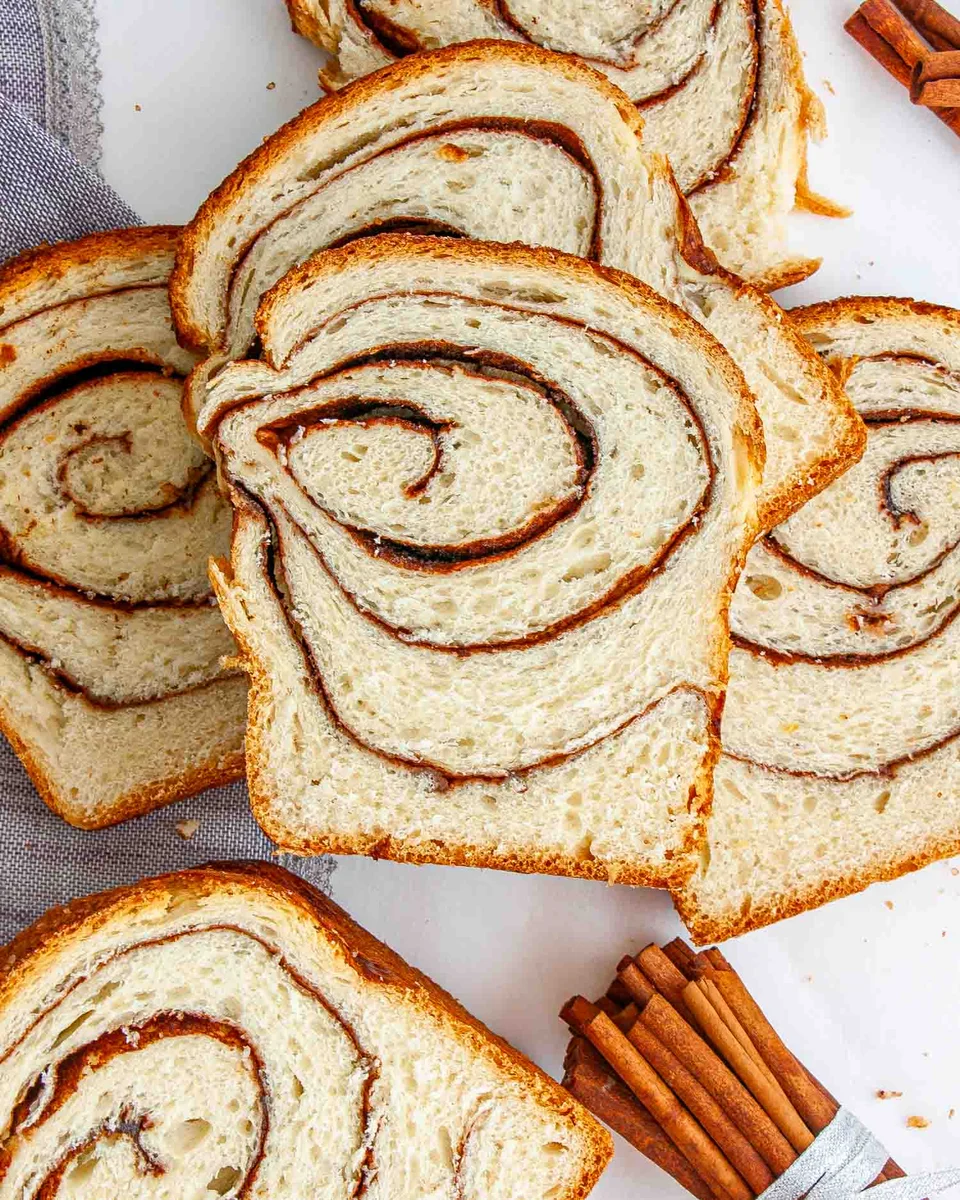
This American-style cinnamon bread is a soft, enriched loaf with a sweet cinnamon-sugar swirl running through it. Make it for breakfast or a snack when you want a homemade loaf that can be sliced and shared.
Ingredients
- 240 ml (1 cup)milk
- 113 g (½ cup)unsalted butter
- 7 g (2¼ teaspoons; 1 packet)active dry yeast
- 2 largeeggs
- 100 g (½ cup)sugar
- 5 ml (1 teaspoon)vanilla extract
- 420 g (3½ cups)plain flour
- 5 g (1 teaspoon)salt
- 67 g (⅓ cup)sugar
- 16 g (2 tablespoons)ground cinnamon
- 1 medium, beatenegg, for brushing
Instructions
- 1
Warm the milk
Put the milk and butter in a saucepan and warm over a medium heat until the butter melts. Do not let the milk boil; it should be warm but no hotter than 40.5°C (105°F). Sprinkle the yeast over the mixture, whisk briefly and leave it for 10 minutes.
- 2
Whisk eggs
Add the 2 eggs, 100 g (½ cup) sugar and vanilla extract to the mixer bowl. Using the whisk attachment, beat until the mixture is light and fluffy.
- 3
Mix dry ingredients
In a separate large bowl, stir together the flour and salt. Add the yeast mixture to the mixer bowl with the egg mixture and mix until combined.
- 4
Form the dough
Add half of the flour mixture to the mixer and fit the dough hook. Mix until combined, then add the remaining flour and continue mixing for 5 minutes.
- 5
Let dough rise
Transfer the dough to an oiled bowl and cover it with cling film. Leave it in a warm place until it has doubled in size.
- 6
Roll the dough
Grease an 21.6 × 11.4 × 7.6 cm (8.5 × 4.5 × 3-inch) loaf tin with butter or cooking spray. On a floured surface, roll out the dough until it is slightly wider than the tin and about 6 mm (¼ inch) thick.
- 7
Add the swirl
Mix the 67 g (⅓ cup) sugar with the cinnamon in a small bowl and spread it evenly over the dough. Roll up the dough and pinch the ends closed.
- 8
Rise in tin
Place the dough in the prepared loaf tin with the sealed side underneath. Leave it to rise again until doubled in size, about 1 hour.
- 9
Prepare to bake
Heat the oven to 180°C (350°F). Brush the loaf with the beaten egg. If preferred, sprinkle a little extra sugar and cinnamon over the top.
- 10
Bake the loaf
Bake for about 35–45 minutes, until golden brown. To check it is baked through, insert an instant-read thermometer into the centre; it should read 91°C (195°F).
What is cinnamon bread?
Cinnamon bread is a sweet, enriched yeast loaf, especially familiar in American home baking. This version layers a rolled dough with cinnamon and sugar, making a spiral through each slice.
The dough’s milk, butter and eggs give it a tender crumb, while two rises help it expand before baking. It works well for breakfast, toasted or eaten as it is.
Nutrition and macros by portion
The nutrition label shows one serving as written: 290 calories, 6g protein, 44g carbs, 10g fat.
| Portion | Adjustment | kcal | Protein | Carbs | Fat |
|---|---|---|---|---|---|
| Lighter | Thinner slice, less butter | 203 kcal | 4g | 31g | 7g |
| This serving | As written | 290 kcal | 6g | 44g | 10g |
| Hungry | Larger slice | 435 kcal | 9g | 66g | 15g |
The flour and sugars provide most of the carbohydrate, while butter and egg contribute much of the fat; the flour, milk and eggs also supply protein. Pair a slice with fruit or yoghurt for a more rounded breakfast.
Building the dough
Warm milk: Melt the butter in the milk gently and keep the mixture below 40.5°C (105°F). Milk that is too hot can interfere with the yeast.
Yeast and eggs: Give the yeast mixture 10 minutes to rest, then beat the eggs, sugar and vanilla until fluffy. Combining these before adding the flour helps distribute them through the dough.
Rolling the cinnamon swirl
Even layer: Roll the dough to about 6 mm (¼ inch) thick and make it a little wider than the tin. Spread the cinnamon sugar right across the surface for a swirl in each slice.
Secure the roll: Roll the dough up evenly, then pinch the ends closed. Set it seam-side down in the tin so the join is held underneath during the final rise.
Rise and timing cues
First rise: Let the dough double in a warm place; the time can vary with the room temperature. Use the dough’s expansion as the cue rather than relying on a fixed number of minutes.
Second rise: Allow about 1 hour in the tin, or until the loaf has doubled. Leave enough room above the dough for it to rise without touching a cover.
How to tell it is baked
Colour: The loaf should be golden brown after 35–45 minutes in a 180°C (350°F) oven. If checking with a thermometer, the centre should reach 91°C (195°F).
Cooling: Let the loaf settle before slicing so the soft crumb and cinnamon spiral are easier to cut cleanly. A serrated knife helps avoid pressing the bread flat.
Serving ideas
Breakfast: Serve slices plain or lightly toasted, with butter if you like. Fresh fruit alongside gives the meal a bright contrast to the sweet, spiced bread.
For a snack, pair a slice with tea or coffee. The loaf is also useful for making toast the following day.
Recipe notes & tips
- Use milk that feels warm rather than hot, and keep it below 40.5°C (105°F).
- Flour the work surface lightly so the dough rolls out without sticking.
- Spread the cinnamon sugar evenly to avoid bare patches in the spiral.
- Pinch the ends of the roll closed before placing it seam-side down in the tin.
- Check the centre temperature near the end of baking to confirm the loaf is done.
- Let the loaf cool before cutting to help the slices hold their shape.
Variations
- Add raisins: Scatter a handful over the cinnamon sugar before rolling the dough.
- Use mixed spice: Replace some of the cinnamon with mixed spice for a warmer flavour.
- Add chopped nuts: Sprinkle finely chopped pecans or walnuts over the filling.
- Make a simple glaze: Drizzle a thin icing sugar glaze over the cooled loaf.
- Toast leftovers: Toast slices and serve them with butter for a crisp-edged breakfast.
Common mistakes to avoid
- Overheating the milk: Keep it below 40.5°C (105°F) so it stays suitable for the yeast.
- Adding flour all at once: Mix in half first, then add the rest and knead with the dough hook for 5 minutes.
- Rolling too thickly: Aim for about 6 mm (¼ inch) so the filling can form a clear spiral.
- Skipping the second rise: Let the loaf double in the tin, around 1 hour, before baking.
- Slicing too soon: Allow the loaf to cool first so the crumb is less likely to squash.
How to store
Once completely cool, store the loaf in an airtight container at room temperature for up to 3 days. Reheat slices briefly in a toaster or warm oven; freeze well-wrapped slices for longer storage.
Frequently asked questions
Can I make the dough without a stand mixer?
Yes. Mix the ingredients in a large bowl, then knead by hand until the dough is smooth and elastic. The method’s 5-minute mixing time is for the mixer; by hand, use the dough’s texture as your cue.
How long should the first rise take?
The recipe gives no fixed time for the first rise. Leave the dough in a warm place until it has doubled in size.
Can I prepare the loaf in advance?
The recipe describes two rises at room temperature and does not specify an overnight method. For best results, follow the rise cues and bake it on the day you prepare it.
Why did the cinnamon swirl separate from the bread?
A loose roll or unsealed ends can make the swirl separate. Roll the dough evenly and pinch the ends closed before setting it seam-side down in the tin.
How do I know when the loaf is baked through?
Look for a golden-brown crust and check the centre with an instant-read thermometer; it should reach 91°C (195°F). The recipe estimates 35–45 minutes of baking.
Can I leave off the extra sugar and cinnamon on top?
Yes. The topping is optional; the cinnamon-sugar filling still gives the loaf its swirl and flavour.
Cook it from the original
This recipe comes from jocooks.com. Their page has the author’s own photos, notes and tips — the best place to cook it from.
Open the recipe on jocooks.com