
The Best Thanksgiving Turkey Recipe
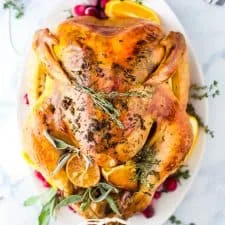
A whole roast turkey with garlic, fresh herbs and butter tucked beneath the skin, then covered with butter-soaked cheesecloth as it cooks. It is designed for a generous Thanksgiving table, with no brining required and a resting period that helps keep the meat juicy.
Ingredients
- 6.8 kg (15 lb)turkey, neck and giblets removed, fully thawed and patted dry
- 1 large sheetdouble-lined cheesecloth
- 1 largeorange, cut into quarters
- 2 smalllemons
- 946 ml (4 cups)low-sodium chicken stock or broth
- 227 g (2 sticks)unsalted butter, softened
- 1 tablespoonsalt
- 1 tablespoonfresh tarragon, chopped
- 1 tablespoonfresh sage, chopped
- 1½ tablespoonsfresh thyme, chopped
- 2 teaspoonsfresh rosemary, chopped
- 4 clovesgarlic, minced
- 1 teaspoonfresh lemon zest
Instructions
- 1
Heat the oven
Preheat the oven to 220°C (425°F) and position a rack in the lower third.
- 2
Prepare the turkey
Take the turkey out of the fridge and let it come to room temperature. Remove the neck and giblets if needed, then pat the bird completely dry.
- 3
Set up the pan
Place the turkey on a large wire rack set inside a roasting pan.
- 4
Mix the herb butter
Put the softened butter in a medium bowl with the salt, tarragon, sage, thyme, rosemary, garlic and lemon zest. Mash with a fork or spoon until combined.
- 5
Fill the cavity
Season the turkey cavity with salt, then add the orange and lemons along with any leftover sage, thyme, rosemary or tarragon.
- 6
Loosen the skin
Starting at the breast, gently ease your fingers between the skin and the meat to form a small pocket.
- 7
Add herb butter
Rub three-quarters of the butter mixture beneath the skin, spreading it over both sides of the breast.
- 8
Melt the butter
Melt the remaining butter in the microwave.
- 9
Soak the cloth
Dip the cheesecloth into the melted butter and soak it thoroughly.
- 10
Cover the turkey
Scatter any remaining herbs or garlic over the skin, then drape the butter-soaked cheesecloth over most of the turkey.
- 11
Add the stock
Pour the chicken stock or broth into the roasting pan.
- 12
Start roasting
Roast the turkey at 220°C (425°F) for 45 minutes.
- 13
Lower the heat
After 45 minutes, take the turkey out and reduce the oven temperature to 180°C (350°F). Baste the turkey.
- 14
Finish roasting
Return the turkey to the oven and roast for another 2½ to 3 hours at 180°C (350°F), basting with the pan drippings throughout. The thickest part of the thigh should reach 71°C (160°F).
- 15
Rest the turkey
Once it reaches 71°C (160°F), take the turkey out and gently remove the cheesecloth. Transfer it to a chopping board, cover loosely with foil and rest for 20–30 minutes.
- 16
Check the temperature
Before carving, take the temperature once more and make sure it has reached 74°C (165°F).
- 17
Carve and serve
Slice the turkey and serve.
What is Thanksgiving turkey?
Roast turkey is a centrepiece of the American Thanksgiving meal, usually served with sides and gravy. This version seasons the bird with a mixture of butter, garlic and fresh herbs rather than relying on a brine.
Herb butter beneath the skin flavours the breast, while the citrus-filled cavity adds aroma as the bird roasts. A butter-soaked cheesecloth covers much of the turkey during cooking.
Nutrition and macros by portion
The nutrition label shows one serving as written: 650 calories, 68g protein, 2g carbs, 40g fat.
| Portion | Adjustment | kcal | Protein | Carbs | Fat |
|---|---|---|---|---|---|
| Lighter | Less butter, more vegetables | 455 kcal | 48g | 1g | 28g |
| This serving | As written | 650 kcal | 68g | 2g | 40g |
| Hungry | Larger turkey portion | 975 kcal | 102g | 3g | 60g |
The turkey provides most of the protein, while the butter is the main source of fat and contributes substantially to the energy per serving. The orange and lemons add little carbohydrate; stock and added salt contribute sodium. Pair a serving with vegetables and a moderate portion of potatoes or stuffing for a balanced plate.
Why use herb butter?
Under the skin: Loosening the skin creates room to spread the butter directly over the breast meat. Work gently to avoid tearing it, and distribute the mixture across both sides.
Herb mix: Tarragon, sage, thyme and rosemary bring distinct savoury notes, while garlic and lemon zest add pungency and brightness. Chopping the herbs finely helps them mix evenly into the softened butter.
The cheesecloth method
Soaking step: The cloth needs to be thoroughly saturated with the melted butter before it goes over the bird. Drape it across most of the turkey, taking care when handling it around the hot roasting pan.
Basting: The method calls for basting after the initial high-heat roast and then repeatedly during the longer roast. Use the liquid in the pan and keep the oven door open only briefly.
Roasting temperature and doneness
Two temperatures: The turkey begins at 220°C (425°F) for 45 minutes, then cooks at 180°C (350°F) for a further 2½ to 3 hours. The stated roasting time is a guide; check the bird with a thermometer rather than relying on time alone.
Temperature check: Measure the thickest part of the thigh, avoiding the bone. The method takes the turkey out at 71°C (160°F), then checks again after resting to confirm it reaches 74°C (165°F).
Rest before carving
Resting: After removing the cheesecloth, transfer the turkey to a chopping board and cover it loosely with foil for 20–30 minutes. This gives you time to finish other dishes and makes carving easier.
Carving: Use a sharp carving knife and slice across the breast. Keep the pan drippings to serve alongside the meat.
Plan the Thanksgiving plate
Sides: Serve the turkey with potatoes, vegetables and a bread-based stuffing or dressing for a familiar holiday spread. A tart cranberry sauce can balance the buttery, savoury meat.
Gravy: The stock and roasting juices provide a flavourful base to accompany the slices. Keep the turkey covered while you organise the sides so it stays warm during that short wait.
Recipe notes & tips
- Make sure the turkey is fully thawed before roasting so it cooks evenly.
- Pat the skin thoroughly dry before adding the butter for a better chance of browning.
- Use softened, not melted, butter for the herb mixture that goes under the skin.
- Keep a reliable meat thermometer handy to check the thigh temperature.
- Let the turkey rest for the full 20–30 minutes before carving.
- Take care when lifting the butter-soaked cheesecloth, as it may be hot and delicate.
Variations
- Change the herbs: Use the listed herbs in different proportions to suit your preferred flavour.
- Citrus swap: Replace the orange with another orange of similar size while keeping the lemons.
- Use unsalted stock: Choose unsalted chicken stock and adjust the added salt to taste.
- Add pan vegetables: Roast vegetables separately if you want extra sides without changing the turkey method.
- Make extra gravy: Use the pan drippings as a base for gravy to serve with the carved turkey.
Common mistakes to avoid
- Starting with a damp bird: Pat the turkey dry before seasoning so excess moisture does not hinder browning.
- Tearing the breast skin: Ease your fingers underneath gradually rather than forcing them through.
- Leaving the cloth dry: Soak the cheesecloth completely in the melted butter before draping it over the bird.
- Skipping the temperature checks: Measure the thigh during roasting and check again after resting.
- Carving too soon: Rest the turkey for 20–30 minutes before slicing to make the serving step easier.
- Relying only on the clock: Use the stated roasting time as a guide and confirm doneness with a thermometer.
How to store
Refrigerate leftover turkey in a covered container within two hours of serving and use within 3–4 days. Reheat portions until steaming hot, adding a little stock or pan juice to help keep the meat moist.
Frequently asked questions
Do I need to brine this turkey?
No brining step is included in this recipe. The turkey is seasoned with herb butter beneath the skin and roasted with stock in the pan.
How long does this turkey take to cook?
The recipe specifies 45 minutes at 220°C (425°F), followed by 2½ to 3 hours at 180°C (350°F). The bird also needs 20–30 minutes to rest, and doneness should be checked with a thermometer.
What temperature should the turkey reach?
The method removes it from the oven when the thickest part of the thigh reaches 71°C (160°F), then checks after resting to ensure it reaches 74°C (165°F).
Can I prepare the herb butter ahead?
You can mix the butter and herbs ahead and keep the mixture covered in the fridge. Let it soften enough to spread beneath the skin before using.
Why is the turkey covered with cheesecloth?
The recipe soaks the cloth in melted butter and drapes it over most of the turkey during roasting. Follow the method's basting instructions and remove the cloth gently before resting.
How should I use the pan drippings?
The method uses the drippings to baste the turkey during roasting. They can also be served alongside the carved meat.
Cook it from the original
This recipe comes from joyfulhealthyeats.com. Their page has the author’s own photos, notes and tips — the best place to cook it from.
Open the recipe on joyfulhealthyeats.com