
Prime Rib of Beef
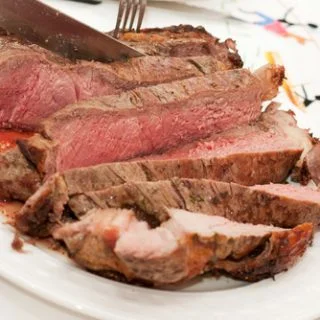
Prime rib is a celebratory beef roast with a savoury crust and a pan sauce made from red wine and beef stock. A hot start helps brown the outside, while resting gives the meat time to finish cooking before it is carved.
Ingredients
- 1three-rib prime rib roast, trimmed and tied
- 15 ml (1 tablespoon)olive oil
- 15 ml (1 tablespoon)cracked black pepper
- 15 ml (1 tablespoon)coarse sea salt
- 360 ml (1½ cups)dry red wine
- 240 ml (1 cup), reduced from 360 ml (1½ cups)reduced beef stock
- 28 g (2 tablespoons)butter
- to tastesalt and pepper
Instructions
- 1
Preheat the oven
Heat the oven to 230°C (450°F).
- 2
Season the roast
Rub the roast with the olive oil, then season it with the salt and cracked black pepper.
- 3
Brown the roast
Set the roast fat side down in a heavy, ovenproof pan and roast at 230°C (450°F) for 20 minutes.
- 4
Continue roasting
Lower the oven to 165°C (325°F) and cook for about 1½ hours, until a meat thermometer registers 46°C (115°F).
- 5
Rest the beef
Move the roast to a platter and leave it to rest. It will continue cooking as it rests, with the temperature rising by as much as 6°C (10°F).
- 6
Degrease the pan
Remove excess fat from the roasting pan, keeping the browned bits in the pan.
- 7
Deglaze with wine
Set the pan over medium-high heat, add the red wine and scrape up the browned bits from the bottom.
- 8
Reduce and strain
Cook for 5 minutes, then strain the reduced wine into a smaller pot.
- 9
Thicken the sauce
Add the beef stock and cook over medium-high heat until the liquid has thickened and reduced by almost half.
- 10
Adjust the seasoning
Taste the sauce and add salt and pepper as needed.
- 11
Finish with butter
Whisk the 28 g (2 tablespoons) of butter into the sauce.
- 12
Keep the sauce warm
Keep the sauce warm while you carve the beef.
- 13
Carve the roast
Cut the beef across the grain into 2.5 cm (1-inch) slices, then cut the slices around the bone.
- 14
Serve with sauce
Serve straight away with a drizzle of the reduced wine sauce.
What is prime rib?
Prime rib is a large beef roast cut from the rib section and commonly served for a special meal. The name is used for the cut; it does not necessarily mean the beef has a particular grading.
This version uses a hot initial roast, followed by gentler cooking, and turns the browned pan residue into a red-wine sauce. The roast is carved around the bone after resting.
Nutrition and macros by portion
The nutrition label shows one serving as written: 800 calories, 50g protein, 3g carbs, 65g fat.
| Portion | Adjustment | kcal | Protein | Carbs | Fat |
|---|---|---|---|---|---|
| Lighter | Smaller beef slice | 560 kcal | 35g | 2g | 46g |
| This serving | As written | 800 kcal | 50g | 3g | 65g |
| Hungry | Larger beef slice | 1200 kcal | 75g | 5g | 98g |
Most of the protein and fat come from the beef, while the oil and butter add further fat; the wine and stock contribute little carbohydrate once the sauce is reduced. Serve a moderate slice with vegetables and potatoes to make a balanced plate.
The roast and its seasoning
The tied roast holds its shape as it cooks, while the fat side is placed against the pan for the initial browning. Olive oil helps the salt and pepper adhere to the surface.
Coarse salt and cracked pepper provide a simple, bold seasoning that suits the rich beef. Season the roast evenly rather than leaving most of the seasoning in one patch.
Getting the doneness right
A meat thermometer is more reliable than timing alone, especially because the roast's weight is not specified. Insert it into the thickest part of the meat without touching the bone.
The stated target is 46°C (115°F), and the recipe allows for the temperature to rise as the roast rests. Keep in mind that the final doneness depends on the roast and how much its temperature increases.
Why the roast rests
Resting lets the meat finish cooking from its retained heat before carving. It also makes it easier to slice the roast neatly.
Keep the roast on its platter while it rests, and use that interval to prepare the sauce. The method does not specify a resting time, so check the temperature and carve when you are ready to serve.
Building the red-wine sauce
Pan residue: After removing excess fat, add the wine to the roasting pan and scrape up the browned bits; they contribute flavour to the sauce.
Reduction: The wine is cooked for 5 minutes before straining, then combined with the reduced beef stock and cooked until it thickens and reduces by almost half.
Finishing: Butter is whisked in at the end for a smooth, glossy finish. Taste before adding extra salt, since the stock may already be seasoned.
Carving and serving
Cut the roast across the grain into 2.5 cm (1-inch) slices, then work around the bone. Slicing across the grain shortens the muscle fibres and makes each portion easier to eat.
Serve the beef with a little sauce drizzled over it and keep extra sauce warm at the table. Roast potatoes and vegetables make practical accompaniments to the rich meat.
Recipe notes & tips
- Use a meat thermometer in the thickest part of the roast, away from the bone.
- Let the roast sit at room temperature briefly before cooking if it has been chilled, so it is not very cold going into the oven.
- Use a roasting pan that can also be heated on the hob for making the sauce.
- Scrape the pan well when adding the wine to lift the browned bits.
- Taste the sauce before adding more salt, as the stock can vary in saltiness.
- Carve just before serving to keep the slices warm.
Variations
- Add garlic: Rub a little crushed garlic over the roast with the oil and seasoning.
- Use fresh herbs: Add rosemary or thyme to the pan while the roast cooks.
- Change the wine: Choose a dry red wine you would be happy to drink with the meal.
- Make it pepperier: Add extra cracked black pepper to the roast or sauce.
- Serve with horseradish: Offer prepared horseradish at the table for a sharp contrast.
Common mistakes to avoid
- Skipping the thermometer: Roast size and ovens vary, so check the thickest part rather than relying only on the clock.
- Measuring against the bone: The reading can be misleading; place the thermometer tip in the meat without touching bone.
- Leaving excess fat in the pan: Remove the excess before adding wine so the sauce is not overly greasy.
- Not scraping the pan: Lift the browned bits into the wine to bring their flavour into the sauce.
- Boiling the sauce too aggressively: Keep it at a controlled medium-high heat and watch as it reduces.
- Carving with the grain: Slice across the grain for more tender-feeling portions.
How to store
Refrigerate leftover beef and sauce in separate airtight containers within 2 hours, and use within 3 days. Reheat gently until hot, adding a little stock or water to loosen the sauce if needed; avoid prolonged heating, which can dry out the beef.
Frequently asked questions
How do I know when the roast is ready?
Use a meat thermometer in the thickest part, away from the bone. This recipe gives 46°C (115°F) as the roasting target and notes that the temperature can rise by up to 6°C (10°F) during resting.
Can I make the sauce without a hob-safe roasting pan?
After removing excess fat, transfer the pan juices and browned bits to a saucepan, then add the wine and continue with the reduction.
Why is the beef sliced across the grain?
Cutting across the grain shortens the muscle fibres, making each slice easier to chew.
Can I prepare the sauce ahead?
You can make it ahead and refrigerate it, then warm it gently before serving. Whisk in the butter at the end if you want to follow the recipe's finishing step freshly.
What can I serve with prime rib?
Roast potatoes and vegetables pair well with the beef and red-wine sauce. Horseradish is another traditional-style accompaniment.
Cook it from the original
This recipe comes from italianfoodforever.com. Their page has the author’s own photos, notes and tips — the best place to cook it from.
Open the recipe on italianfoodforever.com