
Pasta Pescatore
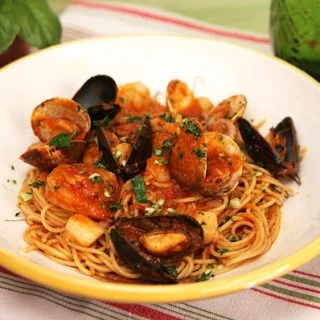
Pasta Pescatore pairs spaghetti with clams, mussels, scallops, shrimp and squid in a spicy tomato and white-wine sauce. It makes a generous seafood supper, finished with a fresh lemon, parsley and garlic gremolata.
Ingredients
- 15 gfresh parsley
- Zest of 1lemon
- 3 clovesgarlic, peeled
- 60 ml (4 tablespoons)olive oil
- About 50 g (⅓ cup)onion, minced
- 3 clovesgarlic, peeled and minced
- 12cleaned clams
- 120 ml (½ cup)dry white wine
- 360 ml (1½ cups)seafood stock
- 720 ml (3 cups)puréed or chopped tomatoes
- 12sea scallops
- 20cleaned mussels
- 12 largeshrimp, cleaned
- 227 g (½ pound)fresh squid, cleaned and chopped
- 15 g (¼ cup)fresh parsley, chopped
- To tastesalt and pepper
- To tastered pepper flakes
- 454 g (1 pound)spaghetti or pasta of choice
Instructions
- 1
Soften the onion
Heat the oil in a large saucepan. Add the onion and cook for about 4 minutes, until soft and translucent.
- 2
Cook the garlic
Add the minced garlic and cook for a couple more minutes.
- 3
Open the clams
Pour in the wine and seafood stock and bring to the boil. Add the clams and cook until they open.
- 4
Add the tomatoes
Stir in the tomatoes, chopped parsley, salt, pepper and red pepper flakes, then bring the sauce to the boil.
- 5
Cook the seafood
Turn the heat down, add the remaining seafood and cook gently while the pasta cooks.
- 6
Boil the pasta
Cook the pasta in boiling salted water until al dente.
- 7
Make the gremolata
Finely mince the parsley, lemon zest and peeled garlic cloves together, then set aside.
- 8
Toss the pasta
Drain the pasta, add a scoop of tomato sauce and toss to coat.
- 9
Divide the servings
Serve the pasta in four individual bowls. Spoon over more sauce and divide the seafood evenly among the bowls.
- 10
Finish and serve
Sprinkle gremolata over each serving and serve immediately.
What is Pasta Pescatore?
Pescatore means “fisherman” in Italian, and pasta alla pescatora is a seafood pasta associated with Italian coastal cooking. Recipes vary, but commonly bring shellfish and other seafood together with pasta and a tomato-based sauce.
This version combines clams, mussels, scallops, shrimp and squid in a sauce enriched with white wine and stock. Parsley, lemon zest and garlic minced as gremolata give the finished bowls a bright, fresh contrast.
Nutrition and macros by portion
The nutrition label shows one serving as written: 790 calories, 54g protein, 89g carbs, 22g fat.
| Portion | Adjustment | kcal | Protein | Carbs | Fat |
|---|---|---|---|---|---|
| Lighter | Less pasta, more seafood | 553 kcal | 38g | 62g | 15g |
| This serving | As written | 790 kcal | 54g | 89g | 22g |
| Hungry | Larger pasta portion | 1185 kcal | 81g | 134g | 33g |
Most of the carbohydrates come from the pasta, while olive oil contributes much of the fat. The mixed seafood supplies most of the protein, with some additional energy from the tomato sauce. For a more balanced plate, serve it with a green salad or another non-starchy vegetable.
Build the sauce in stages
Onion and garlic: soften the onion in olive oil before adding the minced garlic, so the base becomes fragrant without rushing the aromatics.
Wine and stock: bringing these to the boil before adding clams gives the shells a chance to open in the liquid. The tomatoes and seasonings go in after that, creating the sauce for the rest of the seafood.
Watch the shellfish
Clams: cook them until their shells open, as directed, and discard any that remain closed. Keep an eye on the pan while they cook.
Remaining seafood: add the mussels, scallops, shrimp and squid together as the recipe specifies, then simmer gently while the pasta cooks. Seafood can turn firm if cooked for too long, so avoid letting the sauce bubble hard.
Aim for al dente pasta
Pasta: cook it in salted boiling water until tender but still with a slight bite. This keeps it from becoming too soft when tossed with sauce.
Sauce: the pasta should be coated rather than swimming in liquid. Add a scoop, toss, then serve with more sauce and the seafood divided evenly between the bowls.
Make the gremolata fresh
Lemon and parsley: finely mince these with the peeled garlic cloves and set the mixture aside while the pasta and seafood cook. Its fresh, citrusy flavour lifts the richer tomato and olive-oil sauce.
Finish: sprinkle the gremolata over the bowls just before serving. Adding it at the end preserves its vivid aroma.
Plan the timing
The stated total time is 35 minutes, and the method cooks the seafood gently while the pasta boils. Get the gremolata ready during that cooking window so it is waiting when the bowls are assembled.
Have the seafood cleaned and the remaining ingredients measured before starting. That makes it easier to keep track as the clams open and the pasta reaches al dente.
What to serve alongside
A crisp green salad or simply dressed vegetables make a fresh counterpoint to the tomato sauce and seafood. Crusty bread is useful for mopping up any sauce left in the bowl.
The dish already includes pasta, so keep sides simple. Serve the bowls as soon as they are assembled for the best texture.
Recipe notes & tips
- Use a large saucepan so the seafood has room to cook in the sauce.
- Rinse cleaned shellfish and check for any broken shells before cooking.
- Keep the sauce at a gentle simmer once the remaining seafood is added.
- Cook the pasta until al dente, as it will be tossed with hot sauce before serving.
- Mince the gremolata ingredients finely so the lemon, parsley and garlic are evenly distributed.
- Divide the seafood among the bowls as you serve, rather than leaving it all in the pan.
Variations
- Choose another pasta: use a different pasta shape in place of spaghetti.
- Adjust the heat: add red pepper flakes gradually for a milder or spicier sauce.
- Use chopped tomatoes: choose them instead of puréed tomatoes for a chunkier sauce.
- Change the seafood mix: swap one type for another cleaned seafood of a similar size.
- Add extra lemon: serve with lemon wedges for a sharper citrus finish.
Common mistakes to avoid
- Overcooking the seafood: keep the heat low and cook it gently while the pasta boils.
- Hard-boiling the sauce: reduce the heat after adding the remaining seafood to help it cook gently.
- Missing closed clams: remove any clams that have not opened after cooking.
- Soft pasta: check it before draining and stop cooking when it is al dente.
- Uneven portions: divide the seafood between all four bowls as you serve.
- Adding gremolata too early: sprinkle it on at the end to keep its fresh flavour.
How to store
Refrigerate leftovers promptly in an airtight container and use within 1–2 days. Reheat gently in a covered saucepan until piping hot, adding a splash of water if the pasta has become dry; avoid prolonged heating, which can toughen the seafood.
Frequently asked questions
Can I use frozen seafood?
Yes, provided it is suitable for cooking and has been thawed according to the packet instructions. Drain it well before adding it to the sauce.
Can I make the sauce ahead?
You can prepare the tomato sauce base ahead, but cook the seafood and pasta close to serving time. Reheat the base gently before adding the seafood.
What should I do with clams that do not open?
Discard any clams that remain closed after cooking.
How spicy is the sauce?
The heat depends on how many red pepper flakes you use. Start with a small pinch and adjust to taste.
Can I use a different pasta shape?
Yes. The recipe allows spaghetti or pasta of your choice; cook it until al dente before tossing it with the sauce.
Cook it from the original
This recipe comes from italianfoodforever.com. Their page has the author’s own photos, notes and tips — the best place to cook it from.
Open the recipe on italianfoodforever.com