
Spicy Tuna
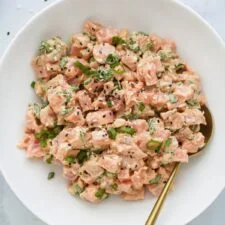
Spicy tuna is a quick, Japanese-inspired mixture of diced raw tuna, creamy mayonnaise and chilli sauce, finished with sesame and green onion. Serve it straight away in sushi, salads or meal bowls for a savoury, gently spicy addition.
Ingredients
- 283 g (10 oz)raw sushi-grade ahi tuna, finely diced
- 30 ml (2 tablespoons)Kewpie Japanese mayonnaise
- 15 ml (1 tablespoon)sriracha
- 5 ml (1 teaspoon)garlic
- 2.5 ml (½ teaspoon)minced ginger
- 5 ml (1 teaspoon)tamari
- 5 ml (1 teaspoon)sesame oil
- 5 ml (1 teaspoon)rice wine vinegar
- 5 ml (1 teaspoon)white sesame seeds
- 2.5 ml (½ teaspoon)black sesame seeds
- 60 ml (¼ cup)diced green onion (green parts)
Instructions
- 1
Dice the tuna
Use a very sharp knife to cut the tuna into small cubes, about 6 mm (¼ inch) across.
- 2
Add the ingredients
Put the tuna in a medium bowl with the mayonnaise, sriracha, garlic, ginger, tamari, sesame oil, rice wine vinegar, both kinds of sesame seeds and green onion.
- 3
Mix until coated
Stir everything together with a spoon until the tuna is evenly coated.
- 4
Garnish and serve
Finish with extra sesame seeds or green onion, if desired, and serve immediately.
What is spicy tuna?
Spicy tuna is a seasoned raw-tuna mixture commonly used in Japanese-American sushi rolls and bowls. Its creamy, savoury base gets heat from chilli sauce, while sesame and green onion bring a toasty, fresh finish.
This simple version works because the tuna is finely diced, so each piece is coated with the dressing. It can be spooned into sushi or served as a topping for salad and meal bowls.
Nutrition and macros by portion
The nutrition label shows one serving as written: 105 calories, 12g protein, 1g carbs, 6g fat.
| Portion | Adjustment | kcal | Protein | Carbs | Fat |
|---|---|---|---|---|---|
| Lighter | Use less mayonnaise | 74 kcal | 8g | 1g | 4g |
| This serving | As written | 105 kcal | 12g | 1g | 6g |
| Hungry | Serve over extra rice | 158 kcal | 18g | 2g | 9g |
The tuna provides most of the protein, while the mayonnaise and sesame oil contribute most of the fat. The small amount of carbohydrate comes mainly from the seasonings and green onion. Serve it with rice or vegetables to make a more balanced plate.
Choosing the tuna
Sushi-grade tuna: choose very fresh ahi tuna sold for raw consumption and keep it chilled until you are ready to prepare it. Pat it dry if needed so excess moisture does not thin the dressing.
Small cubes: cut the fish evenly into roughly 6 mm pieces. A sharp knife makes clean cuts without crushing the tuna.
Balancing the dressing
Creamy base: Kewpie mayonnaise gives the mixture richness and a tangy savoury note. Add the measured amount first so it coats the fish without overwhelming it.
Heat and seasoning: Sriracha supplies the chilli, while tamari adds saltiness and sesame oil adds a nutty aroma. Rice wine vinegar brightens the blend.
Mixing gently
Fold the ingredients through with a spoon until the tuna is coated. Stir just enough to combine; pressing or mixing vigorously can break up the small pieces.
The recipe is assembled without cooking, so there is no doneness cue to check. Keep the mixture cold and serve it promptly.
Finishing with sesame
White and black sesame seeds add a light crunch and contrast with the creamy mixture. Green onion contributes freshness, so use the green parts as specified.
Sprinkle a little extra sesame or green onion over the top just before serving. This keeps the garnish distinct rather than mixing it all into the dressing.
Ways to serve it
Sushi and bowls: use the tuna as a filling for sushi or spoon it over rice with vegetables. It also works as a savoury topping for a salad.
For a simple meal, pair it with plain rice or crisp vegetables. Keep accompaniments mild if you want the tuna's chilli and sesame flavours to stand out.
Recipe notes & tips
- Chill the tuna until just before dicing and mixing.
- Use a sharp knife to make neat, even cubes.
- Taste the sauce before adding it all if you prefer a milder result.
- Mix gently so the diced tuna keeps its shape.
- Garnish just before serving for the freshest finish.
Variations
- More heat: Add a little extra sriracha and mix it in gradually.
- Citrus lift: Add a small squeeze of lime for a brighter finish.
- Crunchy topping: Scatter thinly sliced cucumber over a bowl topped with the tuna.
- Rice bowl: Serve the mixture over cooked rice with extra green onion.
- Sushi filling: Spoon it into a sushi roll with your chosen vegetables.
Common mistakes to avoid
- Blunt knife: It can crush the tuna; use a sharp blade and clean cuts.
- Uneven pieces: Large chunks may not coat evenly; aim for cubes around 6 mm.
- Overmixing: Vigorous stirring can break up the tuna; fold gently with a spoon.
- Too much sauce: The tuna can lose its texture; measure the dressing ingredients before mixing.
- Leaving it out: Raw tuna should not sit at room temperature; keep it chilled and serve promptly.
How to store
This dish is best served immediately. Keep any leftover mixture covered in the fridge and use it promptly, following the safe-handling guidance for raw fish; do not leave it at room temperature or reheat it.
Frequently asked questions
Can I make spicy tuna ahead?
It is best mixed just before serving, as the tuna is raw and the texture is freshest then. Keep the ingredients chilled until you are ready to assemble.
How can I make it less spicy?
Use less sriracha and taste as you mix. You can add more in small amounts if you want extra heat.
What can I serve spicy tuna with?
Serve it with rice, in sushi, over salad or as a topping for a meal bowl. Mild vegetables and plain rice pair well with its creamy, spicy flavour.
Can I use a different type of tuna?
Use tuna specifically sold as suitable for raw consumption, and keep it properly chilled. The flavour and texture may differ between cuts and varieties.
Can I use regular mayonnaise?
Yes. Kewpie has a distinctive rich, tangy flavour, but regular mayonnaise can be used if needed.
Cook it from the original
This recipe comes from joyfulhealthyeats.com. Their page has the author’s own photos, notes and tips — the best place to cook it from.
Open the recipe on joyfulhealthyeats.com