
Avocado Paratha Recipe (Whole Wheat Indian Avocado Flatbread)
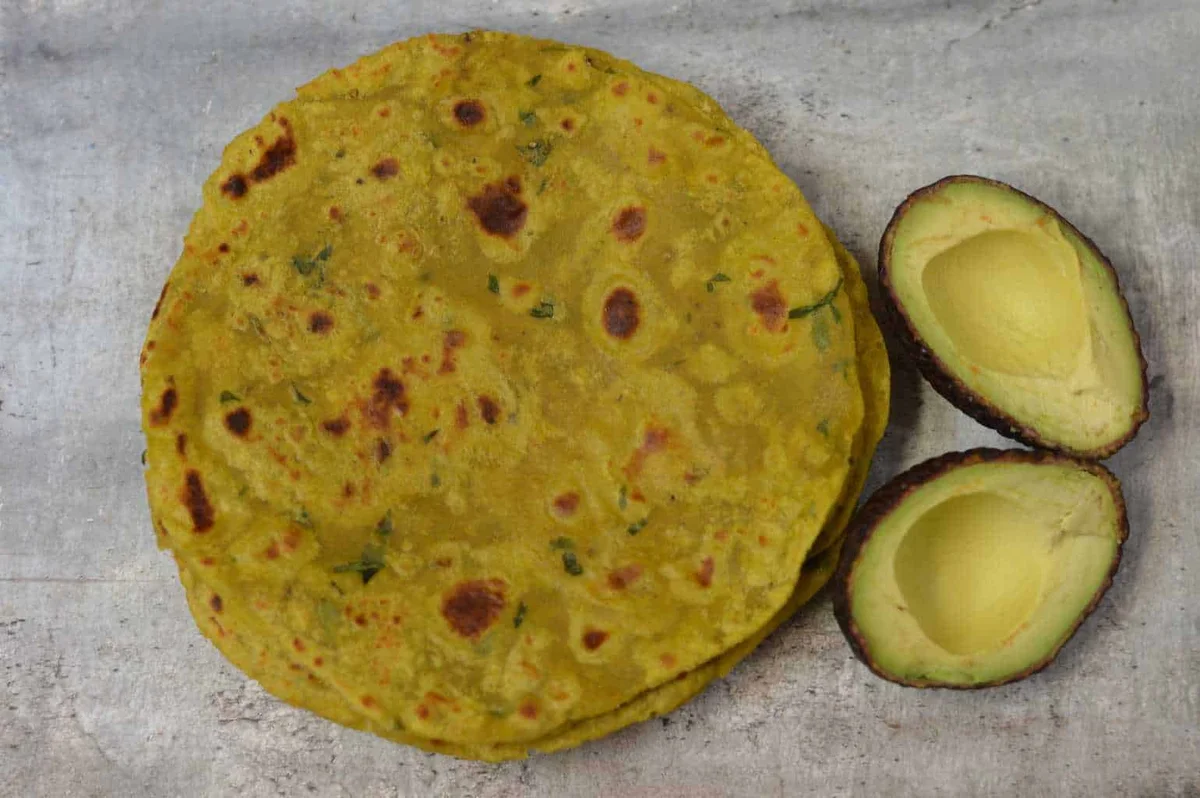
Avocado paratha is a soft Indian flatbread made by kneading ripe avocado, wholemeal flour and spices into a dough, then cooking it on a hot skillet. It is a handy way to make flavourful parathas with a tender texture and no separate avocado filling.
Ingredients
- 1 medium (about 120 ml pulp; 1/2 cup)ripe avocado
- 120 g (1 cup)wholemeal flour or multigrain flour
- 1/4 teaspoonajwain (carom seeds), optional
- 1/2 teaspoongrated ginger
- 1/4 teaspooncrushed black pepper or red chilli powder
- 1/2 teaspoonground cumin
- 1 teaspoonlime juice
- 1 tablespoonfinely chopped coriander
- 30 ml (2 tablespoons)oil or ghee, for cooking
- to tastesalt
- as neededwater, for kneading
Instructions
- 1
Prepare the avocado
Carefully cut the avocado horizontally with a sharp knife, remove the stone, and scoop out the flesh.
- 2
Mash the flesh
Mash the avocado with a fork or potato masher until it is mostly smooth.
- 3
Mix in seasonings
Add the ajwain, red chilli powder or black pepper, ground cumin, coriander, grated ginger and salt. Add the lime juice and mix well to help keep the avocado from browning.
- 4
Add the flour
Stir the wholemeal flour into the seasoned avocado mixture.
- 5
Knead the dough
Knead until smooth, adding a little water if needed. Cover and leave the dough to rest for 15 minutes.
- 6
Roll the parathas
Divide the dough into six balls. Flatten one ball, dust it with flour and roll it into a large circle.
- 7
Cook the first side
Heat a tawa or skillet over medium heat. Add a rolled paratha and cook until bubbles appear.
- 8
Brown both sides
Flip the paratha and drizzle a little oil or ghee over it. Flip again and drizzle oil or ghee on the other side; cook until both sides have golden spots.
- 9
Cook and serve
Repeat with the remaining dough. Serve the parathas with curd, pickle, raita, ketchup or a gravy of your choice.
What is avocado paratha?
Paratha is an Indian flatbread, often made by rolling and cooking a wheat-based dough on a hot griddle. This version mixes ripe avocado directly into the dough, along with aromatics and spices, rather than using it as a filling.
Avocado brings moisture and richness, while wholemeal flour gives the bread its familiar wheaty flavour. Lime juice adds brightness and helps slow the avocado from discolouring as you prepare the dough.
Nutrition and macros by portion
The nutrition label shows one serving as written: 125 calories, 3g protein, 17g carbs, 5g fat.
| Portion | Adjustment | kcal | Protein | Carbs | Fat |
|---|---|---|---|---|---|
| Lighter | Use less cooking oil | 88 kcal | 2g | 12g | 4g |
| This serving | As written | 125 kcal | 3g | 17g | 5g |
| Hungry | Serve an extra paratha | 188 kcal | 5g | 26g | 8g |
The flour supplies most of the carbohydrates, while avocado and the cooking oil or ghee contribute most of the fat. The flour provides some protein, but this is not a high-protein flatbread on its own; serve it with curd, raita or a protein-containing curry and add vegetables to round out the plate.
Choosing and mixing the ingredients
Ripe avocado: choose one that yields gently when pressed, so the flesh mashes easily and blends into the flour. If it is firm, it may leave lumps and make the dough harder to bring together.
Spices: ajwain, cumin, ginger and either pepper or chilli season the dough throughout. The chilli and pepper are alternatives, so choose one rather than using both.
Flour and water: add the flour after mixing the avocado with the seasonings. The avocado supplies moisture, so add water gradually only if the dough needs help coming together.
Kneading and resting the dough
Smooth dough: knead until the mixture feels cohesive and soft rather than crumbly. Add water in small amounts, since too much can make the dough sticky and difficult to roll.
Resting time: cover the dough and leave it for 15 minutes as directed. This gives the flour time to absorb moisture and makes the dough easier to shape.
Rolling evenly
Divide the rested dough into six balls, then flatten and dust each one before rolling. Use just enough flour to stop sticking, as excess flour can dry the surface.
Even thickness: aim for a broad, evenly rolled circle so the paratha cooks at a similar rate across its surface. If the dough springs back, let it rest briefly before continuing.
Cooking on the tawa
Medium heat: give the tawa or skillet time to heat before adding a rolled paratha. The first side is ready to turn when bubbles appear on the surface.
Golden spots: after flipping, add a little oil or ghee, then turn again and coat the other side. Cook until both faces show golden spots, adjusting the heat if the bread darkens before it is cooked through.
Serving the parathas
Serve them warm with curd, pickle or raita for a simple accompaniment, or pair them with gravy as part of a larger meal. Ketchup is another suggested option.
For a balanced plate, add a vegetable dish or salad alongside the paratha and a protein-rich accompaniment such as curd or a suitable curry.
Recipe notes & tips
- Use ripe avocado so it mashes smoothly into the dough.
- Add water a little at a time because the avocado already brings moisture.
- Keep the dough covered while it rests and while you roll the parathas.
- Dust the work surface lightly to prevent sticking without coating the dough in excess flour.
- Wait for bubbles to appear before turning the paratha for the first time.
- Cook the remaining parathas on the same medium heat, adjusting it if they brown too quickly.
Variations
- Choose multigrain flour: use it in place of wholemeal flour for a different grain mix.
- Use chilli: choose red chilli powder instead of black pepper for a warmer finish.
- Keep it mild: use black pepper and omit the optional ajwain if you prefer a gentler spice profile.
- Cook with ghee: use ghee instead of oil for the cooking fat.
- Serve with raita: pair the parathas with raita for a cool accompaniment.
Common mistakes to avoid
- Adding too much water: the avocado already moistens the flour, so add water gradually as needed.
- Skipping the lime juice: mix it into the mashed avocado to help limit browning.
- Rolling with too much flour: use only a light dusting so the parathas do not turn dry.
- Turning too soon: wait until bubbles appear before flipping the first time.
- Using high heat: cook over medium heat so the outside does not brown too quickly.
How to store
Cool leftover parathas and refrigerate them in an airtight container for up to 3 days. Reheat in a dry skillet over medium heat until warmed through, or use a microwave; the skillet helps restore some surface texture.
Frequently asked questions
Can I make the dough without water?
Possibly, if the avocado provides enough moisture for the flour to come together. Add a little water only if the dough remains dry or crumbly.
Can I leave out the ajwain?
Yes. Ajwain is optional in this recipe, so you can omit it.
How do I know when to flip a paratha?
Turn it when bubbles appear on the surface. After flipping, continue cooking until both sides have golden spots.
Can I use oil instead of ghee?
Yes. The recipe allows either oil or ghee for cooking the parathas.
What can I serve with avocado paratha?
Serve it with curd, pickle, raita, ketchup or a gravy of your choice. Vegetables or a protein-rich accompaniment can make it a more complete meal.
Can I prepare the dough ahead?
The recipe specifies a 15-minute covered rest. For a longer make-ahead period, store the dough covered in the refrigerator and use it promptly, as avocado can discolour.
Cook it from the original
This recipe comes from indianveggiedelight.com. Their page has the author’s own photos, notes and tips — the best place to cook it from.
Open the recipe on indianveggiedelight.com